Rail Vision (RVSN): Customer Map and Commercial Signals for Investors
Rail Vision develops AI-powered vision systems for railways and monetizes through equipment sales, installations, follow-on orders, and deployment pilots with national and regional operators. The company’s revenue profile remains small today (Revenue TTM $1.49M; negative EBITDA -$11.6M), but the customer footprint—anchored by Israel Railways and expanding through proofs of concept in India and follow-on orders in Latin and Central America—demonstrates a commercial trajectory from trials to repeat purchases. For ongoing customer intelligence on RVSN, visit https://nullexposure.com/.
The core commercial thesis in one line
Rail Vision is converting research-grade AI into a safety-critical product suite that sells as locomotive and yard systems; early anchor customers validate product fit, while pilots and MOUs create a pipeline for scalable, higher-margin follow-on sales.
How the customer evidence shapes operating and business-model expectations
The customer signals in public disclosures translate into several actionable operating characteristics for an investor valuation or diligence process:
- Contracting posture: The company is operating with a pilot-first commercial model — proof-of-concept and short-term evaluations (one-month pilots and POCs) precede wider deployments, indicating deliberate, phased contracting with operators rather than large upfront rollouts.
- Concentration and reference value: Israel Railways functions as a strategic anchor customer — critical for credibility and referenceability — which reduces early commercial friction but concentrates revenue and execution risk.
- Criticality and stickiness: Systems are safety-focused (obstacle detection and yard safety). That elevates product criticality and supports longer purchase cycles but also implies durable relationships and potential long-term service and upgrade revenues once certified by operators.
- Maturity and scale: Financials show an early commercialization stage (low revenue, negative earnings), so investor returns hinge on converting pilots to paid deployments and expanding geographically via partners and MOUs.
- Go‑to‑market: Use of local partners (e.g., Sujan Industries in India) signals a channel-led approach for complex national rail systems rather than pure direct-sales expansion.
Customer relationships and what they mean for RVSN
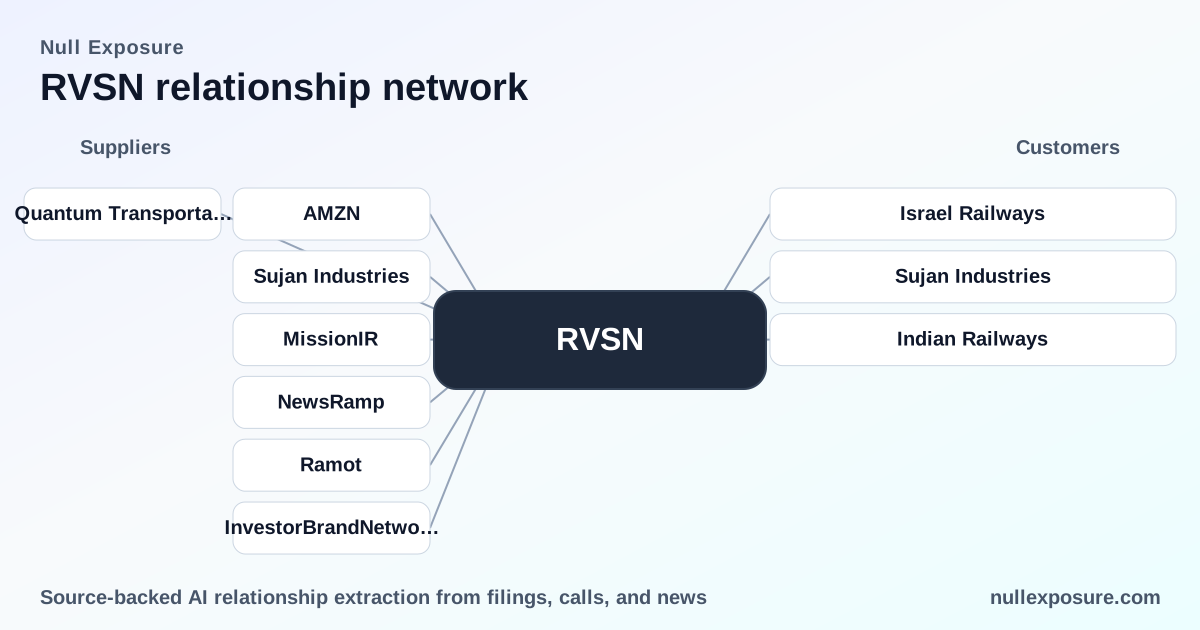
Israel Railways — installed MainLine systems and expanding pilots
Rail Vision’s MainLine camera systems are already purchased and installed on Israel Railways locomotives, and the relationship is moving into the next commercial phase with a ShuntingYard evaluation and a one‑month pilot in the cargo division; Israel Railways also presented the systems publicly at CES 2026, enhancing the company’s credibility. (Source: GlobeNewswire financial releases and related press coverage, March–May 2026.)
Sujan Industries — Indian market entry via an MOU and proof-of-concept
Rail Vision signed a Memorandum of Understanding with Sujan Industries to enter the Indian market and launched a proof-of-concept in January 2026, using Sujan as a local partner to showcase MainLine technology to senior officials. (Source: GlobeNewswire and DigitalJournal investor announcements, March 2026.)
Indian Railways — strategic proof-of-concept with major national operator
Rail Vision initiated a proof-of-concept focused on Indian Railways in early 2026, positioning the company to address one of the world’s largest rail fleets and unlocking significant long-term addressable market potential if the pilot scales. (Source: The Globe and Mail press release, March 2026.)
Why each relationship matters to valuation and commercial risk
- Israel Railways is the single most material commercial reference. Operational deployments and the move from MainLine installations to ShuntingYard trials suggest a pathway from initial sales to broader fleet adoption and upsell opportunities; this reduces technical risk in investor models while concentrating counterparty risk. (See Israel Railways press releases and CES 2026 coverage, Mar–May 2026.)
- Sujan Industries and the Indian POC are channel-leveraging steps that materially expand addressable markets without requiring a large direct-sales footprint in-country, but they require successful localization and regulatory acceptance to convert into significant revenue. (See Sujan MOU and proof-of-concept announcements, Jan–Mar 2026.)
- The Indian Railways POC is the largest strategic prize. Successful validation there creates scale optionality across an electrifying, modernization-focused network — a key upside scenario for long-term revenue multiple expansion. (See RVSN shareholder update and The Globe and Mail coverage, Mar 2026.)
Financial and commercial constraints investors should price in
No formal constraint documents were supplied with these customer records; as a company-level signal, the public relationship set implies:
- Sales concentration risk from reliance on a single anchor customer in Israel during the early commercialization phase.
- Lengthy sales and certification cycles inherent to safety-critical rail deployments, which will compress near-term revenue growth and extend payback timelines.
- High commercial leverage if pilots convert — follow-on orders in Latin and Central America and the proposed cargo-deployment pilots in Israel demonstrate that validated technology drives repeat business and geographic expansion.
These operational characteristics should be built directly into any cash-flow or scenario model: long sales cycles, pilot conversion rates, and customer concentration dynamics dominate near-term upside and downside.
Investment implications — downside and upside drivers
- Upside: validation from Israel Railways and public demonstrations at CES 2026 materially de-risk technical adoption, enabling follow-on orders and channel expansion (Latin America, Central America, India).
- Downside: current revenue base is small (Revenue TTM $1.49M) and margins are negative (Operating margin TTM -4.824, EBITDA -$11.6M), so equity value depends on conversion of pilots to commercial deployments and successful international rollouts.
- Monitor: pilot conversion timelines, contract structures (one-off hardware vs. recurring services), and evidence of regulatory acceptance or operator certification.
For a deeper customer-by-customer monitoring framework and ongoing commercial signal tracking, see our coverage at https://nullexposure.com/.
Bottom line
Rail Vision has progressed from lab to live installations with a credible anchor customer and is actively converting technical validation into pilots and MOUs across key geographies. That profile supports a value thesis built on pilot-to-deployment conversion and channel-led geographic expansion, but investors must price substantial execution risk tied to pilot outcomes, customer concentration, and long sales cycles.