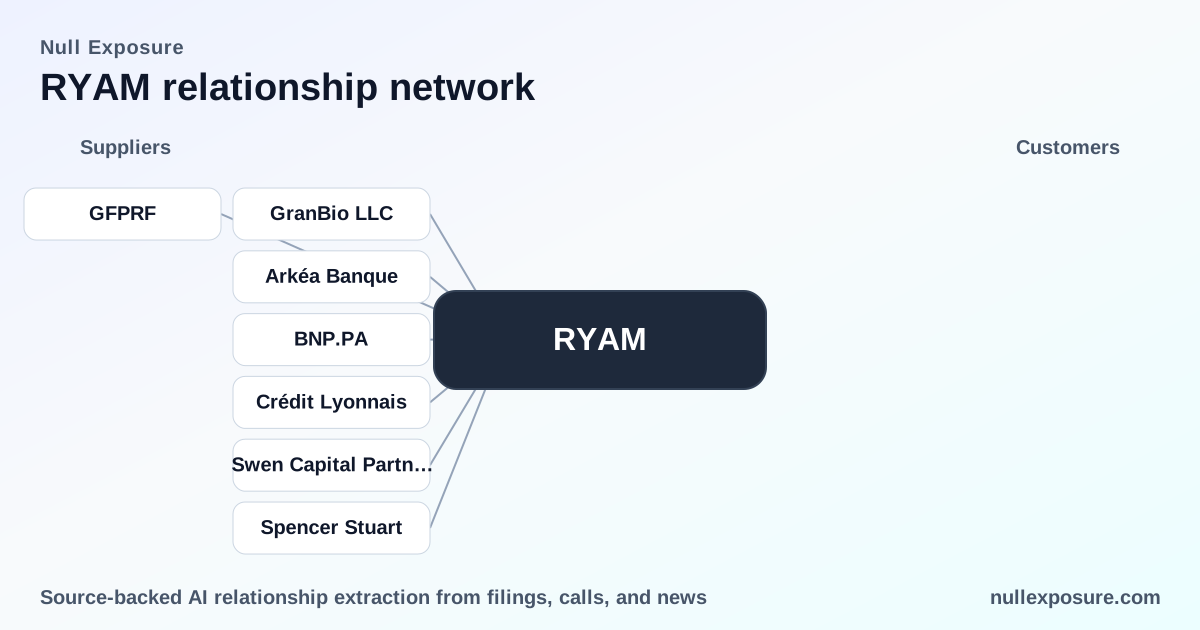
Rayonier Advanced Materials (RYAM): Customer Relationships and Commercial Signals for Investors
Rayonier Advanced Materials manufactures specialty cellulose and related pulp products and monetizes through global sales to industrial customers and distributors across High Purity Cellulose, Paperboard and High‑Yield Pulp segments. The company generates revenue from product sales and increasingly from bio-derived co‑products (ethanol and lignosulfonates) tied into longer‑term commercial offtake arrangements and export flows, with manufacturing bases in the U.S., Canada and France and distribution into 40+ countries. Investors evaluating RYAM should weigh its manufacturing scale, concentrated product lines, and the emerging biofuel/bio‑chemicals revenue stream against earnings volatility and customer concentration swings. For a concise view of relationship intelligence and constraints, see Null Exposure’s coverage at https://nullexposure.com/.
How RYAM runs its commercial engine
Rayonier Advanced Materials is a manufacturer‑first business. It operates integrated pulp and refining facilities, sells directly to industrial customers and through distributors, and records significant export volumes. Revenue trailing twelve months: $1.466 billion; EBITDA: $140.1 million; market capitalization: ~$605.9 million. The balance of product sales is geographically diversified: the U.S. and China are large end markets (34% and 22% of sales referenced in company reporting), with meaningful flows into Europe, Japan and other Asian markets.
Key commercial characteristics:
- Manufacturing and seller role: RYAM is the primary producer of High Purity Cellulose and related products and sells both directly and via distributors, typically under payment terms less than 90 days.
- Geographic breadth with export intensity: Sales outside the U.S. comprised roughly 66% of revenue in 2024, reflecting export dependence and regional revenue exposure across APAC, EMEA, LATAM and North America.
- Evolving product mix: Beyond pulp and cellulose, RYAM is commercializing second‑generation (2G) bioethanol and lignosulfonates as ancillary revenue streams under structured agreements.
What the relationships show — concise coverage of every match
Below I summarize every customer relationship identified in Null Exposure’s search results and cite the underlying source.
- BioNova (inferred BIIO): Rayonier supplies increased feedstock that flows into the biomaterials business and is explicitly routed to BioNova; the company reports selling more ethanol and lignosulfonates as that feedstock increases. According to an earnings call transcript published on InsiderMonkey for Q4 2025 / FY2026 commentary (posted May 3, 2026), RYAM described these commercial flows into BioNova and the related product sales. (InsiderMonkey Q4 2025 earnings call transcript, May 2026).
What the constraints tell us about RYAM’s operating model
The extracted constraints provide company‑level signals about contracting posture, concentration, criticality and maturity of RYAM’s commercial relationships.
-
Long‑term contracting posture: RYAM references a long‑term offtake agreement that underpinned commercial sales of 2G bioethanol beginning April 2024. This shows deliberate movement from spot sales toward structured, multi‑year contracts for emerging bio‑products — a sign of commercialization maturity and revenue predictability for that product line.
-
Global, export‑driven footprint: Sales and manufacturing excerpts show product shipments to China ($352m in 2024), Europe ($280m), Japan and other Asian markets, plus sizable U.S. and Canadian flows. RYAM manufactures in the U.S., Canada and France and sells into over 40 countries. This is a globally diversified revenue base with export concentration that links company performance to international demand cycles and logistics.
-
Customer concentration dynamics: The company noted one customer in the High Purity Cellulose segment represented 10% of total sales in 2023, while no single customer exceeded 10% in 2024 or 2022. Concentration is episodic — capable of creating single‑customer exposure in certain years but not a persistent structural dependence.
-
Role versatility and collection profile: RYAM functions as manufacturer and seller, and uses distributors and agents in some channels, typically under payment terms less than 90 days. This mix reduces go‑to‑market friction but places working capital emphasis on receivables and short payment cycles.
-
Relationship stage and operational maturity: Commercial sales of 2G bioethanol began under a long‑term offtake and are described as active, indicating the company has moved beyond pilot to commercial production for at least some bio‑products. The bio product lines are commercially active and contractually anchored.
-
Segment posture: Operating segments remain manufacturing‑centric (High Purity Cellulose, Paperboard, High‑Yield Pulp) with by‑product valorization (electricity and bio‑products) increasingly considered part of the commercial mix.
Investment implications — risk and opportunity
-
Opportunity: structured monetization of by‑products. The shift into long‑term offtake agreements for 2G bioethanol and the sale of lignosulfonates provide incremental revenue diversification beyond core cellulose and paperboard markets. Long‑term contracts generate higher predictability for these emerging revenue lines.
-
Risk: earnings volatility and negative EPS. RYAM carries a trailing EPS of -6.15 and thin profit margins (Profit Margin -28.7% TTM, Operating Margin ~2.9% TTM). Operational leverage and commodity price exposure can produce volatile earnings; the balance sheet and cash generation must support working capital and reinvestment into bio commercialization.
-
Geographic exposure requires active trade and logistics management. With two‑thirds of revenue outside the U.S., trade dynamics, tariffs, and logistics constraints are first‑order risks that can shift realized margins quickly.
-
Concentration is situational. The historical 10% customer concentration in 2023 shows the company can have sizable single‑customer exposures in a segment, but the absence of such a concentration in 2024 suggests management can diversify sales channels or that contract renewals altered exposure.
Bottom line and next steps for analysts
Rayonier Advanced Materials is a manufacturing business widening its revenue base by commercializing bio‑derived co‑products under long‑term commercial contracts while remaining dependent on international markets and cyclical pulp pricing. Key investor focus should be on the pace of bio product revenue growth under offtake agreements, receivables/working capital management given short payment terms, and margin stability across geographic markets.
To dive deeper into relationship analytics and live signals on RYAM customers, visit Null Exposure: https://nullexposure.com/. Consider tracking upcoming quarterly commentary for updates on bioethanol offtake volumes and any named counterparties that could shift customer concentration.