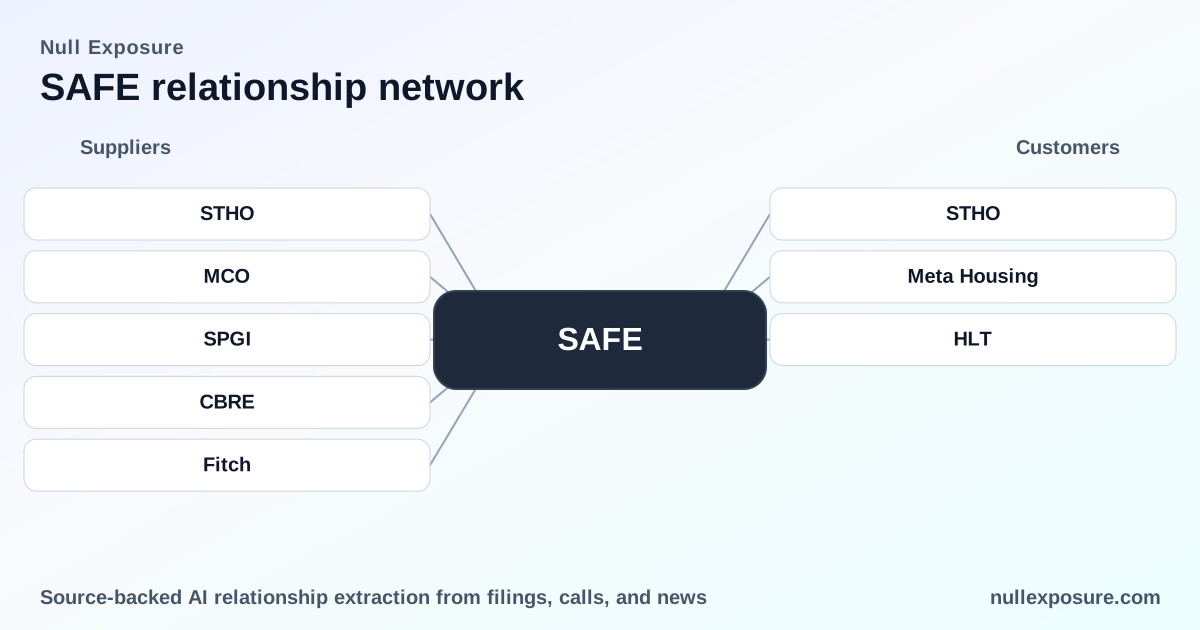
Safehold Inc. (SAFE) — customer relationships that define a ground‑lease franchise
Safehold operates and monetizes by acquiring and structuring long‑term ground leases (30–99 years) across high‑quality U.S. real estate, collecting contractual rent (including periodic escalations and occasional percentage‑of‑revenue participations) and generating fee income through related management services. Revenue drivers are therefore a combination of predictable long‑dated lease cashflows, variable usage‑linked rent components, and management fees tied to affiliated vehicles — a mix that delivers steady income but concentrates sensitivity around a few large counterparties and origination pipelines. For a focused look at Safehold’s customer map and the commercial signals investors should use, see NullExposure for deeper relationship signals: https://nullexposure.com/.
How to read Safehold’s customer relationships — the high‑level framing
Safehold is effectively a landlord and, in some cases, an external manager. Its commercial model blends long‑duration, low‑turnover contracts with pockets of usage‑linked revenue and fee income from affiliated vehicles. That mix creates a defensive earnings profile but also concentration and fee‑dependence risks that require active monitoring of a small set of counterparties and origination volumes.
- Contracts are long‑term: ground leases underpin a persistent revenue stream and limit tenant churn.
- Some rent is usage‑linked: contractual escalations and percentage participations introduce growth leverage to property performance.
- The company also provides management services: Safehold’s subsidiary acts as external manager for Star Holdings, creating a second income stream and operational linkage.
For portfolio managers evaluating SAFE, the table stakes are monitoring tenant litigation, fee‑income stability, origination cadence, and the concentrated counterparty exposures described below. If you want a systematic view of counterparty-level exposure, NullExposure provides relationship signals and source traceability: https://nullexposure.com/.
Commercial counterparties that matter today
Star Holdings / STHO
Safehold acts as external manager to Star Holdings through Safehold Management Services Inc., and Star Holdings has been a meaningful fee source; a $5.1 million year‑over‑year decline in management fees from Star Holdings was explicitly called out as a headwind in the FY2025 results and continued to affect FY2026 earnings. According to Safehold’s Q4/FY2025 earnings call coverage (Globe and Mail / Motley Fool, Mar 2026), fee reduction from Star Holdings subtracted materially from reported management revenue.
Circle Internet Group / CRCL
Safehold announced a strategic partnership with Circle Internet Group to position Safe as an institutional storage solution for USDC in self‑custody and DeFi, signalling a non‑traditional custody/treasury relationship that expands product scope beyond pure lease cashflows. Marketscreener reported the partnership announcement in March 2026, highlighting the move into institutional stablecoin custody.
The NRP Group
Safehold closed a ground lease for an affordable‑housing project in Texas with The NRP Group, marking the company’s entry into new affordable housing relationships and geographic diversification of originations. Safehold’s press coverage on the closing (SAHM Capital, Mar 2026) notes Safehold’s remarks about expanding into the affordable housing market.
Park Hotels / PK
Park Hotels has at least three assets that have been the subject of dispute with Safehold; Safehold’s public remarks and investor transcripts indicate the company expects resolution within a defined timeframe and cited transitional impacts on net income where assets shifted between ground lease and fee‑simple ownership. An Investing.com earnings transcript (May 2026) and related Q1 discussion document this operational dispute and its near‑term impact on results.
Meta Housing
Safehold closed a ground lease for an affordable housing development in Woodland Hills that will be developed by Meta Housing, reflecting Safehold’s push into multifamily affordable housing origination and a working relationship with a major regional affordable‑housing operator. YieldPro and MarketScreener coverage (Feb–Dec 2026 reporting citations) document the Woodland Hills closing.
Mark Development
A Boston‑area multifamily closing with Mark Development represents Safehold’s expanding footprint among regional developers and showcases deal origination in the Northeast multifamily market. SAHM Capital and The Boston Globe (as cited by SAHM Capital, Mar 2026) profiled the transaction as Safehold’s first with Mark Development.
Samuels & Associates
Samuels & Associates partnered with Safehold on the Boston multifamily transaction alongside Mark Development, adding a local developer counterpart to Safehold’s origination pipeline in that market. SAHM Capital’s March 2026 announcement highlights this as a first‑time relationship for Safehold.
Hilton / HLT
Hilton was mentioned in Safehold’s earnings transcript as a tenant “staying in place,” signaling ongoing operator continuity at properties where Hilton is the brand operator under Safehold leases. The Motley Fool‑sourced transcript (Mar 2026) captures management’s comment that Hilton remains in place at relevant assets.
What the relationship constraints tell investors about Safehold’s operating model
The company‑level signals derived from constraint excerpts illuminate how Safehold runs its business and where risks concentrate:
- Contracting posture — long‑term landlord: Ground leases are structurally long‑dated (30–99 years), creating durable cashflows and low contractual turnover; this is Safehold’s core contract type and defines portfolio longevity and refinancing optionality.
- Revenue mix — usage‑linked components exist: Contracts include periodic escalations and occasional percentage rent participations, which provide upside tied to property performance and introduce some variability into otherwise stable cashflows.
- Geographic concentration — national U.S. focus: Safehold targets ground leases throughout the United States, which spreads market risk across major metros but still concentrates exposure to U.S. economic cycles and real‑estate market dynamics.
- Dual role — landlord and service provider: As seller/landlord Safehold owns ground leases; as service provider, Safehold Management Services serves as external manager for Star Holdings — a structural linkage that creates both fee upside and counterparty dependency where named.
- Lifecycle stage — active, core product: Relationships are current and operational: ground leases represent the company’s single reportable segment and the portfolio generated interest income and accretion in FY2025–FY2026.
Collectively, these constraints describe a mature, product‑centric REIT with stable contract tenors, selective usage upside, and elevated counterparty and fee‑income concentration that investors should monitor.
Investment implications — what to watch next
- Fee concentration: The revenue hit from Star Holdings’ management fee decline is a direct example of fee‑income sensitivity; monitor subsequent filings and management commentary for fee stabilization or further attrition.
- Originations and pipeline: Safehold’s growth thesis requires steady origination with quality developers (Meta Housing, NRP, Mark Development, Samuels). Watch origination cadence and underwriting margins.
- Tenant disputes and asset transitions: Disputes like the Park Hotels situation can compress near‑term earnings; track litigation updates and asset‑status changes.
- Non‑core product experiments: The Circle/USDC custody partnership introduces an unconventional revenue vector; its scale and regulatory posture deserve scrutiny.
Bottom line: Safehold’s business converts long‑dated contractual land ownership into durable income, but investors must underwrite concentrated fee relationships and the pace of new ground‑lease originations to validate forward earnings growth. For ongoing, source‑linked relationship monitoring, visit NullExposure for detailed signals and document traces: https://nullexposure.com/.