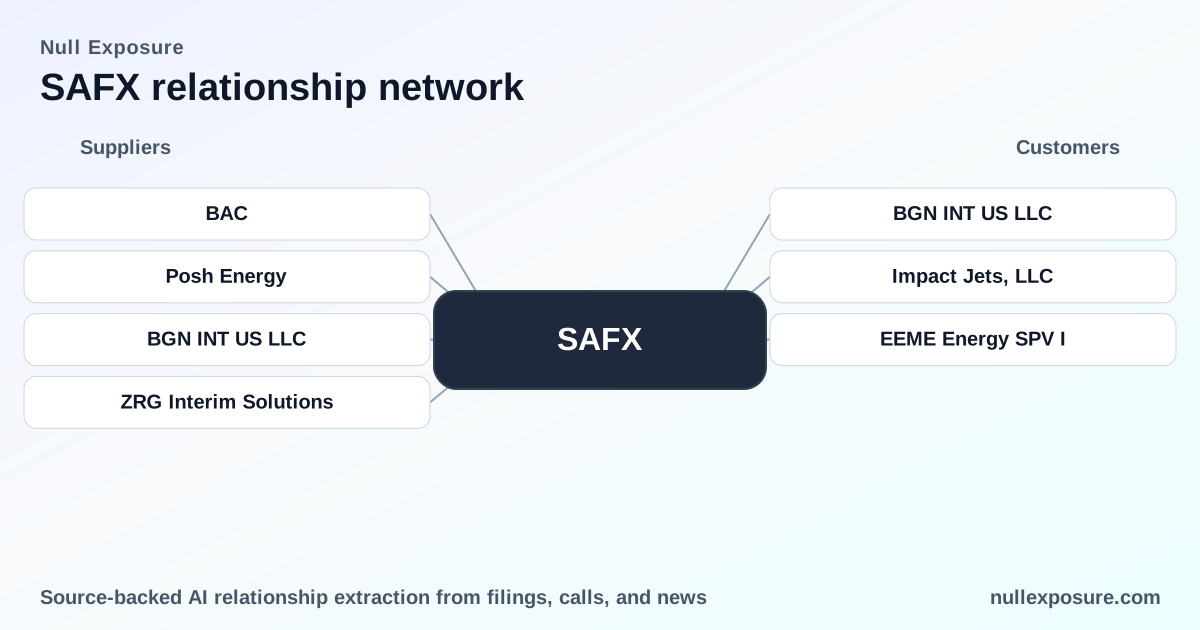
XCF Global (SAFX): Customer Relationships Drive Tolling Revenue but Expose Execution and Financing Risks
XCF Global operates as a North American producer of renewable diesel and sustainable aviation fuel (SAF). The company monetizes through mixed channels: tolling and processing of third‑party feedstocks, direct fuel sales and logistics, and targeted offtake and distribution partnerships that extend its marketing reach. Recent disclosure activity shows XCF is leaning on strategic commercial partners and short‑term equity financing to scale SAF output at its New Rise Renewables Reno plant. For additional background and alerts on these dynamics, visit https://nullexposure.com/.
How to read the relationship map: strategy and signals
XCF’s public relationship activity in FY2026 falls into three operational vectors: (1) commercial partnerships to secure distribution and offtake, (2) tolling and feedstock processing agreements to run plant throughput, and (3) near‑term financing and capital support. These moves position the company to escalate SAF production quickly, but they concentrate commercial dependency and introduce execution risk tied to counterparties and financing cadence.
Key takeaway: commercial progress is real and progressing from MOUs to binding term sheets, yet legacy counterparty adjustments and equity financings shift capital structure and operational risk materially.
Detailed relationship notes (every disclosed partner covered)
BGN INT US LLC / BGN (BGNX)
XCF executed a non‑binding Memorandum of Understanding with BGN INT US LLC to jointly develop global distribution, marketing and offtake frameworks across Europe, the Middle East and other strategic markets; that MOU was announced in multiple press releases in March 2026 (see TheNewsStar and Greenville Online press releases, March 2026). Subsequently, XCF and BGN moved from an MOU to a binding term sheet dated April 9, 2026 for a renewable fuel tolling arrangement at XCF’s New Rise Renewables Reno plant, under which XCF will process BGN‑owned feedstocks into SAF and renewable naphtha and provide logistics, storage, blending and marketing support (reported on The Globe and Mail, May 2026). These two disclosures together indicate a transition from commercial intent to a formalized operating relationship tied directly to plant throughput.
Sources: press releases on TheNewsStar and Greenville Online (March 2026); The Globe and Mail coverage of the April 9, 2026 term sheet.
Impact Jets, LLC
XCF signed an agreement to supply the private jet market through Impact Jets’ existing client network of roughly 130 customers, with XCF responsible for fuel supply, logistics management and verified documentation to ensure traceability and environmental impact reporting, as disclosed in a March 2026 press release (Great Falls Tribune). This relationship places XCF into a specialist commercial channel with relatively high margin potential per delivery and visible end‑user traceability requirements.
Source: Great Falls Tribune press release (March 2026).
EEME Energy SPV I
XCF agreed to sell up to $10 million of common stock to EEME Energy SPV I as part of financing tied to a SAF plant conversion, including an initial $700,000 purchase at signing and additional funding through March 31, 2026 with a 19.99% cap pending stockholder approval, according to a TradingView summary of the financing announcement. That equity placement provides near‑term liquidity to support conversion activities but also increases potential dilution until shareholders approve larger issuances.
Source: TradingView press summary of the financing arrangement (March 2026).
Phillips 66 (PSX)
Phillips 66 notified XCF Global of the early termination of their 2017 Supply and Offtake Agreement effective May 1, 2026, and suspended obligations while seeking assurance and setoff, according to a TradingView report on May 3, 2026. This legacy agreement’s termination represents a material change in XCF’s historical feedstock and offtake landscape and creates a near‑term operational and commercial vacuum that the BGN tolling term sheet is intended to address.
Source: TradingView report (May 3, 2026).
Company‑level signals and operating constraints
The relationship disclosures do not include a separate constraints registry for customer relationships. At the company level the public record communicates several operating and financial characteristics:
- Contracting posture: XCF’s commercial progression runs through MOUs, then to binding term sheets, and uses equity placements for bridge financing—indicating a staged, conditional contracting approach, not fully mature long‑term offtake contracts.
- Concentration risk: BGN emerges as a single large partner responsible for both feedstock and distribution activities; the Phillips 66 termination increases concentration importance for BGN and similar partners.
- Criticality: The April 2026 tolling term sheet ties directly to Reno plant output and therefore is operationally critical; loss or delay in that arrangement would impair the company’s ability to convert feedstock into saleable SAF products.
- Maturity and execution runway: Relationships are in early commercial or term‑sheet stages; written commitments exist but full execution depends on definitive agreements, financing approvals, and plant conversion timelines.
- Financing posture: The EEME equity purchase is structured as a capped placement pending shareholder action and provides immediate capital but dilutes equity. Insider ownership of roughly 78% increases governance control but limits institutional investor participation; institutional holdings are low (~3.1%), per company public data.
These signals combined indicate a growth profile that is commercially credible but highly execution‑dependent and sensitive to counterparty dynamics and capital markets access.
Investment implications: where return comes from, and where risk lives
XCF’s path to value creation is straightforward: increase SAF output at Reno, monetize through tolling margins and direct SAF sales, and scale distribution through BGN and niche channels such as Impact Jets. Value accrues if tolling volumes ramp on schedule and distribution partners convert local demand into off‑takers.
Countervailing risks are concentrated and actionable:
- Counterparty risk: Early termination of the Phillips 66 offtake removes a legacy anchor and elevates the importance of BGN and other partners to fill cadence and feedstock supply.
- Execution risk: Term sheets and MOUs require definitive agreements, operational conversions, and regulatory/compliance steps to deliver commercial volumes.
- Dilution and financing risk: Equity placements to EEME provide runway but alter capital structure and shareholder economics until larger approvals conclude.
- Concentration and governance: High insider ownership constrains free float and reduces institutional oversight, which can accelerate decisions but concentrates downside on retail and insider liquidity.
Bottom line and next actions
XCF Global’s FY2026 disclosures show tangible commercial progress—binding tolling agreements and targeted channel partnerships—but the story is one of transition rather than scale. Investors should track definitive agreement filings with BGN, operational milestones at the Reno plant, and shareholder votes tied to the EEME financing. For ongoing monitoring and a consolidated feed of these relationship developments, visit https://nullexposure.com/.
If you want a concise watchlist or an alert setup tailored to XCF Global’s partner milestones and financing events, the coverage and tools at NullExposure provide a practical starting point.