Satellogic (SATL): Commercial nanosat provider selling imagery, platforms and channel partnerships
Satellogic builds and operates a high-revisit nanosatellite constellation and monetizes via image sales, subscription-style tasking services (Constellation-as-a-Service), and direct satellite sales or licensing to industry and sovereign customers. Revenue mixes between recurring CaaS contracts, one-off asset-monitoring purchases, and Space Systems sales—creating a hybrid hardware-plus-software commercial model that sells data, tasking rights, and finished satellite systems.
For a focused view of client relationships that drive revenues and strategic reach, see more at NullExposure — the source used to assemble this summary.
How Satellogic’s commercial model works in practice
Satellogic sells imagery on a point-in-time basis to asset monitoring customers and recognizes recurring revenue from customers that contract a stand-ready CaaS commitment. The company also licenses or sells whole satellites and provides integration and IP transfer services to partners building sovereign or commercial capabilities. This mix drives both near-term revenue variability and multi-year revenue visibility from contractual credits and CaaS arrangements.
Explore deeper customer profiles and relationship signals at NullExposure.
Customer relationships: who buys what and why it matters
The relationships below are drawn from recent reporting and press releases; each entry includes a concise commercial description and the article/source that disclosed the relationship.
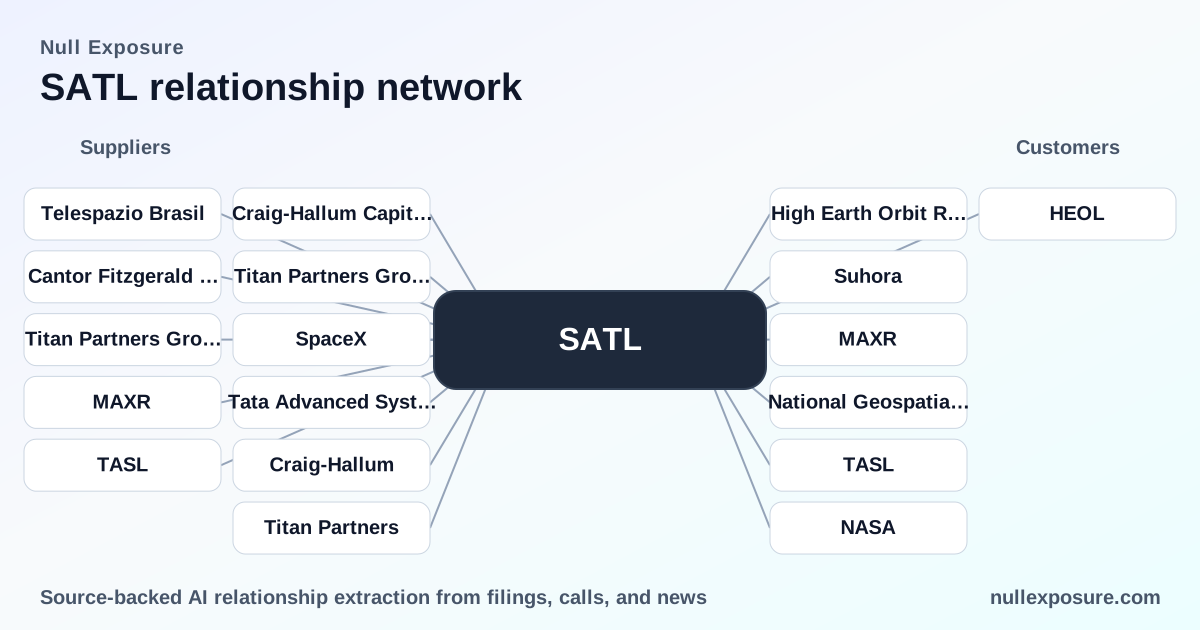
High Earth Orbit Robotics Pty Ltd (HEO / HEOL / High Earth Orbit Robotics Pty Ltd)
Satellogic sold an in-orbit legacy satellite, NewSat-34 (Amelia Earhart), to High Earth Orbit Robotics, establishing a sovereign sub‑meter capability for Australia and representing a direct monetization of in-orbit assets. This transaction highlights revenue from legacy asset sales and sovereign capability transfers. Source: MarketScreener and Investing.com coverage of the NewSat‑34 sale and related company notices (reported March–May 2026).
Suhora
Satellogic signed significant contracts with Suhora in the Middle East as part of international commercial agreements for Earth-observation services, demonstrating the company’s channel expansion and regional sales traction. Source: Satellogic press release on executive hires and contract wins, GlobeNewswire (Nov 2025).
Maxar Intelligence (MAXR)
Satellogic entered a tasking partnership granting Maxar exclusive rights to task its high-revisit constellation for certain U.S. government and allied national security missions, positioning Satellogic as a wholesale imagery supplier to a tier‑one imagery integrator for defense customers. Source: GeoWeekNews report on the Maxar–Satellogic tasking agreement (FY2024 reporting / press disclosure).
Tata Advanced Systems Limited (TASL)
Satellogic supplied technology transfer, IP licensing, foundational components and AIT facility support for TASL’s TSAT‑1A program in India, reflecting satellite system sales and local integration partnerships under the Space Systems product line. Source: Satnews and related coverage of the November 2023 collaboration and the April 2024 launch success (reported April 2024).
National Geospatial‑Intelligence Agency (NGA) — Luno program (via Vantor)
Satellogic expanded channel partnerships and is positioned to service the NGA Luno program through an agreement with Vantor, indicating indirect access to U.S. government geospatial tasking via a reseller/channel relationship. Source: GlobeNewswire release (Nov 2025) describing ecosystem partnerships and NGA channel servicing.
NASA
Satellogic was selected and onboarded to NASA’s Commercial Smallsat Data Acquisition (CSDA) program, opening a scientific/research sales channel and validating the company’s access to government research and civil EO budgets. Source: GlobeNewswire disclosure of program onboarding (Nov 2025).
US Naval Research (Slingshot program subcontract)
Satellogic is a subcontractor supporting the US Naval Research Slingshot program, confirming direct defense-related services and program-level engagement with U.S. military R&D initiatives. Source: MarketBeat/InsiderMonkey reporting on a subcontract announcement (April 24, 2026; reported May 2026).
What the relationship signals collectively reveal
These client engagements illustrate a deliberate go‑to‑market approach: a blend of sovereign satellite sales, commercial CaaS deals, and channel partnerships that route government tasking through intermediaries. The mix produces different revenue profiles—one‑off satellite sales (TASL, HEO), recurring tasking and imagery (Maxar, NGA channel), and program-level defense and research work (US Naval Research, NASA).
Operating constraints and business-model characteristics
Use the following company-level signals to assess operating posture and risk:
- Contracting posture — long-term and subscription elements. The company has long-term noncancellable agreements (five years with annual credit purchase commitments) and recognizes revenue over time for CaaS customers, indicating contractual revenue durability but also exposure to multi-year funding risk from government customers.
- Concentration and materiality. Satellogic reports dependence on a small number of commercial contracts for a meaningful portion of revenue; revenue concentration is a material business risk and gives counterparties bargaining leverage.
- Customer mix — government weight. Multiple constraints signal a strategic push into U.S. and other government agencies; government customers are both revenue drivers and sources of programmatic complexity (e.g., IP and data-rights requirements).
- Geographic footprint — global reach with regional exposure. Revenue splits indicate meaningful sales across North America, EMEA, APAC and LATAM; the company operates as a global EO provider with regional sovereign engagements that drive Space Systems sales.
- Product mix — hardware and services. The business combines hardware sales (satellites and IP licenses) with recurring services (imagery/CaaS); this hybrid model increases upside but also operational complexity (manufacturing, integration, and ongoing constellation ops).
- Spend scale per customer. Evidence points to customer spend bands in the $1–10 million range, including annual minimum purchase commitments and multi‑year credits—commercials that can move materially to P&L when contracts ramp.
- Relationship maturity. Signals include pilot trials and ramping contracts: Satellogic runs pilots across verticals while some customers are at early ramp stages, producing mixed visibility on revenue timing.
Investment implications and risk posture
- Growth vectors: Satellite sales (Space Systems) and channel deals (Maxar, Vantor/NGA) create scalable revenue pathways beyond pure imagery sales; securing recurring CaaS contracts is the primary lever to stabilize top-line growth.
- Risk concentration: Dependence on a handful of large commercial and government contracts increases downside—contract loss or nonrenewal would materially affect near-term results.
- Strategic validation: Participation in NASA CSDA and defense programs (US Naval Research, Maxar tasking) validates technical and compliance posture, improving access to high-value government budgets.
- Margin dynamics: Hardware sales produce lumpy revenue, while CaaS delivers more predictable margin profiles; investors should underwrite volatility but reward trajectory that shifts mix toward recurring CaaS revenue.
Key takeaway: Satellogic’s client relationships show a purposeful move from pure imagery vendor toward sovereign and channel-enabled sales, combining recurring CaaS revenue with one-time satellite transactions; this creates upside if contract concentration is diversified and CaaS penetration increases, but near-term earnings remain sensitive to a small set of large counterparties.
For a structured view of client signals and to monitor relationship-level changes over time, visit NullExposure.