Sally Beauty (SBH): Marketplace partnerships reshape distribution and digital reach
Sally Beauty monetizes a large omni-channel retail and distribution platform by selling professional beauty products through company stores, franchises, direct-to-consumer e-commerce and third‑party marketplaces. Revenue comes principally from merchandise sales across physical and digital channels, with accelerating contribution from marketplace and delivery partnerships that extend discovery and fulfillment. This positioning converts inventory and supplier relationships into recurring retail margins and incremental digital sales.
For an extended profile of counterparty exposures and relationship signals, visit https://nullexposure.com/.
H2: Where the business stands — scale, margins and strategic posture
Sally operates at scale with trailing revenue of approximately $3.71 billion and trailing EBITDA around $408 million, delivering operating margin in the high single digits and a profit margin near 4.9%. The company’s go‑to‑market blends company‑operated stores, a loyalty program with more than 15 million active customers, franchise distribution and an expanding suite of digital marketplace presences. These characteristics produce a contracting posture oriented to diversified retail buyers and distribution partners rather than single large enterprise contracts, and they position Sally as a seller-distributor-reseller hybrid with mature retail operations and rapid digital channel adoption.
H3: Operating-model constraints that shape partner risk and opportunity
- Concentration and geography: Sally is primarily North America‑centric in revenue and customer base, while maintaining operations in parts of Europe and South America; this regional footprint concentrates retail risk and opportunity in NA while offering selective international growth.
- Contracting posture and criticality: The firm’s revenue is merchandise driven and relies on a plurality of retail and marketplace channels; partners that improve digital discovery and last‑mile distribution increase criticality, but no single marketplace dominates top‑line.
- Maturity and distribution complexity: The mix of company stores, franchisees and distribution arms (including BSG/Armstrong McCall channels) indicates an established distribution network where partnerships serve to extend reach rather than replace core retail economics.
- Customer base signal: With over 15 million active customers and a sizable rewards program, Sally has material owned customer assets that complement third‑party marketplace relationships and support cross‑channel merchandising.
H2: Counterparty map — every relationship in the record, with source notes
-
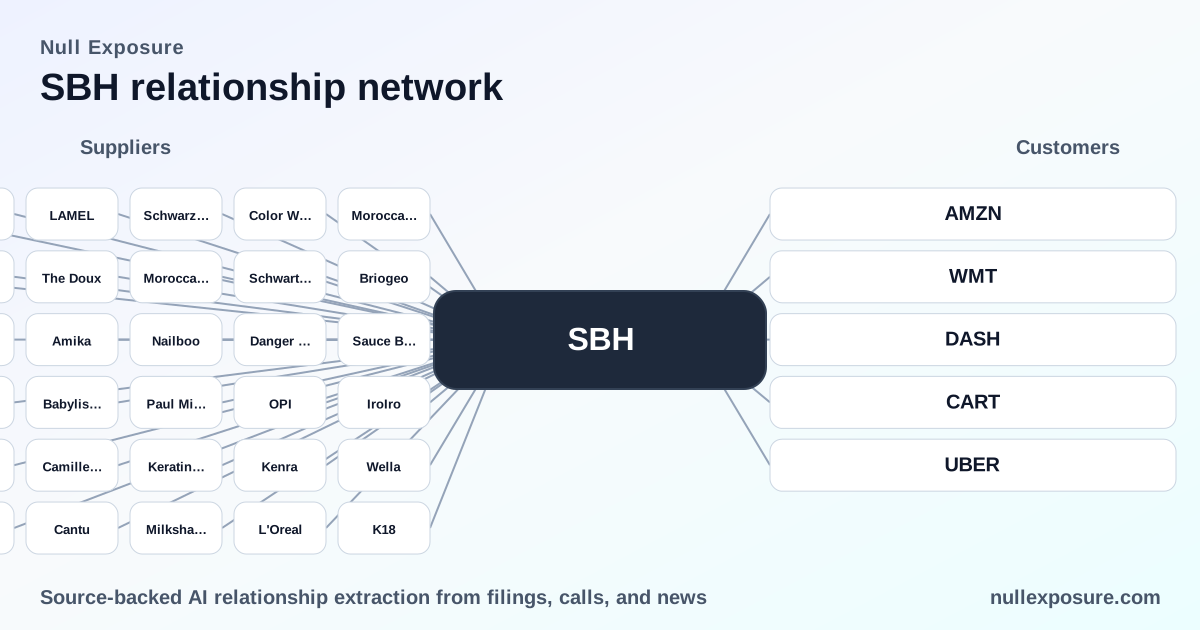
Walmart — Sally cited Walmart as part of its roster of marketplace and delivery partners during the company’s 2025 Q4 earnings call, reflecting marketplace presence and cross‑channel distribution collaboration. Source: 2025 Q4 earnings call (sbh-2025q4-earnings-call, March 2026).
-
Amazon — Management has identified Amazon as a key digital channel contributing double‑digit year‑over‑year growth across Sally’s digital sales, and Amazon is referenced repeatedly in press around Sally’s marketplace expansion. Source: 2025 Q4 earnings call (sbh-2025q4-earnings-call, March 2026) and FY2026 press coverage including StreetInsider and Barchart (May 2026).
-
TikTok Shop — Sally launched a TikTok Shop storefront on March 10, 2026, rolling out over a thousand SKUs to accelerate social commerce reach and to diversify digital discovery beyond traditional marketplaces. Source: StreetInsider and Barchart coverage of the TikTok Shop launch (March 10, 2026 / May 2026).
-
Uber Technologies / Uber Eats — Sally and Uber announced a nationwide partnership that places Sally’s product assortment on Uber Eats, and management highlights the addition of Uber Eats as an extension of its marketplace strategy to fuel digital growth. Source: Uber/Sally joint release covered by Yahoo Finance (March 10, 2026) and SBH 2025 Q4 earnings call (March 2026).
-
DoorDash (DASH) — DoorDash is listed by management alongside other delivery and marketplace partners as part of Sally’s expanded marketplace roster, indicating an established relationship that supports last‑mile delivery and incremental digital sales. Source: 2025 Q4 earnings call (sbh-2025q4-earnings-call, March 2026).
-
Instacart — Instacart is explicitly called out in the company’s earnings remarks as a partner within Sally’s marketplace and delivery mix, underpinning grocery‑style and convenience shopping channels for beauty inventory. Source: 2025 Q4 earnings call (sbh-2025q4-earnings-call, March 2026).
H3: What the relationship map tells investors
The counterparty set groups into two strategic buckets: large general‑market marketplaces (Amazon, Walmart) and delivery/social commerce channels (Uber Eats, DoorDash, Instacart, TikTok Shop). This combination de‑risks distribution concentration while amplifying digital discovery and conversion; each partner plugs into a different step of the shopper journey—search, convenience, impulse social commerce, and last‑mile delivery.
Visit https://nullexposure.com/ for comparative exposure analytics and historical partner evolution.
H2: Investment implications — growth levers and risk vectors
-
Growth levers: Marketplace and social channels are driving double‑digit digital growth and expand reach without proportionate physical capex; loyalty program scale (15M+ actives) supports repeat purchase economics. Marketplace rollouts (TikTok Shop launch, multi‑market delivery partnerships) convert marketing into measurable sales uplift while preserving gross margin on core SKUs.
-
Risk vectors: Reliance on third‑party marketplaces and delivery platforms increases variable fees, promotional friction and platform dependence for discovery. The company’s NA concentration intensifies exposure to regional retail cyclicality and inventory turns. Contracting posture remains retailer‑centric rather than vendor‑locked, so partner churn or fee escalations would pressure incremental digital margins faster than core retail margins.
-
Operational reality: Sally’s mixed role as seller, distributor and reseller, combined with franchise distribution channels, creates complexity in fulfillment, pricing parity and margin reconciliation across channels; successful monetization requires disciplined inventory and channel management.
H2: Bottom line for investors
Sally Beauty is converting an established retail distribution network and a large owned customer base into a diversified digital sales engine through partnerships with Amazon, Walmart, delivery platforms and social commerce channels. The company’s strategy reduces single‑channel dependency, accelerates top‑line digital growth, and retains core retail profitability if third‑party fees are managed. Investors should watch marketplace penetration metrics, fee erosion trends, and international rollout execution as the near‑term barometers of whether digital expansion converts to sustainable margin expansion.
For data‑driven exposure monitoring and a deeper look at counterparty relationships, see our portal at https://nullexposure.com/.