Star Bulk Carriers (SBLK): Asset-led cash flow with opportunistic counterparty activity
Star Bulk Carriers operates and monetizes a diversified dry-bulk fleet by deploying vessels on time and voyage charters, collecting freight revenue, and unlocking value through opportunistic asset sales and dividend distributions. The company combines operating cash flow from shipping contracts with balance-sheet pragmatism — selling older or non-core units to recycle capital — while returning cash to shareholders; recent press shows Star Bulk executing that playbook through a multi-vessel transaction with Diana Shipping and continuing to act as an external ship manager in industry relationships. For a concise, signal-focused view of SBLK’s counterparty landscape, consider additional context at https://nullexposure.com/.
Market context and what investors should track Star Bulk’s business model is twofold: generate steady charter revenues when employment markets are favorable, and extract residual value from the fleet via sales. Financially it is substantial: market capitalization roughly $2.88bn, trailing revenue near $1.04bn and EBITDA about $316m (TTM) — metrics that support recurring dividend capacity and sizeable asset transactions. Management uses asset-sale levers to manage fleet age and liquidity; the recent vessel sale agreement is consistent with a firm that actively recycles capital rather than simply holding ships for long-term cash yield.
Why these counterparty reports matter Counterparty disclosures — buyers, managers, or joint-venture partners — illuminate Star Bulk’s contracting posture and commercial reach. Large single transactions signal both asset concentration risk (sizeable blocks of ships change ownership) and strategic market access (using sales to reposition the fleet and raise cash quickly). For risk-minded investors, the counterparty names, deal sizes, and timing provide a window into how Star Bulk balances operational and financial objectives.
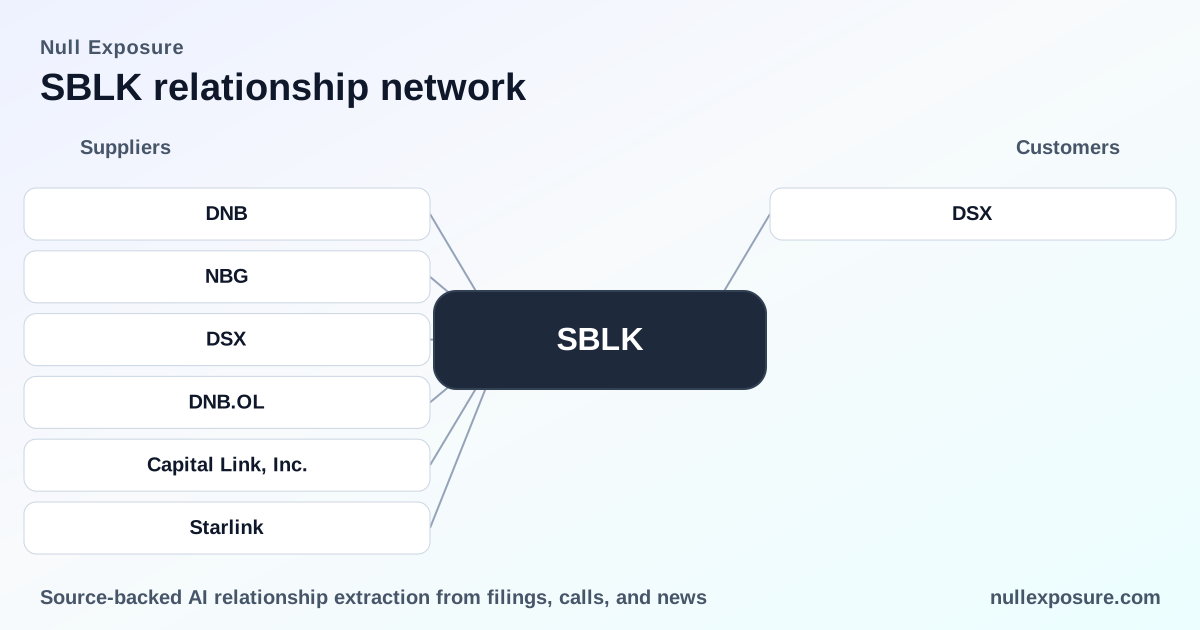
Relationship breakdown: what the reporting shows Below are every relationship referenced in the collected results, with a concise, plain-English summary and a primary source reference.
DSX — Diana Shipping (Baird Maritime report)
Star Bulk has a contractual commitment to sell 16 Genco vessels to Diana Shipping for $470.5 million contingent on the completion of a merger, representing a material asset-disposal that will materially change fleet composition and cash position. According to Baird Maritime (May 2, 2026), the purchase agreement executes upon the merger closing and reflects Star Bulk’s use of large-block sales to convert ships into liquidity.
GOGL — Golden Ocean Group (RoyalGazette mention)
Star Bulk is referenced in a 2021 press report as a global ship manager, indicating the company operates management functions beyond pure ownership and that it has been visible in industry operational arrangements dating back several years. The Royal Gazette noted Star Bulk’s role as a global ship manager in August 2021, highlighting management capabilities that extend its commercial footprint.
Diana Shipping (Intellectia.ai bulletin)
A separate news item reiterated that Diana has entered a definitive agreement with Star Bulk to acquire 16 Genco vessels for $470.5 million, underscoring the same transaction reported elsewhere and confirming market attention on the deal’s cash and fleet implications. Intellectia.ai’s coverage (March 10, 2026) communicates the strategic scale of this asset transfer and its likely contribution to Star Bulk’s liquidity and capital redeployment.
DSX — Diana Shipping (duplicate Intellectia.ai mention)
A second entry duplicates the Diana Shipping transaction reporting the $470.5 million purchase of 16 Genco vessels, reinforcing that multiple outlets recorded the sale terms and timing tied to the merger completion condition. The duplicate report (Intellectia.ai, March 10, 2026) acts as a corroborating data point for the transaction’s magnitude and public visibility.
Operating model implications and commercial constraints The relationship signals map back to a handful of company-level operating characteristics that matter to investors:
- Contracting posture: Star Bulk executes both short- and long-duration charters and is willing to use significant asset sales to reshape the fleet and raise capital. Large-block sales to counterparties like Diana demonstrate an active disposition toward capital recycling.
- Concentration and counterparty risk: Selling 16 vessels in a single package is material relative to peer transaction norms and will alter revenue profiles if the vessels were previously revenue-generating; however, this strategy reduces vintage risk and funds growth or returns.
- Criticality: No single charter counterparty emerges as indispensable from the captured reporting; the company’s ability to transact on asset markets indicates diversified commercial outlets and buyer interest for used tonnage.
- Maturity and sophistication: Public filings, recurring dividends, and market-scale transactions signal a mature operator that manages both operations and fleet finance pragmatically.
Note on constraints: the collected relationship data did not include specific contractual constraints, exclusivity clauses, or service-limiting covenants for these counterparties. That absence should be interpreted as a neutral company-level signal — no special constraints were flagged in the reviewed news coverage, but investors should still verify deal terms in SEC filings or the company’s investor releases for covenant-level detail.
Key investment implications and risks
- Positive: The Genco-vessel sale provides a clear liquidity event that strengthens Star Bulk’s capital flexibility, funds dividends, and enables fleet renewal or debt reduction. Combined operating metrics (forward P/E around 6.5, EV/EBITDA ~11x) position the company attractively if charter markets remain supportive.
- Negative: Large asset disposals create near-term revenue disruption if replacement employment for sold vessels is not matched, and concentrated sales can lead to cyclical timing risk relative to freight cycles. Additionally, the company’s insider ownership (~25%) and institutional stake (~31%) indicate meaningful insider influence and stable investor bases that can shape strategic choices.
Practical next steps for research users
- Review Star Bulk’s 8-K or investor release tied to the Diana Shipping transaction for covenants, timing contingencies, and planned use of proceeds.
- Monitor charter coverage and fleet employment plans to quantify how the vessel sale will affect recurring revenue and EBITDA across the next two fiscal quarters.
- Track buyer and manager names in future press to assess whether the company is broadening third-party management or pursuing more direct sales as its preferred liquidity strategy.
For deeper counterparty mapping and to see how Star Bulk’s customer and buyer network evolves, visit https://nullexposure.com/ for additional signal aggregation and transaction timelines.
Bottom line: Star Bulk’s recent customer and counterparty reports illustrate a deliberate asset-management strategy — monetize sizable vessel blocks when market conditions permit, keep cash returns flowing, and retain operational management capabilities that support commercial flexibility. Investors should weigh the liquidity benefits of large sales against the transitional revenue effects while confirming legal deal terms in authoritative filings.