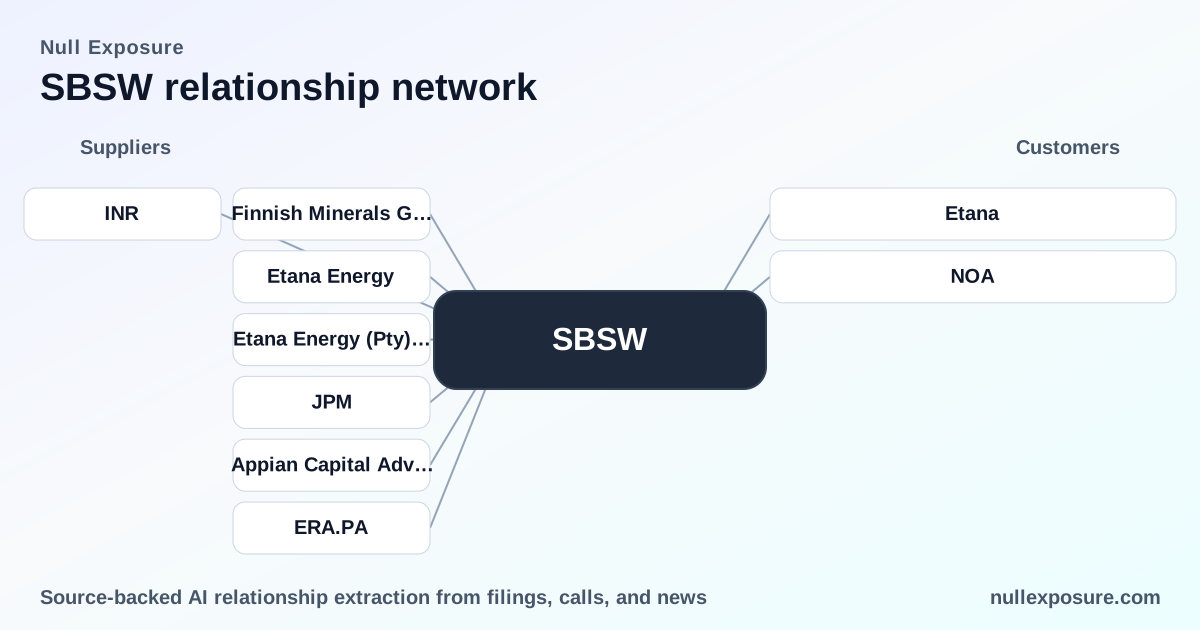
Sibanye Stillwater (SBSW): Renewable counterparties shift the operational ledger
Sibanye Stillwater operates as a global precious metals miner, monetizing through the extraction and sale of platinum group metals, gold and related by‑products across South Africa, the United States, Zimbabwe, Canada and Argentina. Revenue generation is commodity‑driven and capital‑intensive, while cost and operational continuity are materially influenced by energy availability and price. Management is actively contracting renewable capacity to secure supply, lower operating cost volatility and advance carbon‑reduction objectives—moves that change the firm’s cost profile as much as its emissions profile.
For further detail on commercial relationships and how they feed risk models, visit https://nullexposure.com/.
Why Sibanye is treating energy contracts as a strategic lever
Electricity is a core input for underground and processing operations; outages or price spikes translate directly into lost production and margin pressure. Sibanye’s recent agreements expand its renewable pipeline to 765 MW, a scale equivalent to nearly one large baseload unit, and therefore represent both insurance against grid risk and a pathway to lower long‑run power costs. The company reported a strong operating base—latestquarter revenue TTM of roughly $129.7 billion and EBITDA of $34.2 billion—so the renewables program should be evaluated as an efficiency and resilience play rather than a top‑line growth lever. According to the Q4 2025 earnings call, the new agreements with Etana and NOA increased the renewable pipeline to 765 megawatts, supporting energy security and decarbonization goals.
The Etana and NOA deals — practical implications for operations and cost
Etana
Sibanye announced a new agreement with Etana as part of the broader renewables expansion that lifts its pipeline capacity, signaling active diversification of power counterparties. This deal contributes to the consolidated 765 MW figure management highlighted on the Q4 2025 earnings call. (Source: Sibanye Stillwater Q4 2025 earnings call, March 2026.)
NOA
NOA is explicitly named among the counterparties; the Q4 2025 call confirms a finalized agreement with NOA that also flows into the 765 MW renewables pipeline and strengthens on‑site energy security for Sibanye’s operations. (Source: Sibanye Stillwater Q4 2025 earnings call, March 2026.)
How these relationships change the business model profile
There are no explicit contractual constraints disclosed in the relationship dataset for these renewables agreements, which is itself informative: management is pursuing multiple counterparties rather than a single, exclusive provider, indicating a diversified contracting posture. That posture reduces counterparty concentration risk and increases bargaining leverage over time as the program scales. From an investor‑oriented operating model perspective:
- Concentration: Sibanye spreads renewable counterparties, reducing single‑counterparty dependency.
- Criticality: Energy supply is critical to production continuity; securing long‑term renewable capacity directly mitigates this operational risk.
- Maturity: The size of the pipeline (765 MW) indicates a program beyond pilot stage and into substantive deployment.
- Contracting posture: Public statements indicate bilateral agreements rather than in‑house generation only, aligning capital allocation with third‑party developers while retaining operational focus on mining.
Because no constraints are listed in the provided relationship data, these characteristics should be treated as company‑level signals derived from disclosed deal activity rather than contractual text.
How to think about risk, margin and valuation implications
Securing large‑scale renewable capacity affects Sibanye across several valuation levers:
- Margin stability: A reliable, contracted power supply reduces production interruptions and the need for expensive short‑term emergency power, supporting the operating margin (reported operating margin TTM ~13.5%). (Source: company financials, latest quarter 2026-03-31.)
- Cost of energy: Long‑dated renewable agreements hedge future price volatility; this effectively de‑ratchets a portion of energy cost volatility from the margin model.
- Capital allocation: Using third‑party developers for renewables suggests opex and contracted costs may substitute for upfront capex, preserving mining capital for higher IRR projects.
- ESG and financing: Demonstrable progress on decarbonization increases access to ESG‑linked financing and reduces regulatory and permitting friction in certain jurisdictions.
Investors should incorporate these agreements as ongoing cost‑mitigation levers rather than immediate revenue drivers; the company’s core monetization remains metal sales, with renewables improving risk‑adjusted returns on that core business.
What every listed relationship contributes to the strategic picture
-
Etana: The Etana agreement is a component of the renewed pipeline expansion to 765 MW and contributes to Sibanye’s energy security and decarbonization trajectory, as described on the Q4 2025 earnings call. (Source: Sibanye Stillwater Q4 2025 earnings call, March 2026.)
-
NOA: NOA is explicitly named among counterparties concluding a new agreement that also supports the 765 MW renewables target and strengthens operational resilience. (Source: Sibanye Stillwater Q4 2025 earnings call, March 2026.)
Key investor takeaways
- Operational hedge: The Etana and NOA agreements materially increase contracted renewable capacity to 765 MW, improving electricity supply security for energy‑intensive operations.
- Risk reduction over revenue growth: These relationships are risk‑mitigation and cost‑stability instruments, not new revenue lines—treat them as margin and volatility controls.
- Diversified contracting posture: Multiple counterparties reduce concentration risk and indicate a scalable, mature renewables program.
- Valuation relevance: Incorporate lower power‑cost volatility and fewer outages into cash‑flow scenarios; the firm’s strong revenue base (TTM ~ $129.7bn) and EBITDA (TTM ~ $34.2bn) mean renewables are accretive to free cash‑flow stability rather than transformative to scale. (Source: company financials, latest quarter 2026-03-31.)
For a structured view of Sibanye’s counterparty exposure and how it fits into multi‑factor risk models, explore more at https://nullexposure.com/.
Bottom line
Sibanye’s agreements with Etana and NOA signal a deliberate shift to lock in large‑scale renewable capacity—a defensive, margin‑supporting strategy that reduces energy risk and improves the predictability of operations. For investors, the practical consequence is a cleaner, more robust operating cash flow profile that justifies tighter downside assumptions in valuation work while leaving commodity exposure as the primary earnings driver.