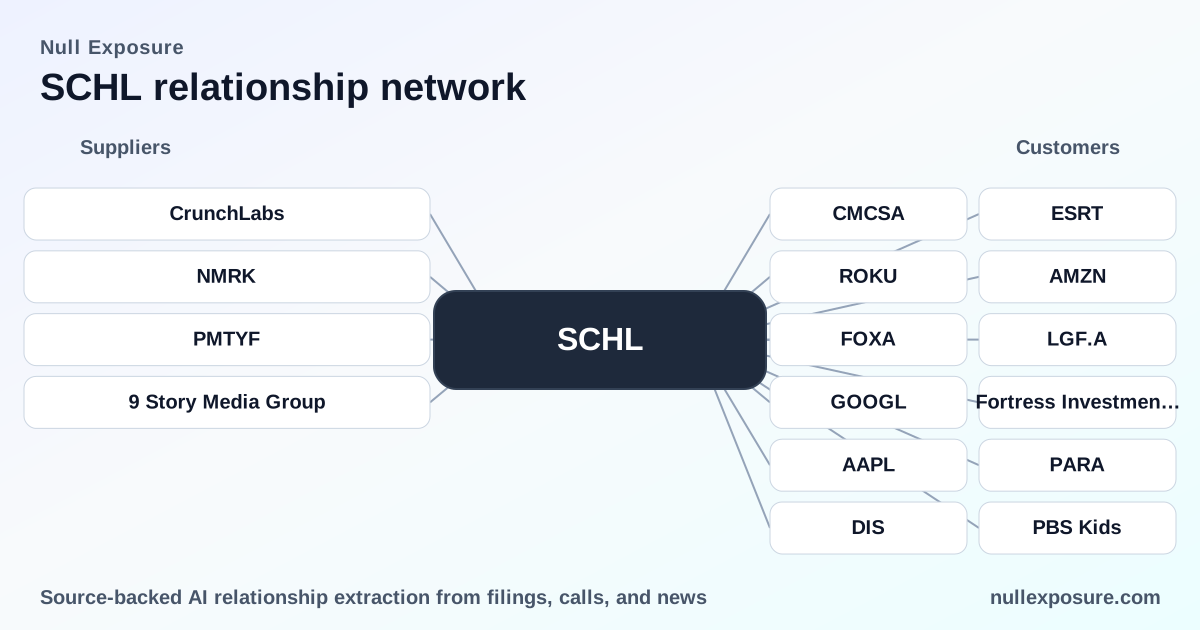
Scholastic (SCHL): Customer map and commercial posture for investors
Scholastic monetizes a diversified IP and distribution business by selling books and educational products directly to parents, teachers and schools, licensing content to global streaming platforms, and providing production services and distribution through third parties; the company supplements operating cash flow with strategic real estate monetizations such as sale‑leasebacks. Revenue drivers are a mix of high‑margin licensing and production fees, recurring subscription and book club sales to individuals, and balance‑sheet management via property dispositions. For a concise, investor‑grade view of Scholastic’s customer relationships, read on — or visit the NullExposure home page for broader coverage: https://nullexposure.com/.
How Scholastic’s commercial model fits investor expectations
Scholastic operates as both a content owner and a distributor. The company sells directly to consumers through online book clubs and retail channels, contracts with school and government buyers for educational services, and licenses content to major streaming and broadcast platforms. Contract forms include licensing agreements (revenues recognized when content is available) and subscriptions (digital product revenue deferred and recognized ratably), consistent with the company’s FY2025 disclosures. Scholastic’s counterparties span individual consumers (high concentration in online parents), government/school districts, and large entertainment platform partners, giving the firm a mixed contracting posture: predictable recurring retail flows plus lumpy, high‑value licensing and production receipts.
Operational implications for investors:
- Concentration: Distribution is global but consumer book club sales are concentrated by channel (online parents accounted for ~68% of internet book club revenues in FY2025).
- Criticality: Streaming and studio partners are high‑value for IP monetization; loss of a major platform placement would affect content revenue cadence.
- Maturity: The core publishing and school supply business is mature; digital licensing and production services are growth levers.
- Contracting posture: Mix of long‑term license/subscription terms and single‑project production contracts; real estate sale‑leasebacks introduce landlord counterparty risk.
Platform and studio relationships — who Scholastic is selling to and licensing with
Below is a relationship‑by‑relationship summary drawn from company press releases and coverage. Each entry is one to two sentences with source context.
-
DIS (Disney / Disney+) — Scholastic projects and IP have been licensed to Disney platforms, including a live‑action “Goosebumps®” series on Disney+ and Hulu; this reflects direct studio partnerships for scripted adaptations. Source: Scholastic press release (FY2025).
-
Disney+ — Scholastic content is placed on Disney+ as part of broader adaptations and series placement, supporting streaming licensing revenue. Source: Scholastic press release (FY2025).
-
ESRT (Empire State Realty Trust, Inc.) — ESRT agreed to acquire Scholastic’s 555‑557 Broadway headquarters for $386 million, indicating a sale‑and‑leaseback of Scholastic’s NYC real estate. Source: simplywall.st report and media coverage (FY2025).
-
Empire State Realty Trust, Inc. — A California Democrat report corroborates that a subsidiary of ESRT will purchase Scholastic’s headquarters for gross proceeds of $386 million in cash, reflecting balance sheet monetization via third‑party landlord arrangements. Source: CaliforniaDemocrat.com (Dec 2025 / FY2025).
-
YouTube — Scholastic expanded its presence on YouTube with multiple dedicated channels through 9 Story’s distribution, increasing ad‑supported and platform distribution reach for legacy content. Source: Scholastic press release (FY2025).
-
Tubi — Scholastic content placements include Tubi as part of a broad VOD distribution push, representing ad‑supported licensing relationships. Source: Scholastic press release (FY2025).
-
The Roku Channel — Scholastic’s catalog has been placed on The Roku Channel via 9 Story’s distribution, widening OTT footprint on ad‑supported platforms. Source: Scholastic press release (FY2025).
-
Peacock — Scholastic’s classic content is distributed to Peacock under licensing arrangements managed by its digital distribution partners. Source: Scholastic press release (FY2025).
-
Lionsgate (LGF.A) — Lionsgate will release a feature adaptation of Scholastic’s Sunrise on the Reaping (release announced for November 20, 2026), demonstrating studio feature‑film partnerships for big‑title IP. Source: Scholastic mediaroom and press reporting (FY2024–FY2025).
-
Hulu — Scholastic content, including the “Goosebumps®” series, is available on Hulu as part of multi‑platform distribution deals with major streamers. Source: Scholastic press release (FY2025).
-
Amazon Prime — Scholastic titles such as “Clifford the Big Red Dog®” have been produced for Amazon Prime, establishing pay/stream licensing agreements and co‑production credits. Source: Scholastic press release (FY2025).
-
AMZN (Amazon / Fire TV) — Scholastic’s distribution includes Amazon platforms broadly (Prime and Fire TV), giving the company access to both subscription and platform distribution economics. Source: Scholastic press release (FY2025) and InsiderMonkey Q3 2026 transcript (FY2026).
-
Apple TV+ — Scholastic has productions for Apple TV+ (for example, “Eva the Owlet™” and “Stillwater®”), indicating direct first‑party streaming relationships for prestige and family content. Source: Scholastic press release (FY2025).
-
CMCSA (Comcast / Peacock) — Comcast’s Peacock is cited as a destination for Scholastic content placements, aligning with distribution across major MVPD/streamers. Source: Scholastic press release (FY2025).
-
Paramount (PARA) — Scholastic‑produced features have studio relationships with Paramount (e.g., live‑action “Clifford” features), reflecting theatrical and studio licensing channels. Source: Scholastic press release (FY2025).
-
PBS Kids — Scholastic has historically placed children’s programming on PBS Kids, aligning with public broadcaster syndication and licensing models. Source: Scholastic press release (FY2025).
-
LGF.A (duplicate entry for Lionsgate) — Lionsgate’s relationship with Scholastic is reiterated in company releases and media, reinforcing the film adaptation pipeline. Source: Scholastic mediaroom and FY2025 reporting.
-
Fortress Investment Group — Fortress affiliates purchased Scholastic’s facility at 6325 Stertzer Road for $95 million in a sale‑leaseback, indicating third‑party capital used to unlock non‑core real estate. Source: CaliforniaDemocrat.com (Dec 2025 / FY2025).
-
ROKU (Roku / The Roku Channel) — Roku’s platform now offers extensive Scholastic episodes (over 800 episodes cited by management), highlighting the scale of OTT catalog distribution. Source: InsiderMonkey Q3 2026 transcript (FY2026).
-
Fire TV — Scholastic content availability on Fire TV expands the company’s reach into device ecosystems and multiplatform distribution. Source: InsiderMonkey Q3 2026 transcript (FY2026).
-
Apple TV (duplicate entry for Apple TV+) — Scholastic references to Apple TV reflect multiple engagements with Apple’s streaming platform for original and catalog content placements. Source: InsiderMonkey Q3 2026 transcript (FY2026).
-
Android platforms — Scholastic content is distributed across Android ecosystems and third‑party app stores, supporting broad digital reach beyond single‑vendor platforms. Source: InsiderMonkey Q3 2026 transcript (FY2026).
Investment implications and risk framework
- Revenue mix: Scholastic combines recurring retail/subscription cash flows from individual consumers with episodic, high‑margin licensing and production receipts from large platform partners. This reduces pure reliance on any single revenue type.
- Balance sheet actions: The ESRT and Fortress transactions demonstrate active monetization of real estate to raise cash while maintaining occupancy — a leverage and liquidity management tool that introduces landlord counterparty exposure.
- Counterparty profile: The company’s counterparties include individual consumers (high online penetration) and government/school district contracts, which diversifies counterparty risk across retail and institutional buyers.
- Platform concentration: Scholastic distributes broadly across major streamers and device ecosystems, which lowers single‑platform dependency but creates operational complexity in rights management and revenue recognition across licensing and subscription models.
- Operational maturity: Publishing/distribution is mature; licensing, streaming placements, and production services are the primary growth levers and require active IP management and partner negotiation.
For a deeper dataset and ongoing monitoring of Scholastic’s commercial counterparties, explore NullExposure’s coverage: https://nullexposure.com/.