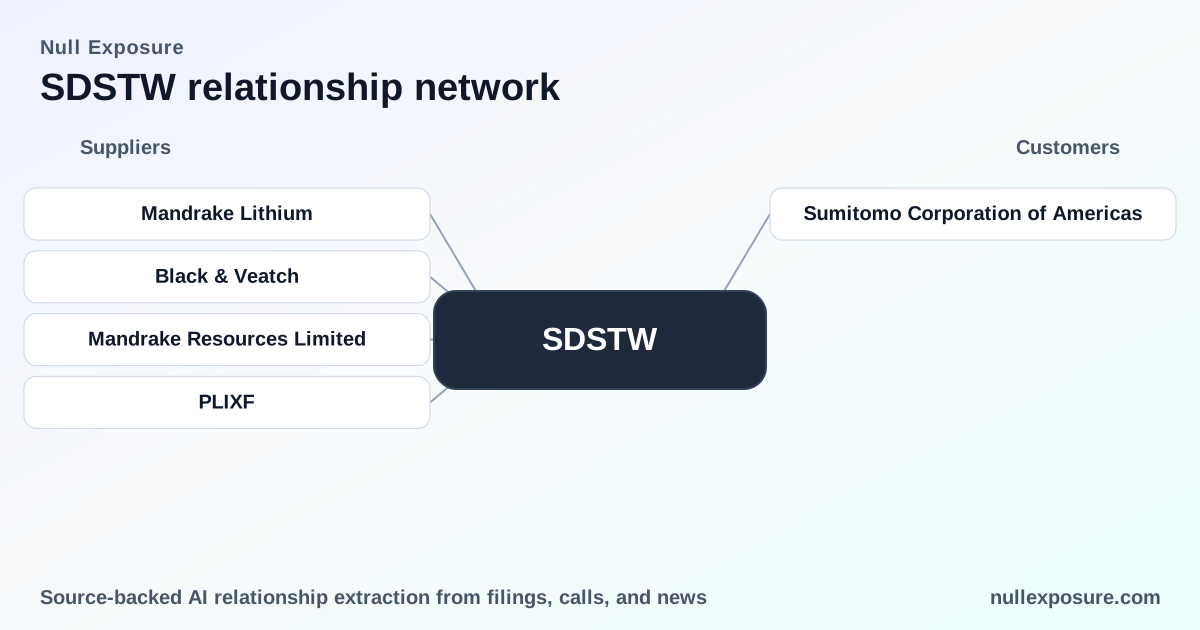
Stardust Power (SDSTW) — Customer relationships and commercial runway
Stardust Power is a vertically integrated lithium refinery that intends to monetize by producing and selling battery‑grade lithium carbonate to battery manufacturers, OEMs and industrial trading partners via long‑term offtake contracts. The company is development‑stage: it has no commercial production or revenue today and plans to convert pre‑commercial memoranda and letters of intent into multi‑year supply agreements once its refinery qualifies product for sale.
For a concise view of Stardust’s commercial prospects and counterparties, see the company profile and filings on the company site or through regulatory filings: https://nullexposure.com/
How Stardust positions itself in the EV lithium value chain
Stardust’s value proposition is a U.S.‑based, large‑scale lithium refinery intended to supply the North American EV and defense industrial bases with battery‑grade lithium carbonate. The company frames its commercial model around long‑term offtake contracts (typical tenor cited as 10 years, with renewal options), pricing mechanisms with caps and ceilings, and sharing of variable pricing between seller and customer. This contracting posture is consistent with strategic buyers who need supply certainty and price protection as they scale battery manufacturing.
Operationally, Stardust is a classic upstream-to‑midstream seller: it will refine feedstock into a standardized chemical product (lithium carbonate) and sell that core product into manufacturing customers rather than providing downstream battery cells or systems. The company’s filings explicitly target Western OEMs, battery manufacturers and the U.S. defense industrial base as customers.
The single disclosed customer relationship investors should track
On January 28, 2025, Stardust entered into a non‑binding letter agreement with Sumitomo Corporation of Americas that contemplates a long‑term commercial offtake. Under the contemplated terms Sumitomo would acquire 20,000 metric tons per year of lithium carbonate from Stardust’s first production line, with an option to increase to 25,000 metric tons under mutual agreement; the initial term is described as 10 years starting from first qualification, and there is an option for a five‑year renewal. (Source: Stardust Power FY2024 Form 10‑K, 10‑K filing describing the January 28, 2025 letter agreement.)
Plain English: Sumitomo
Sumitomo is a prospective long‑term buyer under a non‑binding offtake letter that, if converted to a final agreement, would represent a major anchor offtake for Stardust’s first line at scale. According to the company’s FY2024 10‑K, the letter contemplates 20,000 tpa with potential for expansion and a 10‑year initial term tied to qualification.
What that relationship implies commercially
The Sumitomo engagement, even in non‑binding form, is material because the volumes and tenor outlined are precisely the type of anchor offtake that enables project financing and operational scaling in lithium refining. A binding long‑term agreement with a large trading house or industrial customer would de‑risk revenue visibility and help optimize refinery utilization and working capital. Conversely, because the agreement is explicitly non‑binding and conditional on product qualification, the commercial benefit is contingent on successful technical qualification and negotiated final terms.
Company‑level constraints and operating signals investors should weigh
Stardust’s public filings and profile generate several clear operating and business model signals:
-
Contracting posture: long‑term, structured contracts. The company states it expects to enter into long‑term contracts (typically 10 years) with cap/ceiling pricing and mechanisms to share variable pricing between customers and Stardust. This is a deliberate strategy to deliver revenue stability to both parties and to mirror industry norms for EV supply chains (Source: FY2024 10‑K excerpts).
-
Counterparty profile: large enterprises targeted. Stardust anticipates its customers will be large, experienced companies operating in lithium markets, which implies counterparty credit and procurement sophistication will be central to negotiations (Source: FY2024 10‑K).
-
Geographic focus: North America (U.S.) first. The company positions itself as a U.S.‑based supplier aimed at fostering domestic supply independence for EVs and defense customers, making NA end markets core to its go‑to‑market plan (Company description and FY2024 10‑K).
-
Relationship maturity: prospect / pre‑commercial. Stardust has not yet commenced production and discloses no existing customers; disclosed commercial arrangements are non‑binding or at the LOI stage, representing prospective rather than contracted revenue (Source: FY2024 10‑K).
-
Segment focus: core product / manufacturing customers. The company explicitly plans to sell lithium carbonate to battery manufacturers, Western OEMs and the defense industrial base, consistent with a manufacturing‑to‑manufacturing seller strategy (FY2024 10‑K).
Financial signals reinforce the development‑stage posture: Revenue TTM is $0, EBITDA is negative (reported as −$16,080,040), and return metrics are negative, all of which underscore that commercial execution and contract conversion are the next material milestones (Company financial profile).
Key commercial risks and monitoring checklist
Investors and operators should monitor a short list of event‑driven commercial catalysts and risks:
-
Conversion of the Sumitomo letter into a binding offtake agreement: timing of qualification, definitive pricing, credit terms, and volume finalization. The current arrangement is explicitly non‑binding (FY2024 10‑K).
-
Product qualification milestones: certification for sale to Sumitomo’s customers and other prospective buyers is the gating item for contract commencement and revenue recognition.
-
Concentration risk if initial revenue comes from a small number of large counterparties; anchor offtakes stabilize cash flow but increase dependence on single counterparties for plant economics.
-
Contract terms — the company anticipates cap/ceiling pricing and shared variable pricing; investors should watch for any price‑indexation, minimum take or make‑up provisions, and renewal triggers.
-
Execution and capital availability — converting MOUs and LOIs into contracted flows requires capital to complete construction and qualification; track financing, project milestones, and offtake bankability.
For continuing diligence and sourcing, Stardust’s filings provide the primary disclosure. For a consolidated commercial view and ongoing updates visit https://nullexposure.com/ for tracked filings and relationship summaries.
Quick takeaways for investors
- Sumitomo is the only publicly disclosed prospective customer and the proposed terms would be commercially meaningful if converted to a binding 10‑year offtake (FY2024 10‑K).
- Stardust is pre‑revenue and pre‑qualification; offtake volumes and pricing remain prospective until product qualification and definitive contracts are executed.
- The business model emphasizes long‑term contracts with large enterprise buyers, which is appropriate for project finance and supply security but creates concentration and execution risk during the ramp.
For an ongoing, consolidated view of Stardust’s customer relationships and filings, including the Sumitomo letter and other commercial disclosures, visit https://nullexposure.com/ for tracked documents and analysis.