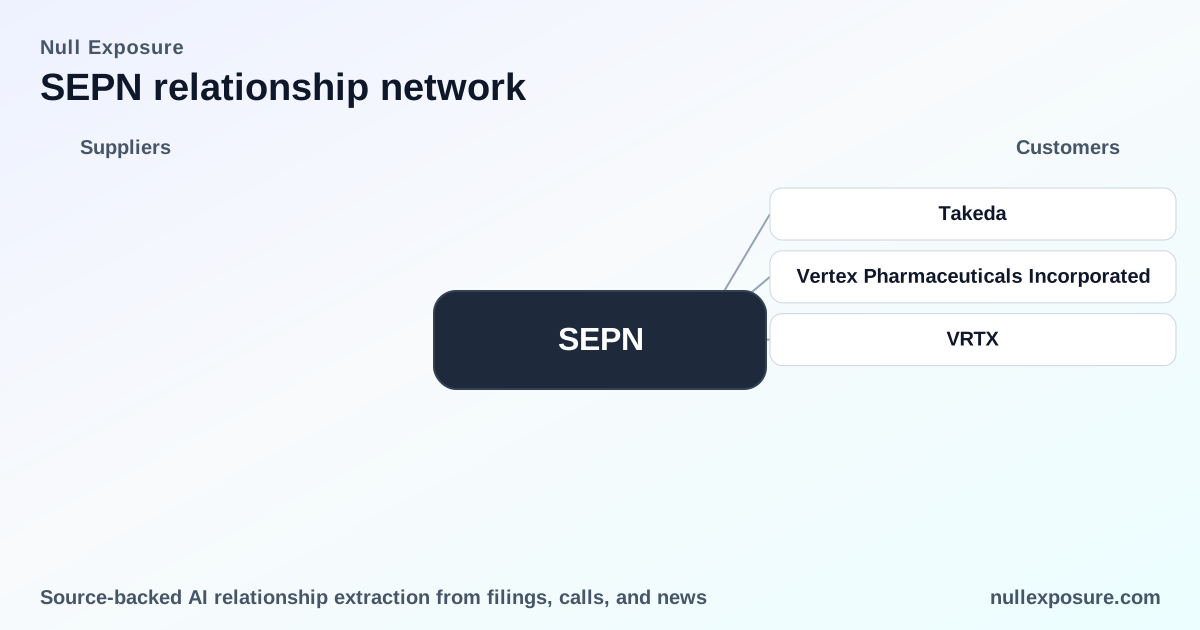
Septerna (SEPN): Partnership-driven revenue with concentrated, short-duration service exposure
Septerna operates as a therapeutics discovery and development company that monetizes through research services, licensing deals and development collaborations with large pharma partners. Its current revenue mix is dominated by collaborative and service arrangements—small recurring service receipts from partners like Vertex and materially larger collaboration receipts tied to Novo Nordisk—while product sales remain zero given the pre-commercial pipeline. For a focused read on customer-level exposure and contractual posture, visit https://nullexposure.com/.
Why customer relationships define the near-term valuation story
Septerna’s corporate economics follow a standard biotech playbook: early-stage technology and pipeline value are realized through partner funding, licensing upfronts and development milestones, rather than product revenue. That makes the identity, scale and contractual design of partner relationships the single most important operating variable for investors evaluating cash runway and upside capture.
- Service payments and research fees provide predictable but limited revenue.
- Licensing and collaboration deals deliver lump-sum capital and upside contingent on clinical progress.
- Concentration of revenue into a few partners increases both runway visibility and counterparty risk.
If you want ongoing relationship monitoring and structured signals, see our tracker at https://nullexposure.com/.
Vertex: small recurring service revenue plus a strategic license
Septerna reported $1.1 million in service revenue from research activities performed for Vertex in FY2024, up from $0.2 million in FY2023, reflecting an active service relationship reported in its FY2024 Form 10‑K. According to the same filing, the Vertex service agreement is structured as a two‑year term but is terminable on 30 days’ notice, which the company treats as effectively month‑to‑month for contract duration and revenue predictability. (Source: Septerna Form 10‑K FY2024)
Separately, industry reporting shows Vertex paid Septerna $47.5 million for a licensing deal covering an undisclosed discovery‑stage GPCR program—a non‑service upfront that demonstrates how Septerna converts discovery work into license value. (Source: FierceBiotech, March 10, 2026)
Takeaway: Vertex contributes both modest, recurring service fees and a meaningful upfront licensing payment; however, the Vertex service contract’s 30‑day termination right creates short-duration revenue exposure for the services line.
Novo Nordisk: a material collaboration driving recent quarters
Multiple news outlets report that Novo Nordisk is Septerna’s lead commercialization partner in a cardiometabolic collaboration, with one coverage item referencing a headline figure of $2.2 billion for development and commercialization rights for oral small‑molecule candidates. Company commentary and press coverage also attribute quarterly revenue of roughly $24.1 million to the collaboration with Novo Nordisk, which demonstrates that partner funding has become a primary near‑term revenue driver. (Sources: TradingView/Zacks coverage citing the deal, March 2026; Investing.com and other press coverage, May 3, 2026)
Takeaway: Novo Nordisk represents a high‑magnitude cash flow backstop that materially improves Septerna’s runway; this elevates partner concentration risk but substantially reduces near‑term financing pressure if milestones and payments continue.
Takeda: incidental regulatory mention, not a customer revenue line
Septerna’s FY2024 filing references Takeda in the context of the recall of NATPARA, which is a regulatory and market event cited in the company’s disclosures but does not correspond to reported revenue from Takeda. The mention is contextual rather than transactional. (Source: Septerna Form 10‑K FY2024)
Takeaway: Takeda appears only as an industry reference in the 10‑K and is not documented as a customer contributor to Septerna’s service revenue.
Every documented relationship — concise investor snapshots
- Vertex Pharmaceuticals Incorporated: Septerna recorded $1.1M of service revenue from Vertex in FY2024, and the Vertex service agreement has a 30‑day termination right, producing month‑to‑month revenue exposure. (Septerna 10‑K FY2024; FierceBiotech March 10, 2026)
- VRTX / Vertex (press): FierceBiotech reported that Vertex paid $47.5M for a license to a discovery‑stage GPCR program from Septerna in the prior year, reflecting non‑service licensing revenue. (FierceBiotech March 10, 2026)
- Novo Nordisk (NVO): Press coverage links $24.1M of quarterly revenue to a collaboration with Novo Nordisk and cites a reported $2.2B collaboration framework for cardiometabolic programs—underscoring a material partnership that drives current top‑line receipts. (Investing.com, May 3, 2026; TradingView/Zacks March 2026)
- Takeda: Mentioned in Septerna’s FY2024 filing regarding the recall of NATPARA, cited for context and regulatory discussion rather than as a revenue source. (Septerna 10‑K FY2024)
What the constraints tell investors about operating risk and maturity
Septerna’s relationship constraints translate into actionable operating signals for underwriting:
- Contracting posture — short‑term for services (Vertex): The Vertex service agreement’s 30‑day termination right creates high churn risk in the services revenue line and limits visibility on renewal economics. This constraint explicitly references Vertex in the 10‑K.
- Geography — U.S.-earned research revenue: Septerna reports that research services revenue for FY2023–FY2024 was earned in the U.S., indicating domestic operational concentration rather than a geographically diversified revenue base.
- Role and segment — seller / service provider in research services: The company’s current revenue model is service‑led, positioning Septerna as an outsourced research provider alongside its licensing activities.
- Relationship stage — active services and prospect pipeline: Septerna reports active service revenue while simultaneously positioning its portfolio as pre‑commercial, which shows simultaneous operational stages—active partner work plus early commercial immaturity.
- Spend band — partner payments in the $1M–$10M band for service revenue: Historical service receipts fall in the low‑single‑digit millions, even while licensing and collaboration headlines point to much larger strategic deals.
These constraints indicate a dual‑track business model: services provide short‑term cash and collaboration deals deliver step‑function financing. That hybrid raises concentration and renewal risk on the services line but material upside tied to milestone‑driven partner payments.
Risks, runway implications and what to watch next
- Contract duration risk on services: Month‑to‑month terminable service contracts reduce revenue visibility and increase dependence on continued deal flows.
- Partner concentration: Novo Nordisk’s contribution to a recent quarter shows revenue concentration; any pause or restructuring in that collaboration would materially affect near‑term receipts.
- Transition from services to product economics: Septerna has no commercial products today; successful translation of licensed programs into value‑creating milestones and royalties is essential for long‑term margin expansion.
Key signals to monitor: quarterly revenue attribution (partner vs. services), milestone and upfront payment timing, any change to Vertex contract terms, and regulatory or clinical readouts tied to licensed programs.
Bottom line for investors
Septerna’s value today is partnership‑driven. Small, short‑duration research contracts provide operational cash and deal flow, while licensing and collaborations—most notably the Novo Nordisk arrangement and prior Vertex license—supply the capital necessary to de‑risk programs and extend runway. Investors should underwrite Septerna as a company with high partner concentration, short contract tenor in the services line, and asymmetric upside through milestone‑linked collaboration economics.
For a structured, ongoing feed of partner exposure metrics and contract signals, explore our relationship intelligence at https://nullexposure.com/.