Scienjoy (SJ): How an entertainment platform is selling AI services into elder care
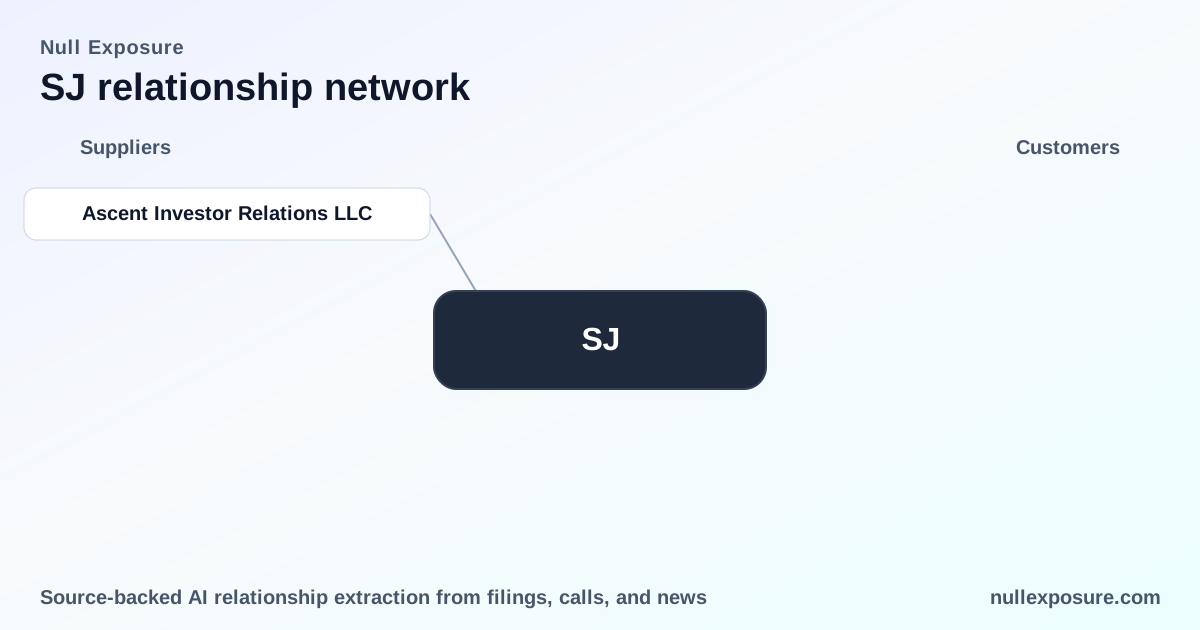
Scienjoy operates mobile live-streaming platforms in China and monetizes primarily through user spending on virtual gifts, advertising, and paid features, while increasingly commercializing its in-house AI stack by selling enterprise deployments such as the AI Digital Human Butler into institutional customers. This hybrid consumer-to-enterprise trajectory creates dual revenue vectors: continuing cash flow from core streaming users plus higher-margin, contract-driven enterprise sales that scale via institutional rollouts. For a concise view of relationship analytics and to track new customer wins, visit https://nullexposure.com/.
Why the Hebei Wendao partnership shifts the revenue profile
Scienjoy announced a strategic healthcare partnership with Hebei Wendao Elderly Care Service Group to deploy an AI Digital Human Butler across elderly care facilities, a move that translates Scienjoy’s conversational and avatar technology into an institutional product that addresses labor shortages and standardizes service delivery across multiple facilities. According to OpenPR and TipRanks reporting on May 3, 2026, the partnership is presented as a framework for modular, secure, and scalable AI deployments in eldercare, indicating the company is actively pursuing non-advertising monetization channels (OpenPR, 2026; TipRanks, 2026).
This customer relationship is important for two reasons. First, it validates a path from consumer engagement technology to enterprise software-as-a-service and systems integration, which carries a different margin and contract structure than live-streaming consumables. Second, elderly-care institutional customers represent a large and addressable market in China given demographic trends, enabling Scienjoy to sell standardized AI bundles across multiple facilities rather than relying solely on high-variance consumer spending.
The Hebei Wendao relationship, in plain English
Scienjoy signed a framework agreement to deploy an “AI Digital Human Butler” in Hebei Wendao’s elderly care facilities as part of a nationwide rollout of AI-enabled services; the deployment is pitched as scalable and designed to relieve staffing pressures while improving service consistency (OpenPR, May 2026; TipRanks, May 2026).
Contracting posture, concentration and maturity — company signals investors should parse
Scienjoy’s public record includes instrument terms that reflect a long-term contracting posture at the company level. Historical disclosures reference multi-year option and public warrant terms issued around the 2019 IPO process, demonstrating a tendency to use longer-dated capital structures and commitments (company filings, 2019 excerpts). Because these constraint excerpts do not name specific customers, treat them as company-level financial governance signals indicating an appetite for longer-duration instruments and commitments rather than as an attribute of any single customer relationship.
Other corporate metrics reinforce the picture of a company in transition from consumer scale to enterprise sales:
- Revenue TTM: $1.241 billion with Gross Profit: $227 million, but Operating Margin TTM: -44.3% and EBITDA negative, indicating the business is not yet operationally profitable and is reinvesting aggressively or absorbing high fixed costs.
- Insider ownership: 60.45% and institutional ownership: 0.23%, which signals concentrated control and thin institutional liquidity — a governance condition investors must weigh against strategic pivots.
- Valuation multiples are modest in absolute terms (Price/Book ~0.26; Price/Sales ~0.038), reflecting low market expectations relative to revenue, but the capital structure and operating losses reveal immature margin capture on enterprise initiatives.
These items together present a company that is contractually comfortable with long-duration arrangements, is still building enterprise revenue maturity, and operates under concentrated insider control, which amplifies both execution speed and investor governance risk.
All customer relationships disclosed in our coverage
- Hebei Wendao Elderly Care Service Group — Scienjoy has entered a framework partnership to deploy an AI Digital Human Butler across elderly care facilities as part of a nationwide AI rollout; the deployment is framed as modular, secure, scalable, and aimed at supplementing staff and improving care quality (OpenPR, May 3, 2026; TipRanks, May 3, 2026).
This list is exhaustive for the customer-scope signals in the reviewed sources. For continuously updated relationship tracking and deeper counterparty detail, see https://nullexposure.com/.
What investors should watch next
- Revenue recognition from enterprise contracts: Institutional rollouts typically convert to multi-year recurring revenue; reported bookings, contract length, and revenue recognition policy changes will show whether the eldercare push is a one-off pilot or a durable contract channel.
- Gross margin expansion: Enterprise AI deployments should have higher gross margins than consumer virtual gifts once the software and integration revenue scale; investors should watch gross margin trends and product-level disclosures.
- Customer concentration and pipeline: One named institutional partner is positive for proof-of-concept but insufficient to de-risk revenue concentration. The company needs multiple enterprise wins to materially change top-line volatility.
- Governance and liquidity: High insider ownership provides execution control but constrains float and reduces institutional coverage; institutional uptake or insider dilution events will materially affect liquidity and valuation dynamics.
Bottom line: strategic pivot with execution risk
Scienjoy has clearly monetized its AI capabilities into an institutional channel with Hebei Wendao, turning consumer-facing technology into a product that sells to facilities at scale. The initiative provides a credible path to diversify revenue and improve margins if the company converts pilots into recurring contracts. Key risks remain operational profitability and concentrated governance, and investors should prioritize confirmations of multi-client rollouts, contract tenure, and margin capture before repricing the equity. For ongoing monitoring of customer relationships and to integrate these signals into due diligence, visit https://nullexposure.com/.
Key takeaways:
- Enterprise AI is a second revenue pillar alongside live streaming.
- One named partner validates product-market fit for eldercare but does not yet reduce revenue concentration risk.
- Company signals indicate a long-term contracting posture, concentrated insider ownership, and immature profitability — all critical factors for investment decisions.