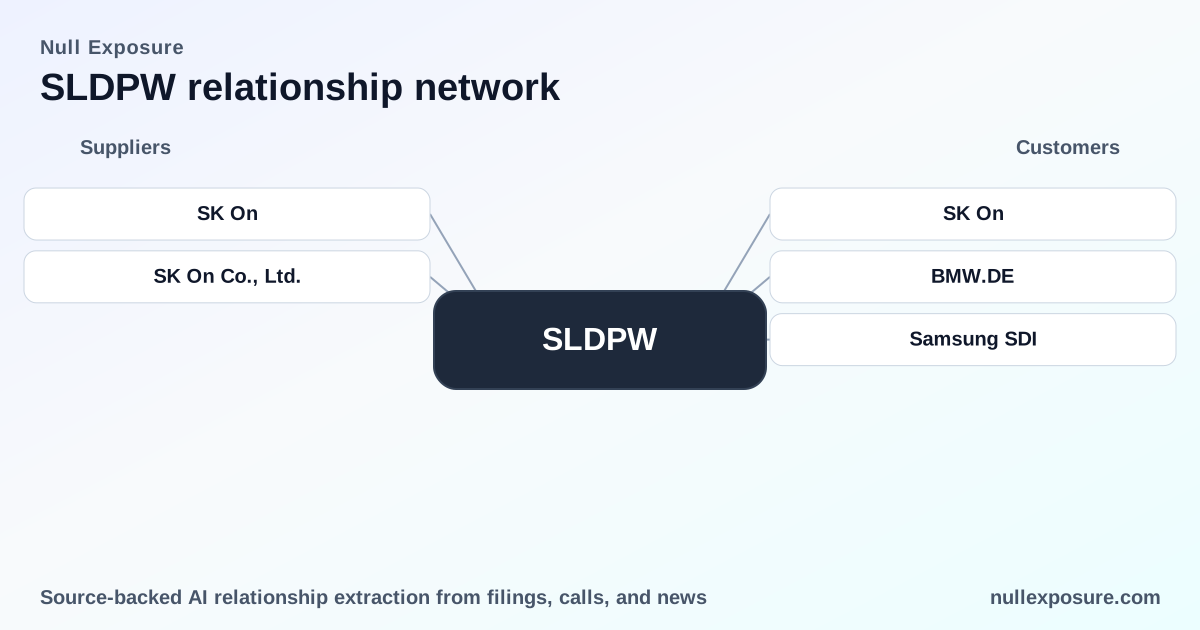
Solid Power’s customer map: who’s buying, licensing, and validating the battery tech
Solid Power monetizes a two-pronged technology play: sell engineered solid-electrolyte material to Tier 1 battery manufacturers and OEMs while license cell designs and manufacturing processes to partners that will scale production. The company’s commercial traction is concentrated in APAC battery supply chains and anchored by long-term supply and line-installation arrangements that convert R&D validation into recurring electrolyte revenue and potential licensing royalties. For a focused read on customer exposures and contract signals, visit https://nullexposure.com/.
What Solid Power is selling and how customers matter
Solid Power’s operating model is a hybrid of product sales (electrolyte) and intellectual property licensing. Revenue today is small by automotive standards but strategically concentrated: the firm generated roughly $17.9 million in trailing revenue and is pricing early electrolyte deliveries and licensing as the path to scale. The company discloses long-term supply commitments, active line-transfer work, and explicit plans to commercialize through both direct sales and licensing, which together create multiple channels to monetize technology as partners transition from evaluation to production.
- Contracting posture: a mix of long-term purchase obligations and licensing arrangements that lock in buyers while enabling partners to localize production.
- Geographic concentration: substantive activity and sampling focused in APAC (particularly Republic of Korea), with R&D and some operations still in North America.
- Maturity profile: relationships span prospect stage (samples and evaluations), active stage (line installation and technology transfers), and early ramping toward commercial deliveries.
- Revenue scale signal: public disclosures indicate electrolyte sales in the low‑double-digit millions band for near-term revenue contributions.
Customer relationships disclosed in the 2025 Q4 earnings call
Below are every customer relationship referenced in the company’s 2025 Q4 call, summarized plainly with source context.
SK On
Solid Power reported it is executing under multiple agreements with SK On — a research and development license, a line installation agreement, and an electrolyte supply agreement. According to company disclosures, SK On is contractually required, after validation, to purchase at least eight metric tons of electrolyte through 2030, underpinning a multi-year revenue stream tied to volume thresholds (Solid Power 2025 Q4 earnings call and company filings covering FY2024–2025).
BMW (BMW.DE)
In October 2025 Solid Power announced a joint evaluation agreement that includes BMW alongside Samsung SDI to advance all-solid-state battery development; this is an evaluation-stage, multi-party engineering and testing collaboration that positions BMW as a strategic automotive OEM partner in technology validation (Solid Power 2025 Q4 earnings call, October 2025 disclosure).
BMW.DE (duplicate mention)
The earnings call repeats the BMW participation in the joint evaluation with Samsung SDI, confirming BMW’s role at the OEM evaluation level for the October 2025 initiative (Solid Power 2025 Q4 earnings call).
Samsung SDI
Solid Power confirmed a joint evaluation agreement with Samsung SDI and BMW announced in October 2025; Samsung SDI is engaged at the cell-development and validation level alongside an OEM, signaling interest from a major Tier‑1 cell maker in integrating Solid Power’s electrolyte and processes (Solid Power 2025 Q4 earnings call, October 2025 disclosure).
How these relationships translate into commercial constraints and growth signals
The relationship evidence and company disclosures create a clear operating profile for investors evaluating customer risk and upside.
- Long-term sales commitments where named: SK On’s purchase obligation through 2030 is an explicit long-term revenue anchor; that contract converts validation work and line installation into predictable electrolyte volumes. This is a relationship-specific constraint because the filing explicitly names SK On.
- Licensing is core to the go-to-market strategy: Solid Power intends to license cell designs and manufacturing processes to partners; this positions revenue to bifurcate into material sales and licensing fees as partners internalize production (company disclosures FY2024–2025).
- APAC concentration creates both runway and concentration risk: the majority of sampled electrolyte volumes in 2024 went to Asian Tier‑1 manufacturers and OEMs, which accelerates adoption but introduces customer and regional concentration.
- Revenue band expectations are meaningful: company statements point to near-term electrolyte receipts in the $10M–$100M band for partner sales, with specific references that certain agreements together accounted for roughly $11.8 million of 2024 revenue and minimum receipts of ~$10 million depending on volumes — this sets investor expectations for early commercial scale.
- Relationship stages are mixed: investors should expect a pipeline that contains prospects (sampling and feedback), active transfers (line installation and technology handover), and early ramping deliveries; this staged maturity dictates cash flow timing.
Bottom line: the customer base is small but strategically significant — SK On provides a multi‑year supply stub, while Samsung SDI and BMW drive validation and scale optionality.
Risk profile and what drives upside
Solid Power’s revenue will rise as partners validate the electrolyte and complete line installations, but that same path creates concentrated counterparty risk and staging risk.
- Concentration risk: heavy reliance on APAC Tier‑1s and a few large partners makes individual contract outcomes material to revenue.
- Execution criticality: successful line installations and technology transfer are binary operational events that determine when licensing and volume sales begin.
- Commercial cadence: the company’s mix of product sale and licensing revenue shifts margins depending on partner choices — OEMs that choose to manufacture internally create higher electrolyte volume demand, while licensing drives recurring royalties and lower materials revenue.
Positive catalysts: validation milestones, first sustained volume deliveries, and new licensing announcements with automotive OEMs or Tier‑1s.
What investors should track next
Track these milestones closely: (1) completion of SK On line-installation milestones and first volumes delivered under the multi‑year purchase commitment; (2) technical validation reports and next-phase timelines from the Samsung SDI/BMW joint evaluation announced in October 2025; (3) any new licensing agreements or public commercialization timelines that translate validation into recurring revenue.
For ongoing customer intelligence and to monitor how partner milestones map into revenue and valuation impact, see https://nullexposure.com/.
Final take
Solid Power’s customer relationships are strategically concentrated, contractually structured to convert validation into multi‑year revenue, and anchored by an explicit long-term purchase obligation with SK On. Investors should value the stock based on execution risk around line transfers and partner validation timelines, and the degree to which APAC Tier‑1s convert sampling and evaluations into production-scale purchases and licensing deployments.