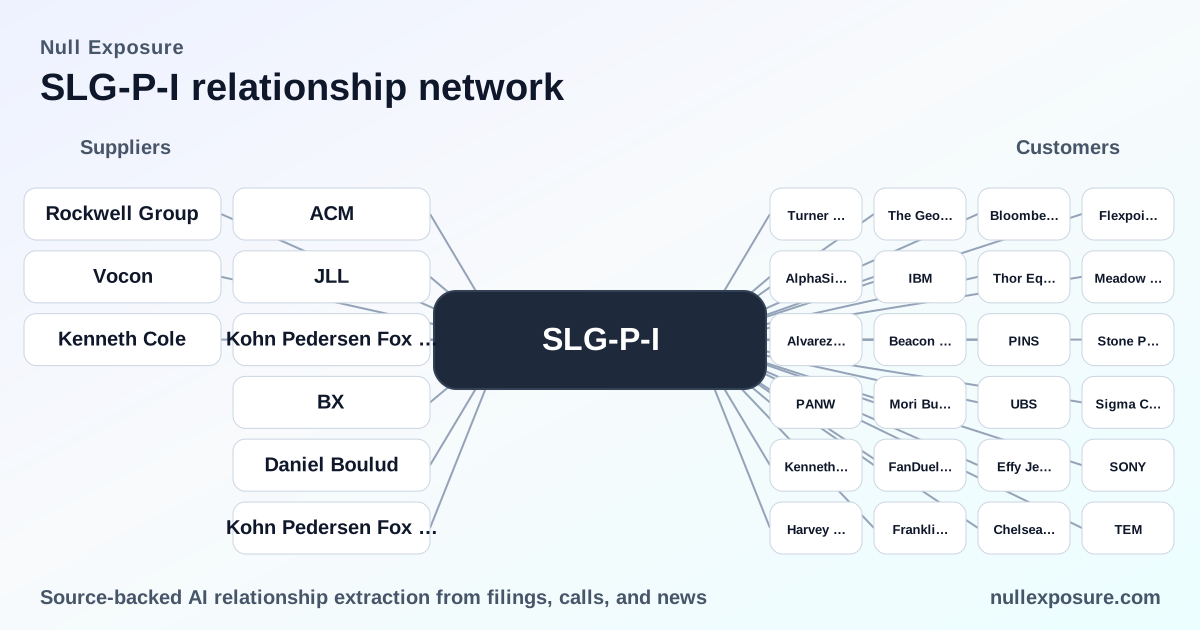
SLG-P-I: Tenant roster and customer relationships that drive the preferred’s risk profile
Investor thesis — SL Green Realty monetizes large-scale Manhattan office ownership through long-term commercial leases, asset-level redevelopment and selective fee-based services; its cashflow and credit profile are driven by lease renewals and expansions from major corporate tenants and the financial market’s appetite for stabilized, amenity-rich flagship buildings. One Madison, 245/280 Park and 1185 Avenue of the Americas are the operating levers that determine near-term cash yield and refinancing flexibility. For a concise view of how these tenant relationships translate into valuation risk, visit https://nullexposure.com/.
Market context and what matters for preferred-holders
- SL Green functions as Manhattan’s largest office landlord and increasingly as a third-party property operator; its earnings for preferred security holders hinge on occupancy stability, tenant credit quality, and the timing of asset-level refinancings.
- Recent activity shows multi-year lease commitments (10–12 years) and large expansions, a tenant mix shifting toward technology and financial services, and headline refinancings that reset interest-cost exposure (for example, the One Madison $1.65bn refinancing priced in 2026).
- Concentration risk is real: a handful of marquee properties and tenants account for material cash flow and financing covenants; that concentration is balanced by active asset rotation and selective third‑party management deals.
A few operating-model takeaways before we run the tenant list
- Contracting posture: SL Green pursues medium- to long-duration leases and expansion deals (10–12 year terms are explicit in recent announcements), supporting predictable base rent but exposing the REIT to cyclical leasing markets when big blocks reprice.
- Concentration and criticality: marquee tenants at One Madison, 245/280 Park Ave and 1185 Avenue of the Americas act as critical revenue anchors; those assets also serve as collateral in recent financings, increasing sponsor reliance on a small subset of properties.
- Business maturity and capabilities: SL Green combines core real‑estate ownership with fee-based services (Green Property Services) that expand addressable revenue and create optionality in asset disposition and third‑party management.
- There are no separate constraint records in the dataset; treat these signals as company-level characteristics synthesized from the reported leasing and financing activity.
Tenant and partner roster — concise relationship summaries (complete) Below are every customer/partner cited in the collected results, each with a one-to-two sentence plain-English summary and a short source citation.
- Alvarez & Marsal Holdings: Named as a major tenant at 100 Park Ave in recent coverage of that building reaching full occupancy. Source: New York Post (Feb 8, 2026).
- AlphaSights: Listed among major tenants at 100 Park Ave as SL Green filled the final blocks of that asset. Source: New York Post (Feb 8, 2026).
- Turner & Townsend: Signed a 12‑year lease for ~24,394 sq ft at 100 Park Ave, representing a long-term commitment to that flagship building. Source: New York Post (Feb 8, 2026).
- Palo Alto Networks (PANW): Included on One Madison’s rotated tenant roster as part of the asset’s 100% leased status tied to SL Green’s March 2026 refinancing. Source: GlobeNewswire / press release (Mar 25, 2026).
- Sigma Computing: Cited as a One Madison tenant in SL Green’s leasing and refinancing disclosures. Source: GlobeNewswire / press release (Mar 25, 2026).
- AlphaSights (duplicate entry noted in sources): Appears in reporting on 100 Park Ave occupancy; treated above. Source: New York Post (Feb 8, 2026).
- La Tête d’Or (Chef Daniel Boulud) / La Tête d’Or by Daniel: The Chef Daniel Boulud restaurant is a branded amenity at One Madison, part of SL Green’s tenant amenity strategy. Source: GlobeNewswire (Mar 25, 2026).
- Chelsea Piers Fitness: Anchors the retail program at One Madison with a large footprint (56,000 sq ft), providing amenity-driven tenant attraction. Source: GlobeNewswire (Mar 25, 2026).
- FanDuel Group: Named among One Madison tenants supporting the building’s full‑lease claim tied to the refinancing. Source: GlobeNewswire (Mar 25, 2026).
- Franklin Templeton Companies (BEN): Listed on One Madison’s tenant roster and referenced in refinancing and leasing announcements. Source: GlobeNewswire (Mar 25, 2026).
- Harvey AI: Executed a large expansion at One Madison — SL Green reported a 92,663 sq ft expansion that completed the leasing there in Q1 2026. Source: GlobeNewswire (Mar 9, 2026).
- IBM: Included among One Madison’s anchor tenants in multiple company leasing and refinancing releases. Source: GlobeNewswire (Mar 9 & Mar 25, 2026).
- Groombridge, Wu, Baughman & Stone LLP: Signed a new 10‑year lease covering 42,866 sq ft, a material full-floor commitment at 1185 Avenue of the Americas. Source: NYREJ (May 2026).
- Wells Fargo Clearing Services, Inc. (WFC): Executed an early renewal/expansion for 49,865 sq ft at 280 Park Avenue, reinforcing institutional tenancy at that address. Source: Yahoo Finance / press release (May 3, 2026).
- MTS Health Partners, LP: Agreed a new 10‑year lease covering 29,166 sq ft at 1185 Avenue of the Americas. Source: NYREJ (May 2026).
- UHY Advisors NY, Inc.: Signed a new 10‑year lease for 27,508 sq ft at 1185 Avenue of the Americas. Source: NYREJ (May 2026).
- Ares Management LLC (ARES): Executed an expansion lease for 38,358 sq ft at 245 Park Avenue, a notable institutional tenant expansion. Source: Yahoo Finance / earnings release (May 3, 2026).
- Cliffwater LLC: New lease for 37,987 sq ft at 245 Park Avenue, adding to that building’s concentration of investment management tenants. Source: Yahoo Finance (May 3, 2026).
- Elliot Management Corporation: Expanded for 39,850 sq ft at 280 Park Avenue, confirming continued demand from hedge/fund operators at Park Ave assets. Source: Yahoo Finance (May 3, 2026).
- Houlihan Lokey Inc. (HLI): Executed an expansion lease for 37,224 sq ft at 245 Park Avenue, reinforcing professional services demand. Source: Yahoo Finance (May 3, 2026).
- Moroccan Oil: Signed for 68,965 sq ft at 1185 Avenue of the Americas, a sizeable retail/office commitment in that asset. Source: Yahoo Finance (May 3, 2026).
- CFGI, LLC: Signed a new 5‑year lease covering 8,661 sq ft at 1185 Avenue of the Americas. Source: NYREJ (May 2026).
- Beacon Capital Partners: Appears in historical transactions as a buyer of a former SL Green asset (707 11th Ave sale referenced). Source: Commercial Observer (2021).
- Mori Building Co., Ltd.: Acquired a 5.0% interest in One Vanderbilt from SL Green, a strategic JV transaction reported by SL Green. Source: The Globe and Mail / press release (FY2025 disclosure).
- Kenneth Cole: After SL Green sold 707 11th Ave, Kenneth Cole leased office/showroom space from the new ownership; mentioned in coverage of that transaction. Source: Commercial Observer (2021).
- The Georgetown Company: Partner buyer with Beacon in the 707 11th Ave acquisition; included in historical transaction reporting. Source: Commercial Observer (2021).
- Paramount Global (PARA): Identified among SL Green’s largest tenants by annualized cash rent, a sign of legacy media tenancy. Source: Investing.com coverage of Q3 2025 (FY2025).
- UBS: Named as one of SL Green’s largest tenants by rent and appears across building-level leasing notes (multiple assets). Source: Investing.com / New York Post summaries (FY2025–FY2026).
- One Vanderbilt: Cited as an asset where percentage rent and tenant mix impacted same-store NOI in Q3; it is a material property for the platform. Source: Reuters via TradingView (Q3 2025 reporting).
- Effy Jewelry: Acquired 590 Fifth Ave from SL Green in a sale transaction, part of portfolio rotation. Source: Commercial Observer (2021).
- Thor Equities: Identified as a previous owner that defaulted on a mezzanine loan tied to a SL Green asset in historical reporting. Source: Commercial Observer (2021).
- Industrial & Commercial Bank of China (IDCBY): Listed among tenants at a Tower referenced in 1185 Avenue leasing coverage. Source: NYREJ (May 2026).
- Syska Hennessey: Named as a tenant in leasing announcements for Tower assets. Source: NYREJ (May 2026).
- Northeast Series of Lockton Companies: Included among tenant roster items in 1185 Avenue coverage. Source: NYREJ (May 2026).
- KEB Hana Bank New York Agency: Reported as a tenant at the Tower in leasing disclosures. Source: NYREJ (May 2026).
- Bloomberg LP: Executed a 191,207 sq ft expansion at 919 Third Ave in earlier SL Green leasing history. Source: ConnectCRE (historic transaction reporting).
- Flexpoint Ford: Signed a 19,522 sq ft lease at One Vanderbilt historically, part of earlier leasing wins. Source: ConnectCRE (historic reporting).
- Meadow Partners: Acquired 110 E. 42nd St office & garage condominiums from SL Green in a sale for a separately managed account. Source: ConnectCRE (historic reporting).
- Stone Point Capital: Executed a 6,554 sq ft expansion at One Vanderbilt in historical leasing updates. Source: ConnectCRE (historic reporting).
- HNA (HNATD): Reported as signing leases at 245 Park Avenue in earlier periods (historic context). Source: GuruFocus summary / FY2025 note.
- Hyundai Motor Group: Appointed SL Green’s Green Property Services to manage and launch leasing at 15 Laight Street, signaling SL Green’s fee-based management capability. Source: SimplyWall.St summary (FY2026).
- Pinterest (PINS): Identified as one of the largest tenants at 11 Madison in prior coverage. Source: New York Post (Aug 17, 2025 / FY2025).
- SONY Music (SONY): Listed among the largest tenants at certain Midtown assets in earlier news. Source: New York Post (Aug 17, 2025).
- Tempus AI (TEM): Reported lease for 39,565 sq ft at 11 Madison Avenue, cited as an indicator of Midtown South leasing velocity. Source: New York Post (Aug 17, 2025).
- PINS / TEM (ticker duplicates): These entries reflect the same corporate tenants above and are covered in their respective bullets. Source: New York Post (Aug 17, 2025).
Strategic implications for investors
- Credit sensitivity: The preferred’s protection is tied to SL Green’s ability to keep marquee assets leased and to execute refinancings on acceptable terms — the One Madison $1.65bn refinancing priced at 5.81% (Mar 2026) is illustrative of prevailing funding costs. Source: Bitget / press release (Mar 25, 2026).
- Tenant mix improvement: A shift toward technology and AI tenants (Harvey AI, Palo Alto Networks, Sigma, FanDuel) increases rent rollover risk but strengthens credit quality if those tenants deliver on occupancy and payment. Source: GlobeNewswire & FinancialContent (Mar 2026 / Apr 2026).
- Operational optionality: Fee-based management (e.g., Hyundai assignment for 15 Laight) provides secondary revenue and reduces absolute exposure to leasing cycles. Source: SimplyWall.St (FY2026).
If you want a compact data-driven briefing formatted for portfolio risk committees, I can convert the list above into a one‑page exposure map keyed to square footage, lease expiry bands and expected refinancing maturities. Learn more at https://nullexposure.com/.