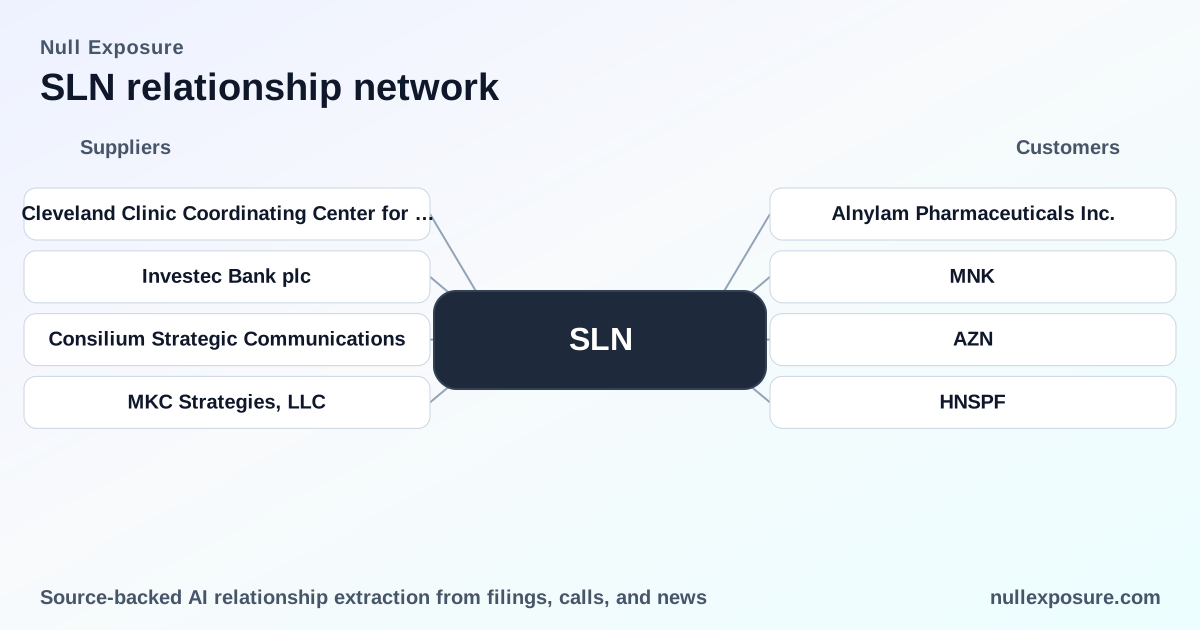
SLN partner map: who pays Silence Therapeutics, how meaningful the cash is, and what changed
Silence Therapeutics (Nasdaq: SLN) operates as a developer of siRNA-based therapeutics and monetizes primarily through out‑licensing, upfront and milestone payments, and royalties on partner sales, supplemented by collaboration‑service revenue. Investors should treat SLN as a partner‑driven biotech: short‑term cash flow and valuation are heavily dependent on the cadence of partner milestones and the timing of license terminations or completions. For a snapshot of the full partner footprint, see the company’s public disclosures and press filings.
Discover more about our partner‑level intelligence at https://nullexposure.com/.
Why partner relationships determine near‑term valuation
Silence’s balance sheet and operating cadence do not come from product sales; they come from license deals, milestone receipts and royalties. That structure produces volatile revenue — periods of meaningful cash followed by lulls when collaborations conclude. For investors, the key variables are (1) the number of active, global licenses; (2) how many programs are in clinical development under partner stewardship; and (3) whether those partners have exercised options or elected to terminate development. The relationship map below summarizes every partner referenced in Silence’s customer‑scope disclosures.
The partner roster: concise, source‑backed summaries
Alnylam Pharmaceuticals — small royalty inflow in FY2024
Silence recorded $0.1 million of royalty income from Alnylam in FY2024, indicating a minor royalties stream tied to partner product sales. This figure is disclosed in Silence’s FY2024 10‑K. (Source: Silence 2024 10‑K, royalty income disclosure.)
Mallinckrodt plc (MNK) — licensed complement asset; development halted after Phase 1
Mallinckrodt obtained an exclusive worldwide license to Silence’s complement asset SLN500 and options on additional preclinical assets under the 2019 collaboration announcement; Mallinckrodt later informed Silence it would not pursue further development of SLN501 following Phase 1 completion, which concluded Mallinckrodt’s contractual commitments. (Sources: PR Newswire collaboration announcement, 2019; Silence filings noting Mallinckrodt’s notification in March 2024.)
AstraZeneca (AZN) — long‑standing strategic collaborator; clinical progress under license
AstraZeneca holds rights under a Research Collaboration, Option and License Agreement and has advanced multiple GOLD‑platform siRNAs; Silence reported its third siRNA from GOLD entered the clinic in 2024 under the AstraZeneca collaboration, and later disclosures attribute fewer AstraZeneca milestones to revenue declines in FY2026. (Sources: Silence 2024 Q4 earnings call; TradingView summary noting reduced AstraZeneca milestones affecting FY2026 revenue.)
Hansoh / Hansoh Pharma (HNSPF) — upfront cash and milestone potential; collaboration concluded with catch‑up revenue
Hansoh paid a $16 million upfront in 2021 and left Silence with potential for up to $1.3 billion in milestones plus tiered royalties, according to the R&D‑day announcement; Hansoh notified Silence in December 2024 that it would not pursue further development, and Silence recognized $24.6 million in 2024 related to the Hansoh Collaboration as a cumulative catch‑up when obligations concluded. Subsequent FY2026 commentary flagged that completion of Hansoh activity was a driver of weaker revenue. (Sources: GlobeNewswire R&D Day release, October 2021; Silence filings and FY2024 revenue note; TradingView FY2026 summary.)
What the disclosures say about how SLN does business (constraints and implications)
The company’s partner disclosures create a clear operating profile investors should internalize:
-
Licensing is core to the contract mix. Silence outsources development and commercial execution through option and license agreements; AstraZeneca is explicitly referenced in the filing describing a Research Collaboration, Option and License Agreement, reflecting a licensing posture where Silence supplies IP and early R&D tools while partners fund later stages. (Company filing language on the AstraZeneca agreement.)
-
Global rights are the standard grant pattern. The company’s agreements referenced in filings and press releases show exclusive worldwide licenses or regionally carved options across partners, which indicates Silence structures deals for maximum commercial reach via partners rather than regional co‑development.
-
Silence operates as the seller of IP/ services to partners. The firm recognizes revenue from upfronts, milestones and services as those obligations are performed; the filings name Mallinckrodt, AstraZeneca and Hansoh as primary sources of collaboration‑derived revenue.
-
Some collaborations have reached formal completion or termination. Mallinckrodt and Hansoh both notified Silence that they would not pursue further development, and those communications represent the contractual conclusion of those collaborations; that dynamic produces one‑time catch‑ups and leaves Silence holding retained targets or rights. (Silence disclosures describing Mallinckrodt’s March 2024 notice and Hansoh’s December 2024 notice.)
-
Milestone receipts can be material in the $10m–$100m band. The company disclosed a $24.6 million recognition in 2024 tied to the Hansoh collaboration, demonstrating that single‑partner catch‑up events can be sizable relative to Silence’s reported revenue base.
-
Revenue is services‑driven when obligations are active and otherwise intermittent. The company explicitly recognizes upfront and milestone payments “as the services are provided,” which makes revenue timing dependent on completion of contract milestones and deliverables.
These constraints combine into a predictable investor lens: SLN is a capital‑efficient IP seller when milestones arrive, but revenue volatility is structural, and partnership lifecycle events (license exercises, opt‑outs, completion) meaningfully affect near‑term cash flow.
Investment implications — what to watch and what to worry about
-
Positive: Strategic partners with global licenses (AstraZeneca, Mallinckrodt historically, Hansoh previously) validate the GOLD platform and create upside through potential milestones and tiered royalties. Large upfront/milestone events can rapidly change the cash position.
-
Negative: Revenue concentration and milestone timing risk are the central hazards. Periods between milestones are predictable lulls; the FY2026 commentary explicitly ties revenue decline to the end of Hansoh activity and fewer AstraZeneca milestones.
-
Catalysts to monitor: clinical readouts or option exercises from AstraZeneca programs, any new licensing deals (especially with global scope), and updates on retained targets following the Hansoh conclusion.
-
Operational posture: expect Silence to continue pursuing licensing and option deals rather than building a commercial organization, making partner selection and contract economics the primary drivers of valuation.
For a partner‑level tracking view and to monitor future notices and milestone events, see ongoing coverage at https://nullexposure.com/.
Bottom line
Silence’s business model is partner‑centric IP monetization: the company sells rights and R&D services to larger biopharma players, harvesting upfronts, milestones and royalties. That model produces episodic but sometimes material cash inflows (e.g., the $24.6 million Hansoh recognition), balanced against periods of revenue drought when collaborations conclude. Investors should value SLN largely as a pipeline‑backed licensing platform where partner decisions, global license scopes, and milestone timing determine short‑term liquidity and long‑term optionality.