Sellas Life Sciences (SLS): Commercial Partnerships Define Near-Term Value
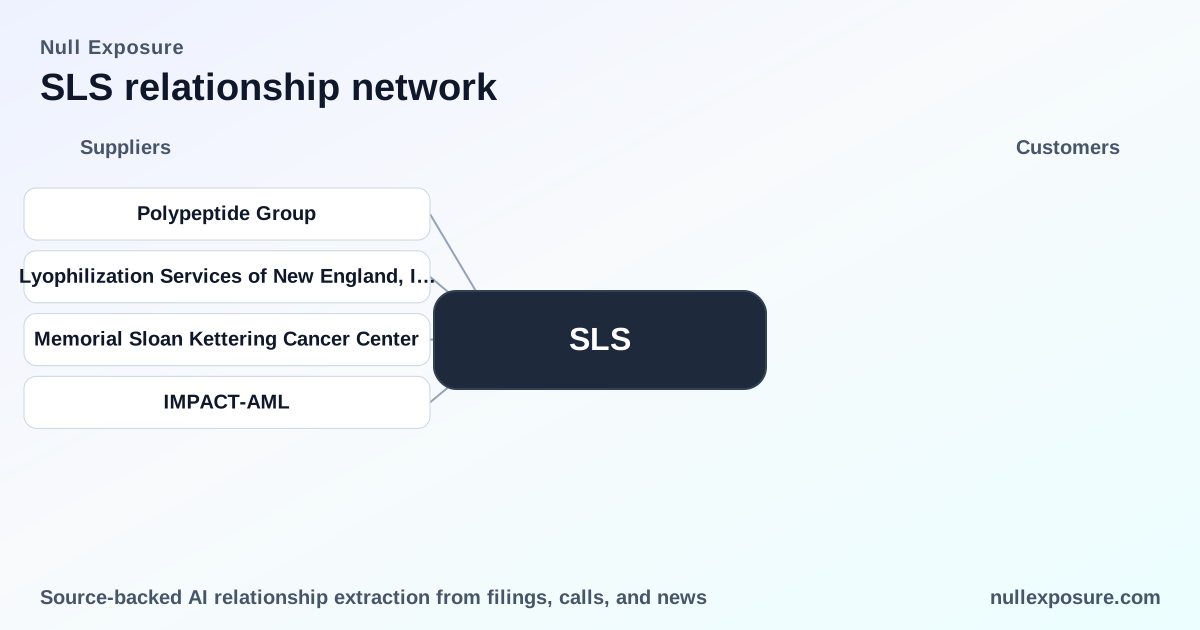
Sellas Life Sciences is an early commercial-stage biopharma that develops cancer immunotherapies and monetizes primarily through out‑licensing, upfront payments, and milestone-driven receipts rather than product sales today. The firm’s commercial exposure is concentrated in contractual licensing arrangements that transfer regional commercialization rights to third parties while retaining upside via milestones and royalties, a posture that drives cash inflows now and optionality on future approvals. For a concise map of counterparty relationships and contractual posture, see https://nullexposure.com/.
Two partnership moves that shape the company’s commercial runway
Sellas disclosed two explicit licensing relationships in its FY2026 disclosures that underpin its near-term cash generation strategy and geographic commercialization plan.
3D Medicines — Greater China license, upfront cash and milestone upside
Sellas granted 3D Medicines a sublicensable, royalty-bearing license for GPS and heptavalent GPS product candidates in mainland China, Hong Kong, Macau and Taiwan, and received $10.5 million in upfront cash with up to $191.5 million in development and sales milestones. According to TradingView’s summary of the company’s FY2026 filing (reported May 3, 2026), the 3D Medicines agreement is an exclusive regional license that shifts development and commercialization responsibility in Greater China while providing Sellas significant contingent upside.
Source: TradingView coverage of Sellas FY2026 disclosures (May 3, 2026) — https://www.tradingview.com/news/tradingview:705094c87db94:0-sellas-life-sciences-2025-10-k-revenue-0-0m-eps-0-25/
GenFleet — Ex‑Greater China license for SLS009
Sellas granted GenFleet rights for SLS009 outside Greater China, effectively parceling global rights by geography so that different partners drive commercialization in different markets. TradingView’s FY2026 summary (May 3, 2026) lists the GenFleet license alongside the 3D Medicines deal, positioning GenFleet as the commercialization counterparty for territories outside the Greater China footprint.
Source: TradingView coverage of Sellas FY2026 disclosures (May 3, 2026) — https://www.tradingview.com/news/tradingview:705094c87db94:0-sellas-life-sciences-2025-10-k-revenue-0-0m-eps-0-25/
How these relationships reveal Sellas’s operating model and commercial constraints
The disclosed agreements are not one-off transactions; they reflect a deliberate operating model and a set of constraints investors should incorporate into any valuation or operational assessment.
-
Contracting posture — out‑licensing as primary commercialization strategy. The company consistently uses exclusive, sublicensable licenses to transfer regional development, manufacturing and commercial responsibilities to partners in exchange for upfront fees and milestone payments. The 3D Medicines Agreement is an explicit example of that model (December 2020 agreement text cited in company disclosures).
-
Concentration and geographic partitioning. Sellas fragments commercialization by geography: Greater China is handled by 3D Medicines, while GenFleet holds rights outside that region. This reduces Sellas’s direct commercialization burden but concentrates clinical and commercial execution risk in third parties.
-
Revenue profile and maturity — pre‑commercial, milestone‑dependent cash flow. Company filings show RevenueTTM = $0 with a small GrossProfitTTM ($900,000) and negative EPS (DilutedEPSTTM = -0.25). These figures signal a business that relies on licensing receipts and contingent milestones for cash rather than recurring product sales.
-
Regulatory and public‑payor exposure as a company‑level risk. Sellas’s disclosures reference federal health care statutes and payor dynamics, signaling government and payer-related regulatory risk and the need to demonstrate therapeutic value for future uptake and reimbursement.
These constraints combine to produce a capital-light, partnership-driven commercial model: rapid cash through upfront deals, deferred upside through milestones/royalties, and outsized dependence on partners to execute development and market entry.
What each relationship implies for risk and upside
-
3D Medicines: This agreement delivers immediate balance‑sheet support ($10.5M upfront) and sizeable contingent upside ($191.5M in milestones). Because Sellas acts as licensor for Greater China, execution risk shifts to 3D Medicines but milestone realization is binary and material. Source: TradingView summary of FY2026 filing (May 3, 2026).
-
GenFleet: By licensing SLS009 outside Greater China to GenFleet, Sellas positions itself to capture non‑China market value via partner payments and royalties while limiting direct commercial exposure; the upside depends on GenFleet’s ability to develop and commercialize SLS009 in those territories. Source: TradingView summary of FY2026 filing (May 3, 2026).
Valuation and investor implications
Sellas trades at a premium relative to its current revenue base, reflecting investor expectations about successful partner execution and milestone realization:
- MarketCapitalization: $926.4M
- RevenueTTM: $0; PriceToSalesRatioTTM: 31.81
- PriceToBookRatio: 12.84
- Beta: 2.244; 52‑week range: $1.36–$6.14
These numbers underscore a common biotech dynamic: valuation is forward‑looking and conditional on partnership performance and clinical/regulatory milestones. The balance between current cash inflows (upfront fees) and the probability-weighted value of future milestones determines realized shareholder returns. Investors should treat the company as a milestone‑driven optionality play rather than a revenue-generating commercial enterprise today.
Key monitoring items for investors
- Timing and size of milestone receipts from the 3D Medicines and GenFleet arrangements, and any new licensing currency that supplements cash flow.
- Partner progress on clinical development, manufacturing scale-up and regional regulatory filings that trigger milestone events.
- Any changes to licensing scope or restructuring of regional rights that would affect royalty pools or upside distribution.
- Broader payor and government interactions that could alter reimbursement dynamics and hospital/provider adoption once approvals occur.
For a centralized view of Sellas’s counterparty map and how these agreements fit into the company’s broader commercial footprint, visit https://nullexposure.com/.
Bottom line
Sellas has deliberately monetized regional development risk through licensing deals that convert programmatic clinical progress into immediate cash and contingent upside. The 3D Medicines and GenFleet agreements are emblematic: they generate near-term liquidity while shifting execution and market risk to partners. Investor returns will be determined by partner execution on development and regulatory milestones and by Sellas’s ability to continue sourcing geographically complementary licenses that convert science into payable events. Monitor milestone realizations and partner disclosures as the primary value drivers.