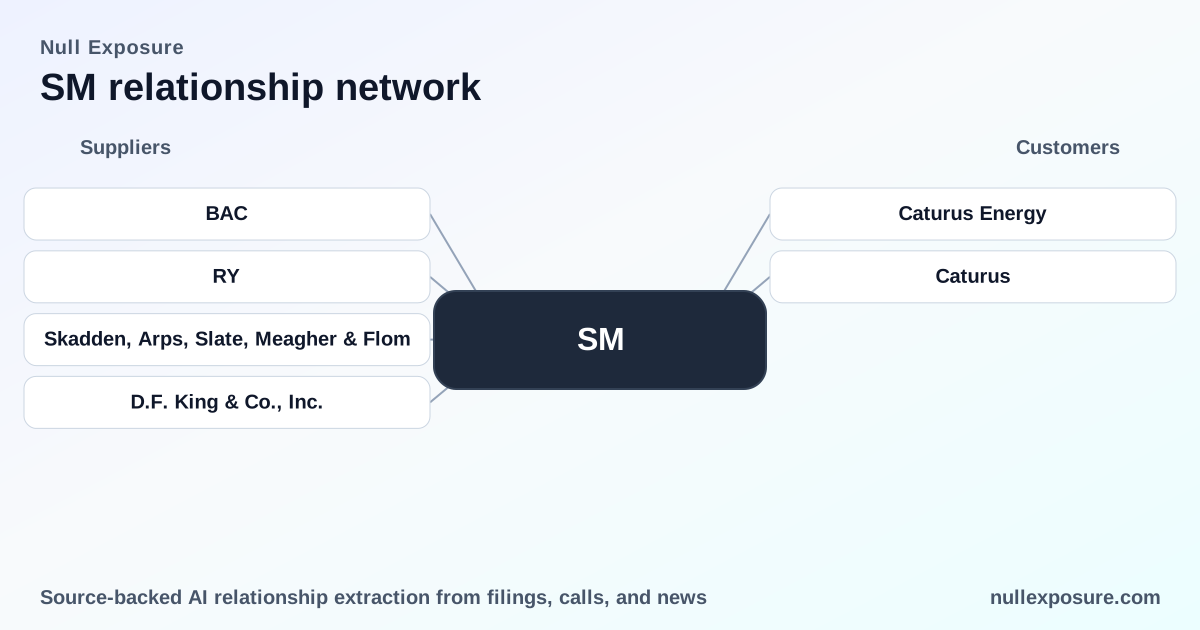
SM Energy: Portfolio pruning and the buyer that just paid $950 million
SM Energy is an independent E&P that generates cash by producing and selling oil, natural gas, and NGLs from core Texas basins and occasionally crystallizes value by selling discrete asset packages. The company monetizes primarily at the wellhead—selling production into multiple local purchasers—and materially reinforced its balance sheet in FY2026 by divesting the Galvan Ranch assets in South Texas for $950 million. For investors, the transaction reduces geographic exposure while delivering immediate liquidity that supports capital allocation and debt metrics. For deeper customer relationship analytics, visit https://nullexposure.com/.
Why the Galvan Ranch deal matters to investors
SM’s sale of the Galvan Ranch package to Caturus is a clear tactical move: convert a concentrated southern Maverick Basin position into cash, tighten the portfolio, and reduce near-term capital intensity. The buyer paid $950 million in cash, a definitive valuation point for that block of production and acreage. Market reaction and analyst updates followed quickly, signaling that the transaction meaningfully changes SM’s balance sheet and investor outlook in 2026. Multiple outlets covered the deal from announcement to completion; the consistent image is a completed divestiture that scales Caturus’s Gulf Coast footprint and de-risks SM through proceeds.
Source-by-source trace of the transaction coverage
-
SM disclosed that it sold some South Texas assets to Caturus Energy for $950 million, reported by Finviz on March 10, 2026. The item was cited when analysts revised price targets after the divestiture. (Finviz, March 2026) https://finviz.com/news/324665/stephens-raised-target-price-on-sm-energy-sm-to-49-following-divesture-of-some-south-texas-assets
-
TradingView captured the Purchase and Sale Agreement detail, noting roughly 61,000 net acres in Webb County transferred for $950 million in cash, subject to customary adjustments. (TradingView, March 2026) https://www.tradingview.com/news/tradingview:9f655d4b65176:0-sm-energy-to-sell-webb-county-maverick-basin-assets-to-caturus-for-950-million/
-
Offshore-Technology reported the divestiture as an all-cash $950 million deal for Galvan Ranch assets, framing it as a strategic south Texas disposition. (Offshore-Technology, March 2026) https://www.offshore-technology.com/news/sm-energy-divest-galvan-ranch-assets-caturus/
-
CityBiz noted that Caturus completed the acquisition, adding production and acreage in South Texas and scaling its Gulf Coast natural gas position. (CityBiz, May 2026) https://www.citybiz.co/article/840439/caturus-expands-gulf-coast-position-with-galvan-ranch-acquisition-from-sm-energy/
-
MarketScreener summarized the transaction in a short note, reiterating the $950 million sale of South Texas assets to Caturus. (MarketScreener, March 2026) https://www.marketscreener.com/news/sm-energy-to-sell-some-texas-assets-for-950-million-ce7e5ddedf8ff223
-
JPT (Journal of Petroleum Technology) documented the companies’ announcement on February 18 that Caturus would acquire SM’s Galvan Ranch assets for $950 million. (JPT/SPE, February 2026) https://jpt.spe.org/sm-energy-to-sell-south-texas-assets-to-caturus-for-950-million
-
Reuters, syndicated via TradingView, ran a definitive-agreement story confirming Caturus’s intent to acquire the Galvan Ranch assets from SM. (Reuters via TradingView, February 2026) https://www.tradingview.com/news/reuters.com,2026-02-20:newsml_ZawHDxs9:0-caturus-expands-gulf-coast-gas-platform-with-sm-galvan-ranch-acquisition/
-
An additional CityBiz piece captured the same definitive agreement language and noted the strategic rationale from Caturus’s perspective. (CityBiz, March 2026) https://www.citybiz.co/article/808018/caturus-to-acquire-sm-energys-galvan-ranch-assets-in-south-texas/
-
TIKR reported the market reaction—SM stock jumped roughly 9% on the $950 million divestiture—and framed analyst commentary that the transaction created a path to higher price targets. (TIKR, March 2026) https://tikr.com/blog/sm-energy-stock-surges-9-on-950m-divestiture-why-analysts-see-a-path-to-a-30-target
-
MarketScreener later referenced RBC Capital’s note that Caturus acquired certain South Texas assets of SM, a point used in RBC’s revised target and rating commentary. (MarketScreener / RBC Capital, May 2026) https://www.marketscreener.com/news/rbc-capital-adjusts-sm-energy-price-target-to-40-from-29-maintains-sector-perform-rating-ce7e50dad089f02d
-
A final Marketscreener/summary item reiterated the sale headlines and served as additional distribution of the $950 million figure across equity research commentary. (MarketScreener, March 2026) https://www.marketscreener.com/news/sm-energy-to-sell-some-texas-assets-for-950-million-ce7e5ddedf8ff223
Operating model constraints and what they imply for customers and counterparties
SM’s filings and public statements provide clear company-level signals about how its commercial relationships function and the attendant risks:
-
Geographic concentration: All operations and revenue are U.S.-based—principally the Midland Basin, South Texas, and Uinta Basin—so purchaser sets and midstream/marketing options are regional and well-established. The company explicitly derives all revenue from U.S. production, which simplifies regulatory exposure but concentrates commodity and counterparty risk within U.S. markets.
-
Contracting posture and role: SM operates as a production seller, delivering oil, gas, and NGLs at or near the wellhead where control transfers to purchasers. This near-wellhead monetization model means counterparty exposure is typically to buyers in local hubs rather than structured long-term offtakes.
-
Concentration of revenue: The company discloses that major customers can account for 10% or more of oil, gas, and NGL revenue in a given year, indicating measurable counterparty concentration risk that investors should monitor as part of credit and price risk assessment.
-
Operational maturity and segment focus: SM reports a single E&P segment, reflecting a focused upstream operator with mature disclosure practices. The company also reported no material unsatisfied performance obligations as of December 31, 2024, signaling execution discipline on contracted obligations.
These constraints collectively paint a picture of a capital-market-driven E&P: monetization occurs at point-of-production, customer options are regionally concentrated, and asset sales are an available lever to reshape balance sheet and operational exposure.
For an organized view of customers and counterparties across transactions and filings, see https://nullexposure.com/ (detailed analytics and source rollups).
Investment implications and what to watch next
-
Balance sheet and allocation: The $950 million proceeds materially de-risk leverage and free capacity for buybacks, dividends, or targeted reinvestment; watch SM’s use of proceeds and updated leverage targets in subsequent filings.
-
Production profile and realized pricing: Removing a south Texas package alters SM’s production mix; track quarterly production and realized price per boe to see whether disposal reduced gas exposure or changed revenue volatility.
-
Counterparty concentration: With major customers capable of representing 10%+ of revenue, investors should monitor customer lists disclosed in annual reports for shifts after the divestiture.
-
Future portfolio activity: The transaction demonstrates SM’s willingness to crystallize value via sales; anticipate further disposals or bolt-on acquisitions as management optimizes the asset base.
Bold, clear action from SM in FY2026 improved liquidity and clarified the company’s strategic posture: keep attention on capital allocation, production mix changes, and any revisions to counterparty concentration disclosures.
For continued tracking of SM’s customer relationships and deal-level sourcing, visit https://nullexposure.com/.