Semler Scientific (SMLR): What the Strive Transactions Reveal About Customer and Corporate Relationships
Semler Scientific operates as a Nasdaq-listed medical technology company that historically monetized through the sale and support of diagnostic devices and related services, while also carrying a material corporate treasury position in Bitcoin prior to its change in ownership. The company’s strategic value to acquirers has been driven as much by its balance-sheet crypto holdings as by its device business, and recent transaction activity has recast counterparty exposure and investor attention toward Semler’s customer and capital relationships.
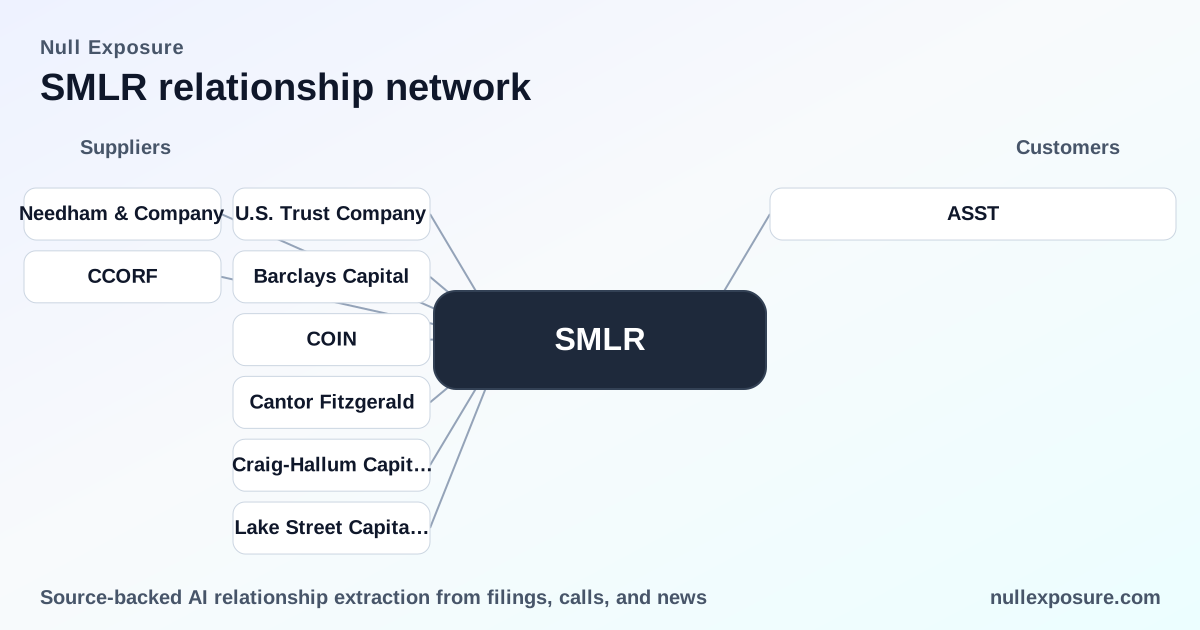
For investors and operators evaluating SMLR customer linkages, the central conclusion is simple: the most consequential relationship on record in FY2026 is with Strive Asset Management (ASST), which completed an acquisition that removed Semler’s independent public-company profile and its Bitcoin treasury from the market. For more background and ongoing coverage, see https://nullexposure.com/.
What changed in FY2026: a corporate transaction that redefines counterparties
The fiscal and news flow in early 2026 centers on an acquisition where Strive Asset Management (ticker ASST) agreed to and finalized a deal for Semler Scientific. The transaction altered counterparty dynamics: an active asset manager with a public market presence took control, bringing a new contracting posture, capital allocation focus, and potential for re-pricing of Semler’s software, service agreements, and installed-base economics. Investors should treat the Strive relationship as both an acquirer event and the primary strategic counterparty for SMLR’s remaining commercial footprint.
According to public reports, the acquisition closed after shareholder approval and included substantial portfolio shifts related to Semler’s Bitcoin holdings. For continued company tracking and periodic updates, visit https://nullexposure.com/.
How this affects Semler’s operating and business model characteristics
- Contracting posture: With Semler now integrated under Strive ownership, contracting posture shifts from an independent commercial vendor to a subsidiary posture where commercial terms and renewal strategies will be driven by parent priorities rather than standalone product economics.
- Concentration: The acquisition increases concentration risk at the corporate level because a single investor/owner (Strive) now controls business direction and capital allocation; commercial customer concentration for device sales is unchanged in disclosed sources but overall counterparty concentration rose due to control consolidation.
- Criticality: Semler’s installed base and recurring service revenue retain operational criticality for end users; however, corporate criticality shifted from being an independent supplier to being a holding within an asset manager’s portfolio.
- Maturity: The presence of an acquirer signals a transition stage — from public company to owned asset — which typically precipitates re-evaluation of product roadmaps and service contracts under centralized governance.
No explicit contract excerpts or supplier-side constraints were provided in the available records; that absence is itself a company-level signal indicating limited public visibility into post-acquisition commercial terms and customer-service commitments.
Every relationship disclosed in the records
ASST (inferred symbol: ASST)
Investors positioned ahead of a shareholder vote on Strive’s proposed all-stock acquisition of Semler, reflecting market sensitivity to the deal’s implications for Semler’s capital structure and treasury assets. This positioning was reported in a March 10, 2026 news piece covering the pre-vote market reaction. (Tech news report, March 10, 2026)
Strive Asset Management (as named in news reports)
Strive Asset Management secured shareholder approval and finalized its acquisition of Semler Scientific, converting Semler from a standalone Nasdaq-listed medical technology company into an asset under Strive’s control and taking on Semler’s Bitcoin holdings as part of the transaction. Reporting on the successful shareholder vote and acquisition was published in May 2026 and March 2026 press accounts. (Bitget report, May 3, 2026; TS2.Tech, March 10, 2026)
Strive (alternate naming in market outlets)
Strive completed the deal and executed balance-sheet actions that included purchasing or retaining hundreds of Bitcoins and materially reducing Semler’s prior debt profile as part of the merger implementation on or around January 13, 2026. Market briefings and trading commentary documented the close and related treasury movements. (TradingView / Cointelegraph summary, March 10, 2026; transaction close dated Jan. 13, 2026 in press coverage)
Key takeaways for investors and operators
- Corporate control is the central risk and opportunity. Strive’s acquisition transforms Semler’s strategic trajectory; investors should reassess counterparty and cash-flow forecasts under parent-level direction rather than as an independent SMLR issuer.
- Treasury mechanics drove transaction value. Public reporting identifies Semler’s Bitcoin holdings as a material reason for Strive’s interest; that asset reallocation reduces the public-market availability of Semler’s treasury and re-risks price exposure to bitcoin moves under a new holder.
- Visibility on commercial terms is limited. There are no constraint excerpts or contract-level disclosures in the available records; that opacity elevates governance and renegotiation risk for legacy customers, suppliers, and service partners.
- Liquidity and leverage profile likely changed. Press accounts note debt reduction activity in the deal execution; capital structure shifts will influence product investment, warranty reserves, and service execution going forward.
A concise list of practical monitoring items for investors:
- Track newly filed regulatory disclosures from Strive regarding subsidiary operations and commercial strategy.
- Monitor renewal notices and warranty service patterns for signs of shifting support economics.
- Watch secondary reporting on Bitcoin disposition or retention to gauge balance-sheet exposure and related market signaling.
Closing perspective
The FY2026 news cycle repositions Semler Scientific from an independent med-tech company with an unusual Bitcoin treasury to an asset under Strive Asset Management control. For anyone studying SMLR’s customer and corporate relationships, the Strive acquisition is the dominant fact — it rewrites counterparty risk, concentrates strategic control, and reduces public visibility into contracts and recurring revenue dynamics. For ongoing monitoring, analysis, and alerts on SMLR and related counterparties, visit https://nullexposure.com/.