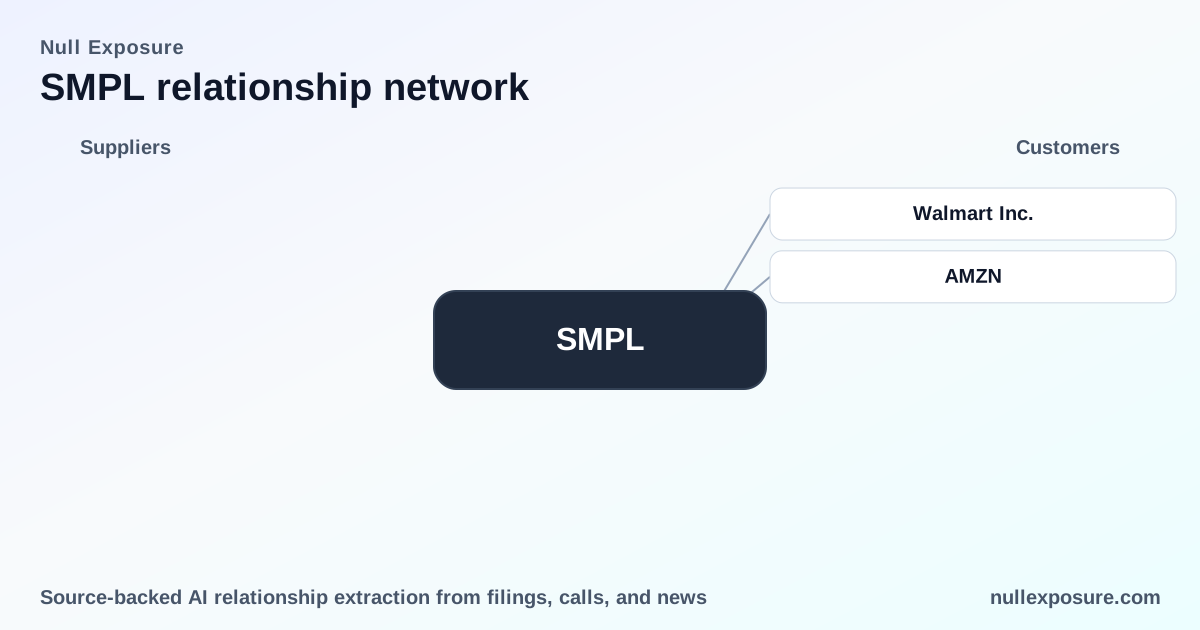
SMPL: Customer Concentration and Retail Channel Dynamics — Walmart, Amazon, and What Investors Should Know
Simply Good Foods (SMPL) is a North American consumer packaged foods company that monetizes primarily through wholesale relationships with mass and club retailers and through direct-to-consumer e-commerce. The company sells protein bars, ready-to-drink shakes and other branded “better-for-you” snacks under Quest, Atkins and OWYN, generating the bulk of revenue through major grocery, club and mass merchandise accounts while keeping online sales as a strategic complement. For investors, the cash flow profile and negotiating leverage are driven by a small number of large retail customers that account for a material share of consolidated sales. Explore underlying customer exposure at NullExposure.
Business model in plain language: wholesale-first, retailer-dependent monetization
Simply Good Foods operates as a branded CPG wholesaler with a hybrid retail + DTC distribution mix. Revenue recognition is dominated by wholesale shipments to major retailers — the company relies on large enterprise buyers for consistent velocity and scale. That structure produces positive operating leverage when core products deliver repeat purchase rates, but it also concentrates counterparty and credit risk.
Key operating characteristics drawn from the company filing:
- Contracting posture is short-term and “at will.” The company maintains contracts that do not require minimum purchase commitments from retailers, creating renegotiation and volume risk tied to retailer assortment decisions (FY2025 Form 10‑K).
- Material concentration across a few retailers. Credit risk and sales concentration are concentrated in two customers that each represented more than 10% of sales during the latest fiscal year (FY2025 10‑K).
- Geographic footprint is heavily North America‑centric. International sales are small (about 2.0% of total net sales for the 52 weeks ended Aug 30, 2025), with top international markets in Australia and New Zealand (FY2025 10‑K).
- Core product portfolio drives volumes. Protein bars, RTD shakes and protein snacks are the core segment that flows through these retail channels, defining the company’s SKU and promotional strategy (FY2025 10‑K).
These points are not academic: they define negotiating dynamics, working capital cycles, and the vulnerability of margins to retailer promotions and slotting economics.
The anchor retail relationships you must model
Walmart Inc.
Walmart is the single largest retail customer for SMPL, accounting for approximately 31% of consolidated sales in fiscal 2025, split roughly 24% through mass retail and 7% through Sam’s Club and e‑commerce channels. According to the company's FY2025 Form 10‑K, Walmart represents the largest concentration of retail demand and therefore the primary source of both scale and counterparty risk (FY2025 10‑K).
Amazon (AMZN)
Amazon accounted for approximately 18% of consolidated sales in fiscal 2025, which positions it as the company’s second largest retail channel and an important e‑commerce distribution partner for branded SKUs (FY2025 10‑K).
AMZN (duplicate filing entry)
The filing contains a repeated reference identifying Amazon (AMZN) as the next largest retailer representing approximately 18% of consolidated sales in fiscal 2025, underscoring that the company treats Amazon both as a significant direct e‑commerce channel and a major wholesale buyer (FY2025 10‑K).
(Each of the above relationship entries is documented in the company’s FY2025 Form 10‑K, filed Aug 30, 2025.)
Why these relationships matter for valuation and risk
The Walmart and Amazon relationships are not just distribution agreements; they are the core drivers of SMPL’s top line and working capital dynamics. When two retailers represent roughly half the company’s revenue, bargaining power shifts to the buyers — that translates into pressure on pricing, promotional allowances, and cost-to-serve that compresses gross margins in promotional cycles. The company’s at‑will contracting posture amplifies this: retailers control shelf space and order cadence without guaranteed minimums from SMPL (FY2025 10‑K).
From a valuation perspective:
- Upside drivers include successful new product rollouts accepted by Walmart/Amazon, improved mix toward higher‑margin RTD products, and DTC growth that reduces reliance on large buyers.
- Downside risks include intensified promotional pricing, private label encroachment, slotting changes at Walmart or Amazon, and concentrated credit exposure if either buyer delays payments or reduces orders.
The 10‑K specifically flags credit concentration and the operational reality of wide retailer variety while still noting that a substantial majority of sales are generated from a limited number of retailers, signaling persistent concentration risk (FY2025 10‑K).
Operational implications for operators and investor due diligence
Operators, category managers and investors should monitor three actionable items:
- Retailer mix and order cadence: track weekly and monthly shipments to Walmart and Amazon; any deterioration is an early signal of assortment pressure.
- Promotional intensity and allowance trends: higher trade spend or slotting fees to retain shelf placement will erode gross margins faster than topline growth can compensate.
- International expansion traction: international sales are currently immaterial (≈2.0% of sales), so material upside requires proof of scalable acceptance beyond Australia/New Zealand (FY2025 10‑K).
Bottom line — concentrated scale is a double‑edged sword
Simply Good Foods has a clear go‑to‑market: branded, better‑for‑you snack and RTD offerings sold at scale through Walmart and Amazon, supplemented by e‑commerce and club channels. That model affords rapid distribution and shelf density, but it also concentrates leverage in a small set of large retailers and leaves SMPL exposed to at‑will contract dynamics and promotional pressure (FY2025 10‑K). For investors and operators, the investment thesis should hinge on whether the company can convert scale into durable margin through innovation and direct channels, or whether buyer negotiating power will compress returns.
If you want a structured view of SMPL’s counterparty exposure and how it compares across peers, NullExposure curates the relationship signals that matter. Visit NullExposure for deeper customer‑level intel: https://nullexposure.com/
Key takeaway: Walmart and Amazon drive the revenue engine; their decisions determine near‑term growth trajectory and margin elasticity — model accordingly.