Similarweb (SMWB): Distribution-first data company embedding into AI agents and financial terminals
Similarweb operates a subscription and enterprise licensing business that monetizes AI-driven web-traffic and digital marketing intelligence through product subscriptions, data licensing, and partner integrations. The company sells software to marketing and competitive-intelligence teams and sells raw and packaged signals to platform partners and terminals; recent FY2026 activity shows a deliberate push to embed its signals inside AI agent workflows and financial distribution channels. For investors, the question is not whether Similarweb can collect traffic data — it can — but how effectively these partnership channels convert into recurring revenue and higher customer lifetime value.
For a focused map of customer-facing relationships and what they imply for revenue coverage, go deeper at https://nullexposure.com/.
Why these partnerships matter for revenue and moat
Similarweb’s recent partner disclosures signal a go-to-market shift from pure product sell-through toward embedded-data distribution. Embedding into autonomous agent platforms and financial terminals accomplishes three strategic objectives at once: broaden end-user reach, shorten discovery friction for enterprise buyers, and create optionality for new licensing lines. At the same time, those same moves place the company in the center of platform-decisions outside its direct control, creating distribution dependency risk if partners re-negotiate terms or internalize comparable signals.
Operationally, the relationships indicate a contracting posture that blends standard SaaS subscription arrangements with data licensing and platform-integration agreements. That mix increases revenue diversification but also elevates the importance of partner negotiations and execution — a critical factor given Similarweb’s current profitability profile (Revenue TTM roughly $282.6M with negative operating margins and EBITDA). The feed returned no itemized contractual constraints, which as a company-level signal should be read as an absence of flagged contract-level limits in this data set rather than proof of none existing.
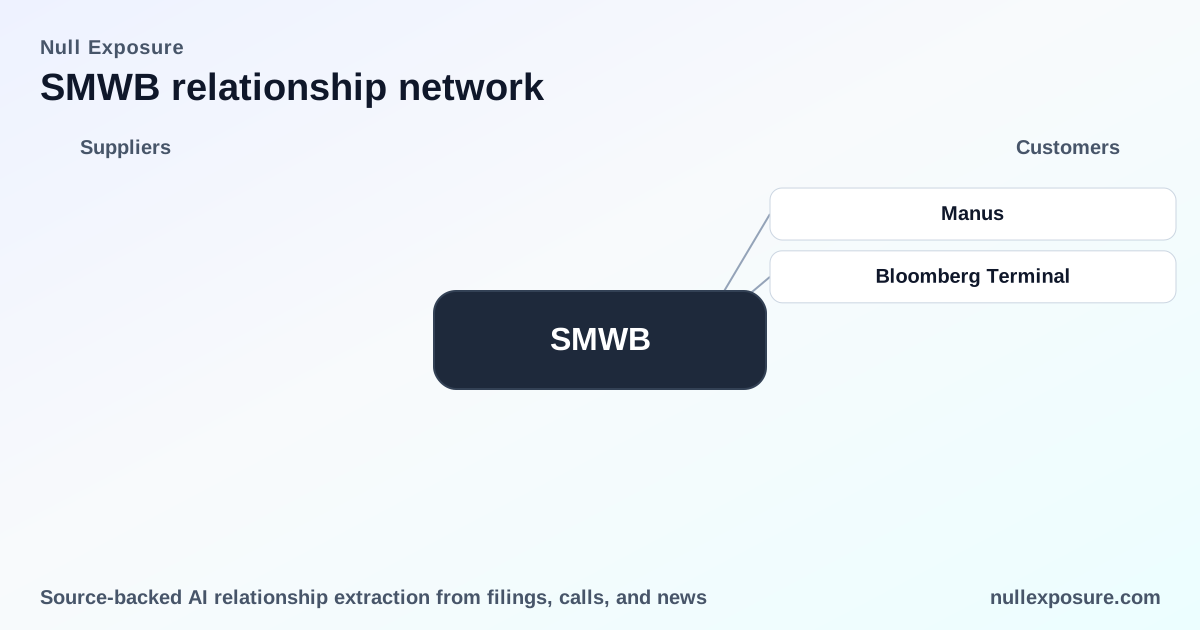
Customer relationship map (FY2026 activity)
Manus — embedding Similarweb into autonomous AI agents
Similarweb announced a collaboration that gives Manus’ autonomous AI agents direct access to Similarweb’s web traffic and engagement data, enabling agents to perform marketing analysis, competitive assessment and strategic planning using live traffic signals. Multiple FY2026 reports emphasize that this integration exposes Similarweb’s signals to agent-driven workflows where data becomes a decisioning input rather than a standalone dashboard. Source: SahmCapital and SimplyWall.st reporting on the Manus collaboration (January–March 2026).
Takeaway: this is a distribution play designed to turn data into embedded workflow value — valuable if it converts into licensed usage or revenue-share terms.
Bloomberg Terminal — expanded distribution into financial workflows
Similarweb expanded its integration within the Bloomberg Terminal in FY2026 so that Bloomberg users can access Similarweb’s digital-performance metrics (unique visitors, average visit duration, page views) directly inside the terminal. Reports tied to the company’s Q4 2025 commentary and subsequent analyst coverage note the integration as part of distribution expansion to institutional users. Source: Investing.com and InsiderMonkey coverage of the Bloomberg Terminal integration (May 2026).
Takeaway: Bloomberg distribution increases visibility to institutional investors and corporate strategists and creates a route to monetize via data feeds or licensing to financial customers.
TripAdvisor (TRIP) — end-user reporting use-case
TripAdvisor’s Summer Travel Index cited Similarweb unique user metrics (de-duplicated monthly, March 2026) as the underlying source for travel demand analysis, indicating that media and consumer-facing companies license Similarweb metrics for market reporting. Source: HospitalityNet reporting on TripAdvisor’s Summer Travel Index (May 2026).
Takeaway: media and research licensing is a steady downstream use-case that complements enterprise subscriptions; it is more tactical revenue but supports brand credibility and third-party validation of the data.
What the relationship set implies about business model constraints
- No contract-level constraints surfaced in the supplied feed. As a company-level signal, the absence of captured constraints implies this dataset did not flag concentration clauses, exclusivity provisions, or material termination rights for the reported FY2026 integrations. This is not the same as contractual certainty, but it does remove a data-identified red flag from this review.
- Concentration vs. diversification: distribution into Bloomberg and Manus broadens channels beyond enterprise direct sales, lowering single-channel concentration risk; however, deeper dependency on a small number of platform partners would reintroduce concentration risk if integration revenue becomes material.
- Criticality and switching costs: being embedded into an AI agent or terminal raises the potential for stickiness because partners and end-users can build workflows around Similarweb signals, but the actual lock-in depends on licensing terms and the ease with which partners can source or model similar signals themselves.
- Maturity of relationships: the FY2026 notes reflect recent, public-stage integrations rather than long-tenured enterprise renewals, indicating early-stage commercialization of these channels that require monitoring for renewal and monetization outcomes.
Investment implications and risk checklist
- Revenue upside through distribution — Embedding into agent platforms and terminals is an effective way to expand the addressable market without proportionally increasing direct sales costs; success will depend on conversion mechanics (paid tier access, volume licensing, revenue share).
- Execution sensitivity — The partnership strategy increases exposure to third-party platform decisions and negotiation leverage; investor attention should focus on contract terms, monetization timelines, and reported contribution to ARR in subsequent quarters.
- Margin and cash-flow profile — Similarweb’s FY2026 operating metrics show solid gross margins but negative operating income and EBITDA; embedded distribution must scale recurring revenue faster than incremental costs to restore profitability.
- Reputational and validation benefits — Inclusion in Bloomberg Terminal and citation by TripAdvisor are high-signal endorsements that strengthen credibility with enterprise buyers.
For a deeper, continuous mapping of Similarweb’s partner and customer relationships and how they evolve into revenue, visit https://nullexposure.com/.
Bottom line
FY2026 reporting and media coverage show Similarweb executing on a distribution-first playbook: integrate data into AI agents and financial terminals, increase visibility in end-user workflows, and convert that access into license and subscription revenue. These are strategic moves that increase addressable market and potential stickiness, but they transfer execution risk to the negotiation and commercialization phase. Investors should track contract structures and ARR disclosures tied to platform integrations as the next decisive indicators of whether these relationships translate into sustainable growth and margin improvement.