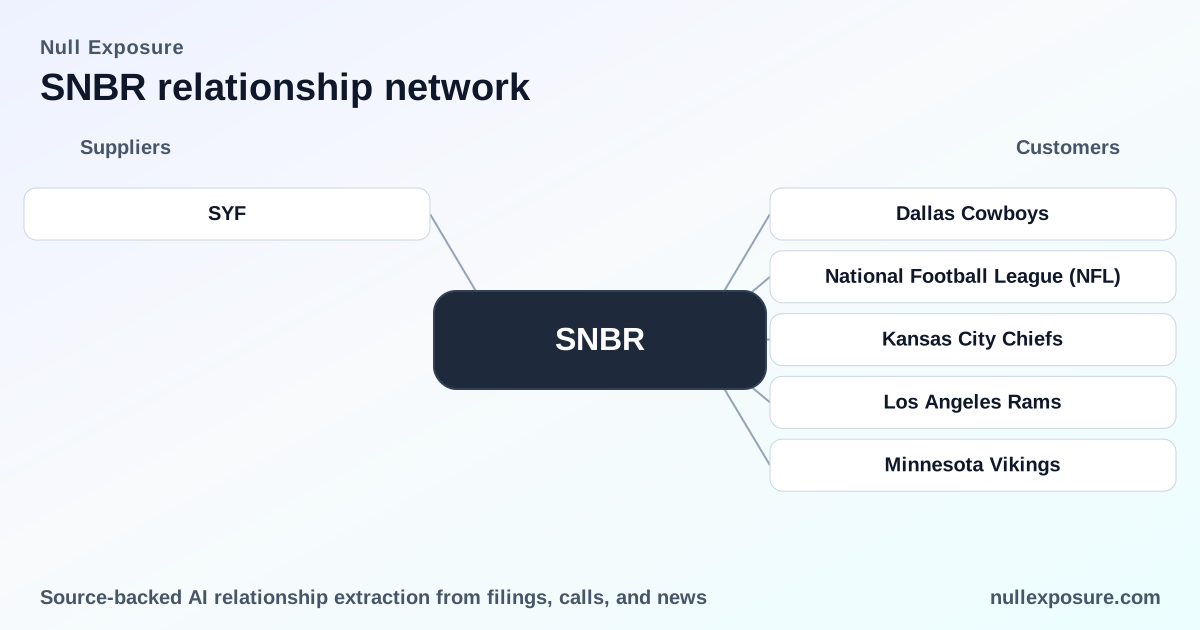
Sleep Number (SNBR): Brand partnerships underpin awareness while retail and SleepIQ drive revenues
Sleep Number designs, manufactures and sells individualized smart beds and an associated SleepIQ technology ecosystem to U.S. consumers, monetizing through direct retail sales, digital engagement and an embedded multi-year revenue recognition profile for its hardware-plus-software product. The business combines a vertically integrated manufacturing and retail model with a subscription-like service layer tied to SleepIQ, producing concentrated retail-driven top-line exposure alongside an active installed base that amplifies marketing ROI through strategic brand partnerships. For an at-a-glance map of Sleep Number’s customer relationships and partner footprint visit https://nullexposure.com/.
How Sleep Number actually makes money — direct-to-consumer and recurring economics
Sleep Number operates as an exclusive designer, manufacturer, marketer, retailer and servicer of its smart beds; it sells primarily through its owned store network and digital channels, and recognizes a portion of product economics over multiple years because the SleepIQ software is integral to the hardware. Stores are the primary revenue engine — accounting for 88% of net sales in 2024 — while the SleepIQ ecosystem converts product buyers into recurring-engagement consumers. The company reported roughly $1.41 billion of revenue TTM and a gross-profit base that supports above-unit margins, but profitability metrics show pressure (negative EPS and thin operating margin) consistent with a capital-intensive retail and manufacturing model.
Key operating characteristics investors should internalize:
- Contracting posture: SleepIQ is treated like a long-duration performance obligation (recognized straight-line over ~4.5–5.0 years), effectively creating subscription-like revenue recognition embedded inside product sales.
- Customer concentration and criticality: The business is concentrated on individual consumers across the United States — Sleep Number operates stores in all 50 states — and the installed base (over 3 million Smart Sleepers with ~80% monthly engagement) is a critical distribution and engagement asset.
- Role and maturity: Sleep Number is vertically integrated (manufacturer and seller) and provides post-sale service and warranty, positioning it as an end-to-end consumer furnishing company with a mature core product but ongoing pressure to maintain brand relevance through marketing and partnerships.
- Average transaction scale: Average revenue per smart bed unit is material at roughly $5,818, which implies meaningful retail ticket sizes but still places most customer accounts squarely below enterprise spend thresholds.
Partnerships mapped: every relationship from the available results
Dallas Cowboys — renewed club-level partnership through 2026–27
Sleep Number renewed its partnership with the Dallas Cowboys, extending a club-level relationship through the 2026–27 season, demonstrating targeted team-level marketing that complements league-wide visibility. HF Business reported the renewal in March 2026, highlighting the extension of the team relationship into the 2026–27 season.
National Football League (NFL) — league-wide Official Sleep + Wellness Partner (referenced in HF Business)
Sleep Number has functioned as the NFL’s official sleep and wellness partner since 2018, a league-level arrangement that amplifies brand credibility and enables player- and team-focused activations. HF Business noted the long-standing NFL partnership in its March 2026 coverage of Sleep Number’s club renewals.
Kansas City Chiefs — club-level agreement supporting activation in-market
Sleep Number holds a separate club-level agreement with the Kansas City Chiefs, a relationship used to activate regional marketing and player-endorsed storytelling that supports consumer demand. HF Business documented the Chiefs agreement as part of the company’s suite of club-level deals in March 2026.
Los Angeles Rams — club agreement to drive local engagement
The company maintains a club-level relationship with the Los Angeles Rams, enabling local market visibility and promotional tie-ins in one of the largest media markets. HF Business included the Rams among Sleep Number’s club partnerships in March 2026.
Minnesota Vikings — club-level relationship rooted in home-market affinity
Sleep Number maintains a club-level partnership with the Minnesota Vikings, notable because Minneapolis is also Sleep Number’s headquarters and represents a core local marketing presence. HF Business referenced the Vikings agreement in its March 2026 reporting on Sleep Number’s football partnerships.
NFL (Markets/FT announcement) — strategic use of player health data and league initiatives
In a Markets/FT-distributed BizWire announcement in March 2026, Sleep Number framed the NFL relationship as a strategic platform that leverages player health data, team partnerships and league-wide initiatives to amplify brand awareness and drive consumer engagement. This communication underscores the company’s emphasis on data-enabled marketing and health-positioning at the league level.
What these relationships actually mean for revenue and risk
Brand partnerships with the NFL and select clubs are not direct revenue drivers at enterprise scale but serve as high-leverage marketing amplifiers for a direct-to-consumer, retail-heavy business. Club and league deals increase brand salience, accelerate customer acquisition and support premium pricing for Sleep Number’s higher-ticket smart beds. Given that stores account for the large majority of sales, these partnerships are tactically valuable for driving foot traffic and online conversions rather than constituting a material contracted revenue stream.
At the same time, the partnership profile highlights two structural realities:
- Customer funnel dependency: Sleep Number’s commercial success is tightly coupled to retail performance and consumer demand; brand partnerships shift demand curves but do not change the concentrated retail cost base.
- Marketing ROI lever: The NFL relationship allows scale marketing into high-attention windows (seasonal viewership), increasing the effective lifetime value of new customers drawn into the SleepIQ ecosystem.
Operational constraints that shape execution and investor scrutiny
Several corporate-level constraints from recent public disclosures define operating levers and risk vectors:
- The SleepIQ technology is judged integral to the bed hardware and recognized over 4.5–5.0 years, which produces a prolonged revenue recognition profile and creates an embedded, subscription-like revenue component.
- The counterparty is overwhelmingly individual consumers with a national footprint (stores in all 50 states), reinforcing retail sensitivity to consumer spending cycles and real estate costs.
- Materiality is concentrated in Stores (88% of net sales in 2024), which magnifies the impact of retail traffic trends, seasonal variability and fixed-cost leverage on margins.
- Vertical integration (exclusive designer/manufacturer/seller) improves gross margin control but increases capital and operational responsibilities, including inventory, warranty and service obligations.
- Average ticket size (~$5,818 per bed) places most transactions below institutional spend bands but high enough to require thoughtful financing and marketing programs to close.
Investor takeaways and watchlist
- Partnerships amplify but do not replace the core retail model: league and club deals enhance brand awareness and shorten customer acquisition payback, but success remains dependent on restoring and growing store and digital sales.
- Embedded recurring economics reduce near-term revenue volatility but delay full revenue recognition, requiring investors to read cash flow metrics alongside reported revenue.
- Monitor retail metrics and engagement: store sales mix, same-store sales trends, SleepIQ active user growth and average revenue per bed will be the most direct indicators of whether partnerships are converting into sustainable demand.
For further breakdowns of Sleep Number’s partner footprint and how these relationships affect customer concentration and revenue recognition, see the full service at https://nullexposure.com/.
Bold, focused monitoring of retail performance, SleepIQ engagement trends and partnership conversion rates will determine whether SNBR’s brand strategy translates into durable margin recovery and shareholder value.