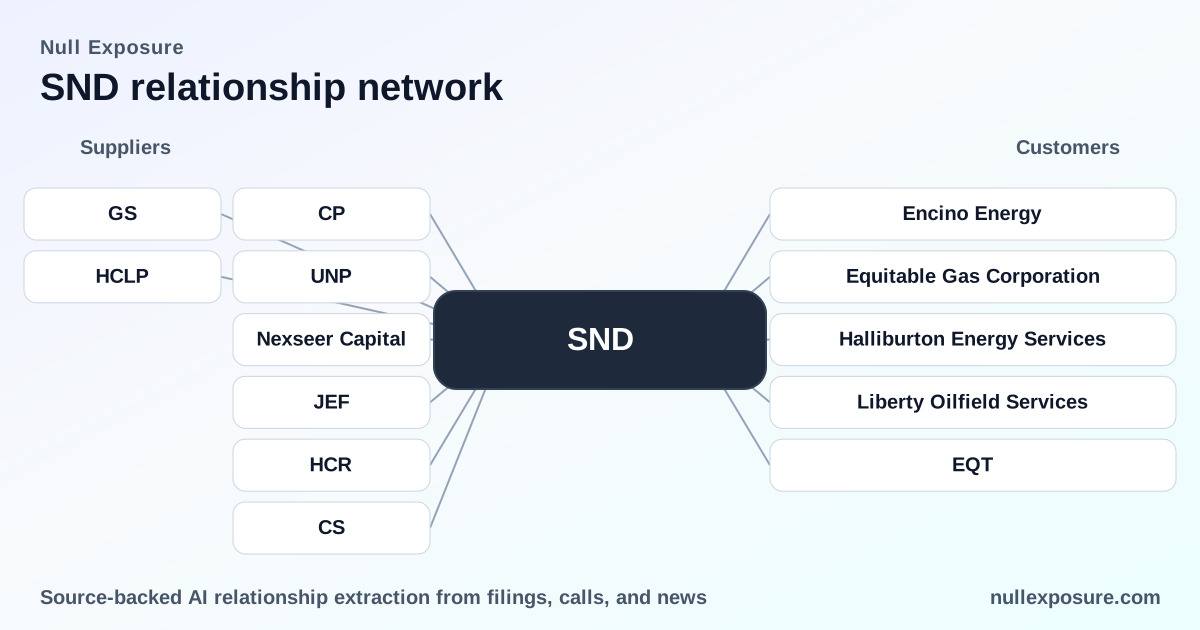
Smart Sand (SND) — Customer relationship map and what it means for investors
Smart Sand is an integrated provider of Northern White frac sand and complementary wellsite solutions that monetizes through commodity sand sales, logistics and recurring SmartSystems equipment rentals and services. The company operates mine-to-wellsite supply chains, sells under a mix of long‑term, short‑term and spot contracts, and leverages direct rail access and in‑basin transloading to compete on delivery and total cost to customers. For investors, the story is one of operational leverage in logistics and concentrated customer exposure that creates both margin upside and revenue risk. Learn more about the research behind these relationships at https://nullexposure.com/.
How Smart Sand actually sells — the business mechanics investors need to know
Smart Sand produces and markets premium proppant and offers logistics and wellsite handling through its SmartSystems segment. The company uses a balanced contracting posture: long‑term contracts for revenue stability, short‑term agreements for flexibility, and spot sales to capture market upside. Smart Sand’s geography is focused on North America with direct and indirect access to Class I railroads, enabling delivery across major onshore basins. The company therefore combines commodity production (proppant manufacturing and distribution) with service and hardware revenue (portable storage, SmartBelts, silo tracking), which increases customer stickiness and creates recurring revenue potential.
A material signal from the filings is concentration: Smart Sand states that “a material portion of our revenues have been generated from sales with a limited number of customers,” which is visible in FY2024 revenue breakdowns. Contract maturity is heterogeneous — the firm has explicit long‑term framework arrangements in place with some customers while other business is transacted short term or on spot.
The headline relationships and what they contribute to revenue
Below are the customer relationships disclosed in Smart Sand’s filings and the press coverage that change contract economics. Each relationship is stated in plain English with source context.
-
Encino Energy — Encino accounted for 13.8% of Smart Sand’s total revenue for the year ended December 31, 2024, highlighting meaningful single‑counterparty exposure within the customer book. According to Smart Sand’s 2024 Form 10‑K, Encino Energy represented 13.8% of total revenue in FY2024.
-
Equitable Gas Corporation — Equitable was 31.9% of total revenue for the year ended December 31, 2024, making it the single largest disclosed customer in FY2024 and a focal point of concentration risk. This figure is reported in Smart Sand’s 2024 Form 10‑K.
-
Halliburton Energy Services — In an earlier disclosure, Halliburton represented 15.4% of total revenue for the year ended December 31, 2022, indicating sizable historic business with a major oilfield services operator; the disclosure is captured in Smart Sand’s Form 10‑K. Note that this percentage reflects FY2022, not the FY2024 mix.
-
Liberty Oilfield Services — Liberty accounted for 10.2% of total revenue for the year ended December 31, 2024, a significant mid‑tier customer by revenue share. This percentage comes from Smart Sand’s 2024 Form 10‑K.
-
EQT (EQT Corporation / EQT Production Company) — Public reporting indicates Smart Sand and EQT will end their existing Product Purchase Agreement on December 31, 2025, and transition to a new take‑or‑pay agreement running through 2027, changing revenue cadence and contractual commitments. A TradingView news report (March 2026) summarized the arrangement, and Smart Sand’s disclosures reference a Master Product Purchase Agreement effective August 1, 2021 with EQT Production Company (exhibit cited in SEC filings).
Each of the above items is drawn from Smart Sand’s public disclosures and press reporting; the financial percentages come from the company’s 2024 Form 10‑K, while the EQT contractual transition was noted in market press in March 2026.
What the relationship constraints tell investors about risk and runway
Treat the constraints reported in Smart Sand’s disclosures as company‑level operating signals:
-
Contracting posture is mixed and flexible. Smart Sand explicitly states it sells through long‑term, short‑term and spot arrangements. That mix gives revenue stability when long‑term agreements are in place and upside when spot markets tighten.
-
Framework agreements exist with strategic customers. The 2021 Master Product Purchase Agreement referenced in SEC exhibits names EQT Production Company, which confirms a formal framework relationship with a major producer and explains the March 2026 reports about contractual restructuring with EQT.
-
Geographic reach is North America, not global. Smart Sand’s logistics advantage is its direct access to multiple Class I rail lines and in‑basin terminals, enabling delivery across U.S. and Canadian basins and supporting competitive pricing and service levels.
-
Revenue concentration is material. Disclosed customer shares show a high concentration profile — the largest customers can represent double‑digit percentage points of revenue in a single year, which accelerates both downside risk and opportunity from a few counterparties.
-
SmartSystems creates recurring and service revenue. The company’s offering of portable wellsite hardware, rental agreements and proprietary tracking software converts commodity sand sales into higher‑value integrated solutions and strengthens customer switching costs.
Investor implications — balancing runway and counterparty risk
Smart Sand’s operating model is advantaged on logistics and integrated service delivery, which supports margin recovery when sand demand is healthy. The existence of long‑term and framework contracts with major producers reduces short‑term volatility and can support financing and planning. However, material customer concentration is the principal corporate risk — a single large customer shift would materially affect revenue and leverage given the revenue shares disclosed for FY2024.
Contract transitions, such as the EQT move from one product purchase agreement structure to a take‑or‑pay arrangement through 2027, are essential events: they change revenue predictability and working capital dynamics. Investors should monitor contract renewal timelines, the mix of take‑or‑pay versus purely volumetric arrangements, and the footprint of in‑basin assets that give Smart Sand its delivery advantage.
Bottom line and where to dig next
- Key takeaway: Smart Sand combines commodity proppant supply with logistics and SmartSystems services, creating both margin optionality and concentrated counterparty exposure.
- Watchpoints: Customer concentration (Equitable/EQT/Encino/Liberty/Halliburton), contract types and expirations, and utilization of in‑basin terminals and SmartSystems rental revenue.
For a compact view of Smart Sand’s customer disclosures and the contract signals described above, review the company filings and market coverage summarized here and at https://nullexposure.com/. If you want a deeper map of counterparties and contractual timelines, visit https://nullexposure.com/ for the full research suite.