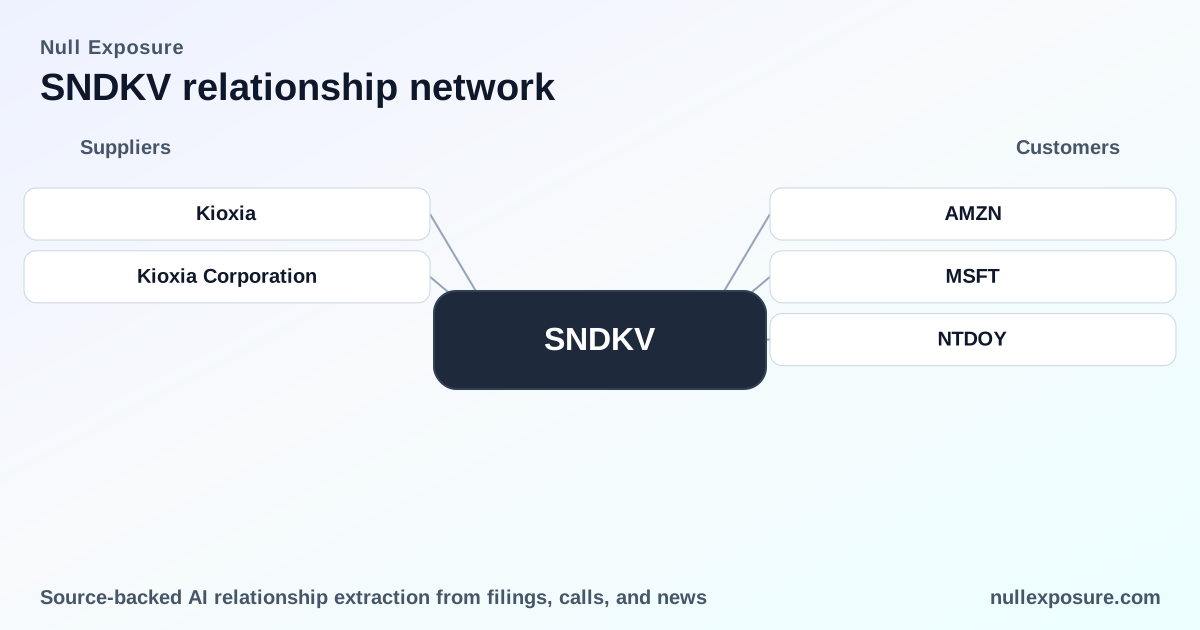
SNDKV customer map: hyperscalers, Nintendo co‑branding, and index flows that move the stock
Thesis: SNDKV monetizes by selling high‑capacity, power‑efficient NAND flash products and SSDs into two revenue channels: large B2B contracts with hyperscalers and cloud providers, and consumer OEM/co‑branded products (notably microSD cards). Revenue is driven both by structural demand from cloud operators and episodic, high‑velocity consumer product sales; index inclusion further creates predictable, non‑discretionary share demand that can amplify price moves. For additional context on data and relationship signals see the company overview at the NullExposure homepage: https://nullexposure.com/
How SNDKV makes money and how customers shape the business
SNDKV sells components that are strategic, high‑volume inputs for cloud providers and consumer electronics makers. Contracts with hyperscalers are procurement‑driven, price‑sensitive, and can lead to material concentration; consumer partnerships run on product cycles and marketing momentum. Index-driven flows (ETF trackers) create a separate, mechanically predictable source of buy pressure when the stock is added to a benchmark. These three vectors — hyperscaler supply, OEM/co‑brand retail, and passive‑fund demand — define both upside and headline risk for investors.
If you want a consolidated dashboard of relationship signals that matter for underwriting, see NullExposure for a deeper read: https://nullexposure.com/
Company-level operating constraints and what they imply for investors
The data payload includes no explicit contractual or constraint excerpts, which itself is a company‑level signal: no flagged exclusivity clauses, supply limits, or regulatory constraints were returned in the results set. From an investor perspective that implies:
- Contracting posture: B2B supply relationships are likely commercial and volume‑based rather than strictly exclusive, increasing flexibility but exposing SNDKV to price competition.
- Concentration: Hyperscaler customers (Amazon, Microsoft) represent concentrated volume risk—losing or losing share with one could materially affect revenue.
- Criticality: Products sold to cloud operators are mission‑critical components for storage infrastructure, which supports sticky demand but also invites aggressive negotiating leverage from large buyers.
- Maturity: The coexistence of cloud contracts and successful consumer co‑branding (Nintendo) signals a portfolio with both mature enterprise demand and faster consumer growth episodes that can boost near‑term top‑line.
These constraints should be read as structural signals rather than absolute contractual facts.
Who the customers are — concise relationship summaries
Microsoft (MSFT)
SNDKV supplies high‑capacity, power‑efficient SSDs targeted at hyperscalers such as Microsoft, positioning the company as a supplier into cloud‑scale storage operations. According to a Globe and Mail press release cited in FY2026, SNDKV is focused on hyperscalers including Microsoft (press release, March 10, 2026).
Amazon / AMZN
Amazon is listed twice in the coverage set (as both "Amazon" and "AMZN"); both entries reference SNDKV’s focus on hyperscalers. Amazon sits alongside Microsoft as a core hyperscaler buyer for SNDKV’s high‑capacity SSDs, which implies meaningful volume exposure to e‑commerce and AWS demand cycles. This relationship is documented in the same Globe and Mail press release in FY2026 (March 10, 2026).
Invesco QQQ Trust (QQQ)
When index trackers are forced to buy, the action is non‑discretionary and mechanically large. A TradingView piece referencing MarketBeat notes that when SanDisk (SNDK) joins the index, the Invesco QQQ Trust and other index funds must purchase shares in proportion, creating a period of intense, non‑discretionary buying (TradingView / MarketBeat, May 3, 2026).
Nintendo / NTDOY
SNDKV’s consumer channel shows measurable success through the Nintendo partnership: the co‑branded Switch 2 microSD Express card cleared 900,000+ unit sales in the fiscal first quarter, demonstrating the company’s ability to monetize branded consumer hardware at scale. This sales milestone is reported in both a Zacks note distributed via TradingView and the Globe and Mail coverage in FY2026 (TradingView / Zacks, March 10, 2026; Globe and Mail, March 10, 2026).
(Note: the dataset includes both "Nintendo" and "NTDOY" entries that reference the same co‑branding milestone; the underlying signal is the same strong consumer activation around the Switch 2 product.)
Why each relationship matters for investors
- Hyperscalers (Amazon, Microsoft): These customers create predictable, high‑volume demand and also concentration risk; pricing and allocation outcomes here determine gross margins and capacity utilization. The Globe and Mail FY2026 coverage emphasizes SNDKV’s hyperscaler focus.
- Nintendo (consumer co‑brand): High‑velocity consumer sales provide incremental revenue and positive brand spillover, reducing revenue cyclicality tied purely to data‑center capex. The Nintendo co‑branded microSD success is a visible, quantifiable win (900k+ units).
- Index inclusion (QQQ): Passive flows are mechanically bullish in the short term, as documented by TradingView/MarketBeat, and can magnify share‑price trends regardless of immediate fundamental change.
Investment implications and risk checklist
- Upside catalyst: Continued share gains with hyperscalers and repeat consumer co‑branding cycles can expand margins through scale and product premiuming.
- Valuation sensitivity: Index‑driven buying can push multiples higher in the short run, but investors should separate mechanical demand from core revenue growth.
- Concentration risk: A small set of large buyers implies negotiation leverage on the buy side and operational dependence on a few procurement cycles.
- Operational risk: Supply chain or capacity misalignment would have outsized P&L effects given the capital‑intensive nature of NAND and SSD production.
Bottom line for allocators
SNDKV operates at the intersection of structural cloud demand and discrete consumer successes, with ETF/index mechanics able to amplify share‑price moves. Monitor hyperscaler contract outcomes, repeatable consumer product launches, and the calendar of index rebalancing for near‑term trading inflection points. For a living view of customer signals and a deeper relationship dashboard, visit NullExposure for analyst‑grade tracking: https://nullexposure.com/
Sources cited in the relationship notes include the Globe and Mail press release (March 10, 2026) and TradingView articles (Zacks piece dated March 10, 2026; MarketBeat/TradingView note dated May 3, 2026) reporting on SNDKV’s FY2026 customer activity and index implications.