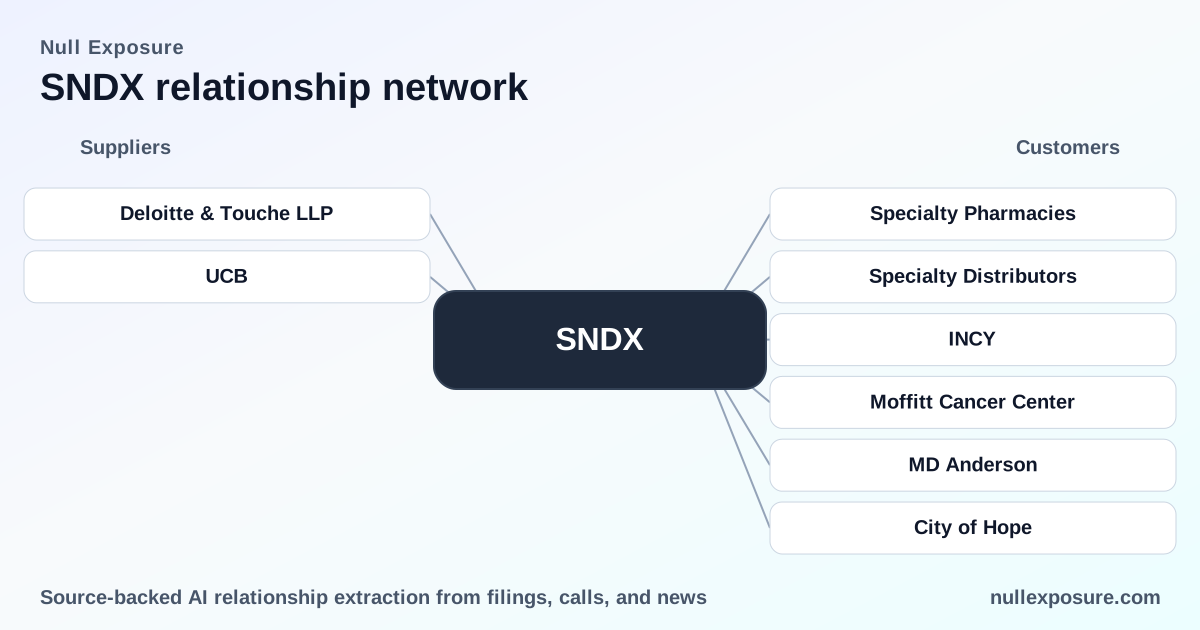
Syndax Pharmaceuticals (SNDX): Commercial footprint and counterparty map for investors
Syndax monetizes through the commercialization of two recently approved oncology products — Revuforj (revumenib) and Niktimvo (axatilimab-csfr) — and by advancing clinical programs that expand those products’ addressable markets. Revenue today is product-driven and channeled primarily through specialty distributors and specialty pharmacies, while strategic co-commercialization with larger peers supports promotion and market access. For investors assessing customer risk and commercial durability, the company’s operating posture is defined by channel concentration, North America revenue focus, and partnerships that both de‑risk and create execution dependencies.
For a compact reference of Syndax’s customer relationships and commercial posture, visit the NullExposure homepage: https://nullexposure.com/.
How Syndax sells and where revenue comes from
Syndax recognizes product revenue from sales of Revuforj and Niktimvo and records milestone revenue from collaborations. The company sells product to specialty distributors and specialty pharmacies, who then resell to healthcare providers, patients and other pharmacies. This is a classic small‑biotech commercialization model: Syndax controls supply and label messaging but relies on third‑party channel partners to reach prescribers and patients. According to the company’s most recent public filings, product revenue is already being generated and is primarily U.S. receipts tied to the approved indications (FY2024 10‑K, reported in FY2024).
The counterparty roster investors need to know
Below are every named relationship pulled from recent filings and press coverage, with plain‑English summaries and source references.
Specialty Distributors
Syndax sells Revuforj into specialty distributors that handle logistics, billing and downstream resale to hospitals, clinics and specialty pharmacies; this is the principal distribution channel for product revenue. According to Syndax’s 2024 Form 10‑K, the company “sells Revuforj to Specialty Distributors and Specialty Pharmacies.” (Syndax 10‑K, FY2024).
Specialty Pharmacies
Specialty pharmacies receive product directly from Syndax and from distributors and execute patient dispensing and care management; these partners are critical to patient access and reimbursement. The company’s FY2024 10‑K states that Specialty Pharmacies are collective “Customers” for Revuforj sales (Syndax 10‑K, FY2024).
Incyte (INCY)
Syndax is in a co‑commercialization arrangement with Incyte to promote Niktimvo and is partnered on expanding axatilimab’s label through clinical trials in chronic GVHD. Syndax publicly reported the co‑promotion agreement and ongoing collaboration in its Q4 2025 business update and in earnings call commentary in early 2026. (GlobeNewswire press release, Feb. 26, 2026; Q4 2025 earnings call transcript, March 2026).
Moffitt Cancer Center
Investigators at Moffitt presented the first real‑world evidence for revumenib at the American Society of Hematology meeting, contributing independent clinical validation that supports commercial uptake and payer discussions. This presentation was cited during Syndax’s Q4 2025 earnings commentary. (Q4 2025 earnings call transcript summary published March 2026).
City of Hope
City of Hope investigators disclosed a Phase I trial design testing revumenib as a two‑year post‑transplant maintenance therapy in adult and pediatric patients, an early signal of investigator‑driven expansion into maintenance indications that could broaden Revuforj’s use. This was referenced in Syndax’s post‑quarter commentary. (Q4 2025 earnings call transcript published March 2026).
MD Anderson
MD Anderson investigators presented real‑world pediatric data on revumenib used as maintenance after stem cell transplant, reinforcing the product’s data package in a high‑profile center and supporting commercial adoption in pediatric oncology. Syndax cited these data points in its Q4 2025 call materials. (Q4 2025 earnings call transcript published March 2026).
What these relationships imply for the business
- Channel concentration is explicit. Syndax’s direct customers are distributors and specialty pharmacies rather than a broad retail pharmacy base; that structure accelerates time‑to‑patient for niche oncology drugs but concentrates commercial execution risk in a small set of channel partners (Syndax 10‑K, FY2024).
- Co‑commercialization with Incyte combines scale with execution dependency. Incyte brings commercial resources and market reach for Niktimvo, improving launch economics while creating reliance on partner coordination for promotion, market access negotiations and revenue splits (GlobeNewswire, Feb. 26, 2026).
- Clinical champions at major cancer centers fast‑track uptake and reimbursement discussions. Presentations from Moffitt, City of Hope and MD Anderson strengthen the clinical narrative and support payer conversations, particularly for rare leukemia and transplant maintenance indications (Q4 2025 earnings call coverage, March 2026).
- U.S. revenue focus. Syndax’s filings make clear that product revenue to date is primarily U.S. based; regulatory and reimbursement dynamics in North America therefore dominate near‑term outcomes (Syndax 10‑K, FY2024).
Operating constraints and company‑level signals
These constraints are company‑level signals drawn from public filings and investor communications and they shape how management runs commercialization:
- counterparty types: government payors are central to reimbursement strategy and individual healthcare providers drive adoption through prescribing behavior.
- geography: North America is the primary commercial geography for initial revenue capture and promotion.
- relationship roles: Syndax acts as seller to channel partners and relies on distributor/reseller roles to deliver product to patients.
- relationship stage: commercial relationships are active with recorded product revenue for Revuforj and Niktimvo.
- segment focus: the business is concentrated on core commercial products while clinical programs aim to expand indications.
Together these signals describe a small‑cap biotech transitioning into commercial operations with concentrated channels, active commercial revenue, and partnership levers that both enable scale and introduce execution dependencies.
Risks to monitor and near‑term catalysts
- Reimbursement posture and government payor policies will materially affect net realized price and uptake in rare oncology indications. Monitor payer coverage announcements and Medicare policy decisions.
- Channel execution with specialty distributors and pharmacies determines patient access; any supply or contracting disruption could depress product flow.
- Execution of co‑commercialization with Incyte will influence Niktimvo’s market penetration and the cadence of milestone payments. Watch joint promotional plans and sales reporting.
- Investigator‑led data from major cancer centers will be the immediate catalyst set for expanded use and label changes; upcoming conference publications and real‑world evidence readouts are high‑impact events.
Bottom line for investors
Syndax has converted clinical progress into commercial revenue through a concentrated, partner‑mediated channel model and strategic co‑promotion with Incyte. The company’s upside hinges on channel execution, reimbursement wins in North America, and follow‑on clinical data produced by both company trials and leading cancer centers. For a consolidated view of Syndax customer relationships and contract signals, see the NullExposure homepage for a single‑page reference: https://nullexposure.com/.
Key sources: Syndax 2024 Form 10‑K (FY2024) for distribution channels and product sales; GlobeNewswire press release (Feb. 26, 2026) and earnings call transcripts/news coverage in March 2026 for Incyte partnership and investigator presentations.