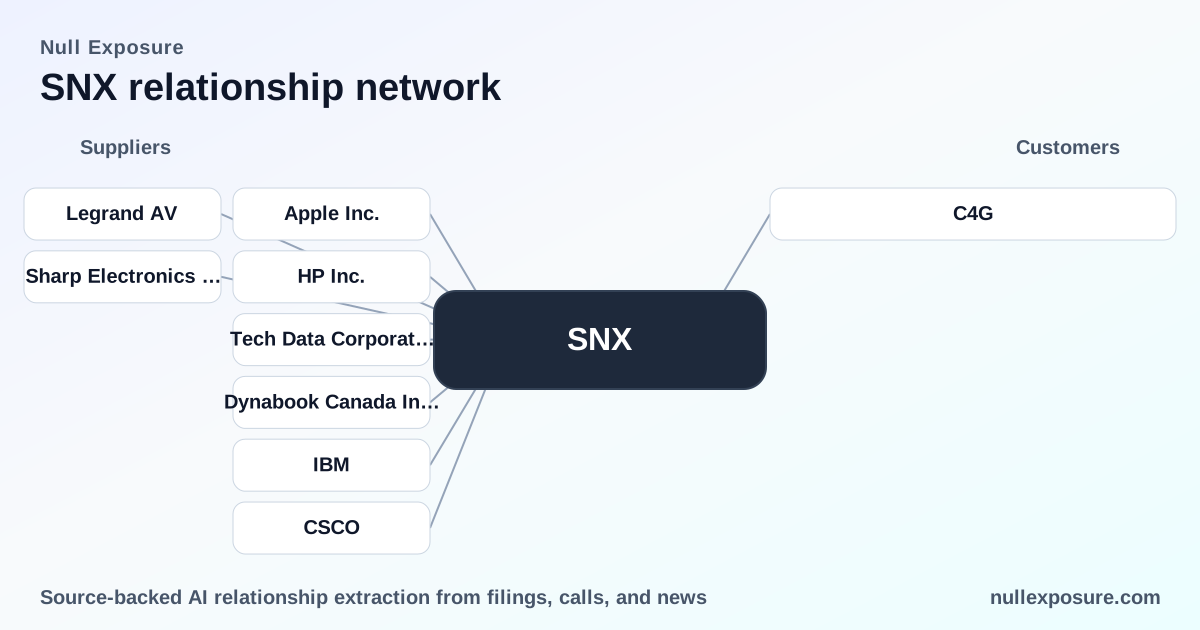
Synnex (SNX) — Customer Map and Commercial Implications for Investors
Synnex operates as a global IT distributor and solutions aggregator that monetizes through product distribution margins, logistics and supply-chain services, and recurring managed services to a broad reseller base; revenue is recognized both at point-of-sale for hardware/software and over time for services. For investors, the company’s economics are driven by scale in inventory financing, platform economics with resellers, and the mix shift between lower-margin hardware and higher-margin services. For a deeper customer-level perspective, visit https://nullexposure.com/.
The core commercial model — what actually drives SNX cash flow
Synnex’s operating model is that of a high-turnover distributor with ancillary services layered on top. The company aggregates inventory from suppliers, sells into a reseller and retail network of more than 150,000 customers, and collects margin on transactions while offering value-added logistics, financing and professional services. Key business characteristics are:
- Transaction-based contracting posture. Company disclosures explicitly state Synnex typically sells on a purchase-order (spot) basis rather than long-term minimum-purchase contracts, which creates higher revenue volatility tied to channel demand but also preserves pricing flexibility.
- High counterparty breadth and geographic scale. End-customers span individuals, SMBs, large enterprises and government entities across North America, EMEA and APAC, enabling diversified demand signals but also exposure to global supply-chain cycles.
- Segment mix that matters. Revenue comprises distribution of hardware and software at point of transfer, plus a growing services book that recognizes revenue over time — this mix determines margin profile and earnings stability.
- Concentration risk to monitor. Management reports that one customer represented roughly 11–12% of revenue over recent fiscal years, making top-customer exposure a tangible earnings sensitivity.
These operational features explain why Synnex delivers attractive top-line scale yet faces cyclicality: distribution volume drives revenue, services drive margin stability.
Customer relationships uncovered and what they tell us
Below are the customer relationships surfaced in public sources. Each relationship is summarized in plain English with a concise source reference.
SIMO — distribution appointment in SIMO Alliance
TD SYNNEX was appointed as a distribution partner inside the SIMO Alliance Program, positioning Synnex to channel SIMO connectivity solutions through its reseller network and expand the vendor’s reach into enterprise customers. (AIjourn press release, March 2026: https://aijourn.com/simo-appoints-td-synnex-as-distribution-partner/)
C4G — IBM-focused AI practice engagement
C4G, an existing IBM partner, intends to grow its AI practice using IBM watsonx and to leverage the TD SYNNEX program to scale that capability into the channel, signaling Synnex’s role as a facilitator for ISV-led AI deployments through resellers. (IndustryAnalysts coverage referencing TD SYNNEX program activity; referenced activity surfaced in FY2025 commentary: https://industryanalysts.com/052024_tdsynnex/)
FATN (FatPipe) — public sector procurement access via cooperatives
FatPipe has expanded public-sector and education procurement access through a partnership with TD SYNNEX and cooperative purchasing programs (Equalis Group), demonstrating Synnex’s protocol for placing networking and security vendors into government and education channels. (AccessNewswire release, May 2026: https://www.accessnewswire.com/newsroom/en/computers-technology-and-internet/fatpipe-expands-public-sector-and-education-procurement-access-th-1162017)
NTGR — named as one of the largest distributors
NTGR’s FY2025 filing lists TD SYNNEX among its largest distributors, confirming Synnex’s role as a principal go-to-market partner for hardware vendors that sell through distribution rather than directly to end customers. (NTGR FY2025 10‑K filing, reported for fiscal year ended Dec 31, 2025)
What the relationships imply about Synnex’s go-to-market and competitive position
The sampled relationships illustrate Synnex’s core value proposition: a one-to-many conduit for suppliers to access resellers and public-sector buyers. Vendor appointments (SIMO, FatPipe) show Synnex’s utility for specialty vendors expanding into new verticals or procurement channels; the C4G example shows Synnex’s role in channel-enabling software-driven, services-oriented offerings; and NTGR’s 10‑K confirms the company’s entrenched distributor status with large hardware suppliers.
Collectively these relationships reinforce three operational truths for investors:
- Synnex is platform-centric and partner-dependent. Its growth vector is vendor onboarding and expanding SKU penetration within a large reseller base.
- Sales are largely spot-driven and volume-sensitive. The company’s own disclosures indicate purchase-order sales predominate, creating sensitivity to channel inventory turns and enterprise capex cycles.
- Public-sector access is an expanding lane. Cooperative purchasing partnerships are evidence of deliberate effort to monetize government and education procurement channels, which changes mix toward longer procurement cycles and potentially higher logistic/service requirements.
Risk and concentration: what to watch in quarterly diligence
Several company-level signals should be weighted in investment decisions:
- Contracting posture: spot purchase orders dominate. This creates revenue volatility when demand softens but preserves gross-margin control in inflationary or supply-constrained environments.
- Customer concentration is notable. One customer contributing roughly 11–12% of revenue is a material counterparty risk that can swing margins if contractual terms or buying patterns change.
- Global footprint increases complexity. Presence across APAC and EMEA diversifies demand but raises exposure to regional supply-chain disruptions, currency and regulatory regimes.
- Segmental mix influences margin profile. Hardware distribution remains volume-driven; software and services drive higher and steadier margins as services revenue is recognized over time.
Practical takeaways for operators and portfolio managers
For operators: prioritize vendor onboarding that shifts revenue mix toward services and recurring models, and invest in cooperative procurement capabilities for the public sector to capture stickier demand. For portfolio managers: stress-test cash flow under cyclical contractions in hardware demand, monitor concentration metrics for top customers, and prize management commentary on margin expansion from services.
For a fuller customer relationship analysis and ongoing monitoring tools, see https://nullexposure.com/.
Bottom line
Synnex is a scale-dependent distributor whose profit trajectory hinges on channel volume, the evolving mix toward services, and management of top-customer concentration. Investors should value Synnex for platform leverage and operational durability, while actively monitoring cyclical demand and counterparty concentration as the primary downside levers.