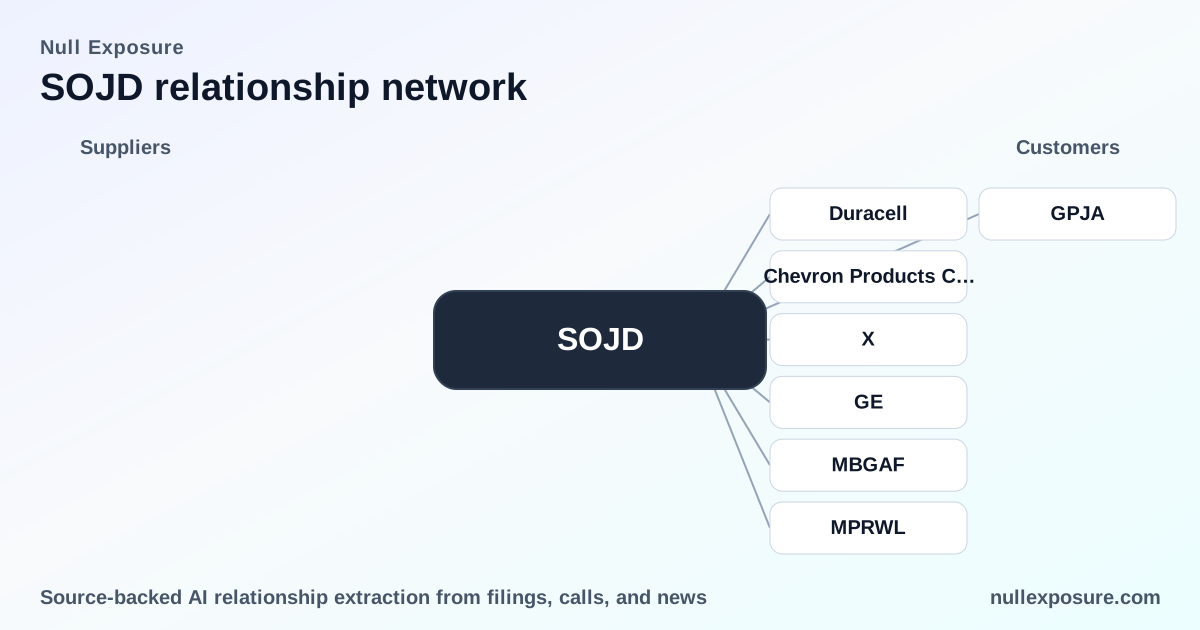
Southern Company (SOJD) — Customer Map and What It Means for Investors
Southern Company monetizes a diversified energy platform by selling electricity and related services across retail and wholesale markets, predominantly in the U.S. Southeast. Revenue is driven by long‑dated power purchase agreements (PPAs), regulated tariff receipts through its traditional operating utilities, and targeted wholesale sales from Southern Power and Southern Company Gas. For investors, the key operating levers are PPA tenor and structure, wholesale vs. retail mix, and concentration in large industrial and municipal counterparties.
Explore the platform-level view at Null Exposure: https://nullexposure.com/
How Southern’s customer relationships drive predictable cash flow
Southern’s customer base is a mix of regulated retail customers and contracted wholesale counterparties. The business is structured to favor long‑term, fixed‑price PPAs and tariffed retail arrangements that reduce commodity exposure and create visible revenue streams. At the same time, occasional short‑term opportunity sales and wholesale market activity provide tactical upside.
The company disclosures show a consistent pattern: many wholesale sales are governed by long‑term contracts, while the traditional operating companies collect tariff revenue tied to regulated rates. For the active investor, this combination implies a revenue profile that is largely contractually protected, but one that still requires attention to contract renewals and customer concentration.
Company-level constraints and what they signal about risk and resilience
- Long-term contracting posture: Southern repeatedly discloses that generation is predominantly sold under long‑term PPAs (15–20 years) and tolling arrangements. This structure translates into durable revenue visibility and limited direct commodity fuel exposure for many wholesale positions.
- Short-term flexibility exists: Management also notes the company conducts short‑term opportunity sales and can sell short‑term capacity, which supplies earnings optionality but increases exposure to wholesale market prices.
- Geographic concentration in North America: Operations and customers are concentrated across the U.S. Southeast and broader North American wholesale markets, reinforcing regulatory and regional demand sensitivities.
- Customer concentration is meaningful at the subsidiary level: Mississippi Power’s long‑term contracts with wholesale customers represented 13.9% of Mississippi Power’s operating revenues in 2024, a material concentration to monitor. This is a named relationship‑level signal in the filings.
- Segment mix and spend scale: Southern Power’s wholesale sales and the regulated operating utilities’ retail tariffs together form the core product revenue streams; the filings also disclose $371 million of revenues from Southern Power to the traditional operating companies, indicating significant intra‑company commercial flows that affect consolidated reporting.
- Relationship maturity and stage: Many contracts are active and long‑dated; Southern Power actively pursues replacement PPAs ahead of expirations, reflecting an emphasis on renewal continuity rather than opportunistic customer turnover.
Detailed relationship review (every disclosed counterparty)
Below I list each relationship item identified in the public disclosures and provide a concise investor‑oriented summary with a natural source reference.
1) Chevron Products Company — (10‑K, FY2024)
Mississippi Power provides retail electric service to Chevron’s Pascagoula refinery under agreements that extend through at least 2038, establishing a long‑dated utility relationship with a large industrial offtaker. This is documented in Southern Company’s FY2024 Form 10‑K.
2) Duracell — (2025 Q4 earnings call)
Management cited Duracell as an example of a commercial/industrial customer served by the company’s generation or energy services footprint alongside other metals and manufacturing names. This mention occurred on Southern’s 2025 Q4 earnings call.
3) US Steel (ticker X) — (2025 Q4 earnings call)
US Steel was named among industrial customers in management commentary, signaling Southern’s exposure to large metals industry load and the industrial demand profile discussed on the 2025 Q4 earnings call.
4) GE / General Electric (ticker GE) — (2025 Q4 earnings call)
General Electric was listed by management as another familiar industrial counterparty in the metals and manufacturing cohort, referenced during the 2025 Q4 earnings call to illustrate the company’s commercial customer mix.
5) Mercedes‑Benz (ticker MBGAF) — (2025 Q4 earnings call)
Mercedes‑Benz was cited in the same management discussion as a commercial/industrial customer, underscoring Southern’s service to automotive and large manufacturing clients. Source: 2025 Q4 earnings call.
6) Mississippi Power — (10‑K, FY2024)
Mississippi Power is both an operating company and a wholesale service provider; the 10‑K notes active long‑term service to several wholesale counterparties and that those contracts represented 13.9% of Mississippi Power’s total operating revenues in 2024, a materially disclosed concentration. This is drawn from Southern Company’s FY2024 Form 10‑K.
7) MPRWL (Mississippi Power ticker) — (10‑K, FY2024)
The filings reference Mississippi Power under its trading identifier when noting a cogeneration agreement and other wholesale arrangements as of December 31, 2024, confirming active and contractually governed industrial relationships (10‑K, FY2024).
8) Georgia Power — (10‑K, FY2024)
Georgia Power purchased sizable quantities of wholesale energy from third‑party facilities in 2024 (for example, 6.9 billion kWh at a cost of $320 million and 767 million kWh at $72 million from other facilities), illustrating its role as an internal and external wholesale buyer in the region; this is documented in the FY2024 Form 10‑K.
9) GPJA (Georgia Power ticker) — (10‑K, FY2024)
The same Georgia Power activity is cited under the GPJA identifier in the 10‑K, reinforcing the utility’s purchasing behavior and exposure to market purchases recorded in 2024 (Form 10‑K, FY2024).
Investment implications and what to watch next
- Predictability and renewal risk: The dominance of long‑term PPAs supports stable cash flows, but investors must monitor contract expirations and the company’s success in securing replacement PPAs before revenue gaps emerge.
- Counterparty concentration: The material concentration at Mississippi Power (13.9% of its revenue tied to specific wholesale contracts) elevates single‑counterparty risk at the subsidiary level even as the parent benefits from portfolio diversification. Monitor any renegotiation or early termination language for those contracts.
- Wholesale vs. retail dynamics: The blend of tariffed retail revenues and market‑priced wholesale sales provides both stability and upside; changes in wholesale market prices can amplify earnings through short‑term sales while regulatory rate actions affect retail margins.
- Commercial and industrial exposure: Named industrial customers (Chevron, US Steel, GE, Mercedes‑Benz, Duracell) indicate meaningful exposure to cyclical industrial demand, which links Southern’s cash flows to broader manufacturing trends.
For a concise dashboard and ongoing monitoring of these customer relationships, visit Null Exposure: https://nullexposure.com/
Bottom line: Southern’s customer base is structurally defensive due to long‑term contracted revenues and regulated tariffs, but focused relationship concentration and the necessity of PPA renewals are the primary commercial risks investors should track.