Southern Company (SOJF) — customer map and what it means for investors
Southern Company operates as a vertically integrated energy provider in the U.S. Southeast and monetizes through a mix of regulated retail tariffs, wholesale market sales, and long-duration power purchase agreements (PPAs). Its utility subsidiaries collect stable cash flows from rate-regulated retail customers while Southern Power — the wholesale arm — monetizes generation assets largely via long-term, fixed-price PPAs and selective short-term market sales. For investors, that combination delivers predictability at the retail level and growth optionality via contracted renewables and merchant assets. Visit https://nullexposure.com/ for a consolidated view of customer relationships and filings.
How Southern’s commercial posture shapes cash flow and risk
Southern Company’s commercial strategy blends regulated monopoly economics with contract-based wholesale exposure. The company’s utilities (Alabama Power, Georgia Power, Mississippi Power) earn revenue through tariffs set or overseen by state regulators, which delivers stable base earnings. Southern Power supplements that profile by developing and selling generation under PPAs that are predominantly long-term (15–20 years), creating predictable merchant revenue streams when those contracts are in place.
- Contracting posture: The public filings document a clear preference for long-term contracts across renewable and thermal projects; Southern Power also opportunistically sells short-term capacity in organized markets. This mix protects earnings from fuel-price volatility while preserving optional upside from asset development.
- Counterparty mix and concentration: Counterparties include investor-owned utilities, municipalities, cooperatives, commercial and industrial customers, and other load-serving entities, reflecting a hybrid wholesale/retail footprint. Large industrial customers and wholesale agreements can concentrate revenue at the subsidiary level even when the parent company remains diversified.
- Geographic focus and regulatory envelope: Operations and customer relationships are concentrated in the Southeastern U.S., exposing cash flows to regional demand cycles and state regulatory outcomes rather than broad national diversification.
- Criticality and maturity: Many contracts are multi-decade and tied to dedicated capacity or dedicated facilities, which supports long-term cash flow visibility but creates replacement risk when PPAs expire; some expirations would be material to Southern Power’s earnings even if not material to the consolidated parent.
These characteristics combine to produce high predictability of core earnings with targeted pockets of counterparty concentration and contract-renewal risk.
All documented customer relationships (complete coverage)
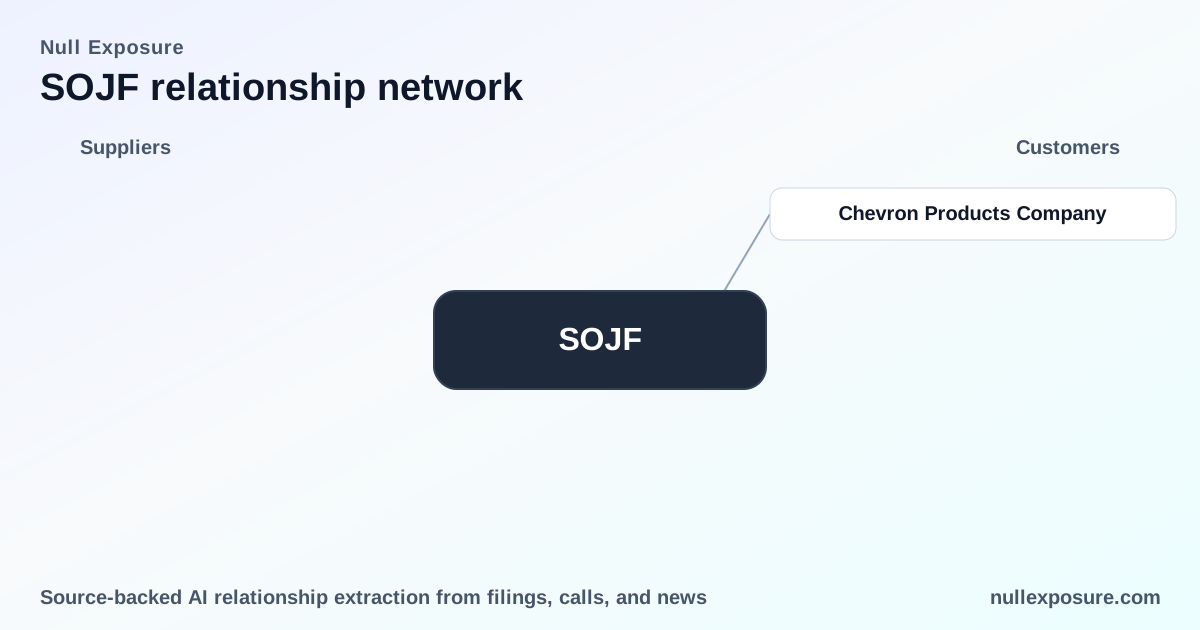
Chevron Products Company — a long-term industrial retail customer
Mississippi Power serves the Chevron refinery in Pascagoula, Mississippi under agreements that extend through at least 2038, making Chevron a long-tenor and strategically significant retail customer for Mississippi Power. According to Southern Company’s FY2024 Form 10‑K, Chevron is identified as Mississippi Power’s largest retail customer and is served under these long-term arrangements. (Source: Southern Company FY2024 Form 10‑K, filing sojf-2024-12-31.)
Why this matters: Mississippi Power’s service to a large refinery creates local revenue concentration and lends stability to retail demand at the subsidiary level so long as the relationship persists; the contract term through 2038 provides long runway for earnings visibility at that operating company.
Practical implications for investors evaluating SOJF customer exposure
Southern’s documented relationships and the broader contract evidence in the 10‑K drive several investment-relevant conclusions:
- Predictable regulated cash flows are the portfolio anchor. Retail utilities operate inside regulatory frameworks where rates and allowed returns are subject to state commissions, producing baseline stability for dividends and leverage metrics.
- Wholesale earnings hinge on PPA rollovers and merchant exposure. Southern Power’s reliance on long-term PPAs reduces commodity-price exposure today but transfers replacement risk to management over the medium term; the company explicitly recognizes that expiration of certain PPAs without successful remarketing could have a material negative impact on Southern Power’s earnings, even if not material to consolidated Southern Company revenues. (Source: Southern Company FY2024 Form 10‑K.)
- Large industrial customers are a double-edged sword. Relationships like the Mississippi Power–Chevron contract deliver concentrated, high-value demand and contracted tenure, but they increase sensitivity to the economic health of specific industrial counterparties and to local regulatory or operational disruptions.
- Counterparty diversity cushions some risk. The company transacts with utilities, cooperatives, municipalities and commercial/industrial customers, providing counterparty diversification across public-sector and private-sector buyers.
- Geographic concentration drives regulatory and market exposure. Southern’s Southeastern footprint centralizes regulatory risk (state commission outcomes) and market fundamentals (seasonal demand drivers, regional natural gas prices).
If you want a centralized view of how these relationships map to filings and excerpts, the research hub at https://nullexposure.com/ aggregates the primary documents and relationship signals.
Investment takeaways and risk checklist
- Strength — stable retail cash flows: Regulated utilities underpin a defensive cash-flow profile and support consistent dividend policy.
- Strength — long-term contracted wholesale revenue: Predominant use of multi-decade PPAs for renewable and gas-fired assets creates multi-year revenue visibility at Southern Power.
- Risk — subsidiary-level concentration: Large industrial retail customers such as the Chevron refinery create concentration risk at the operating company level, which investors should monitor separately from consolidated metrics.
- Risk — contract replacement and market exposure: When PPAs expire, remarketing is not guaranteed; expirations can be earnings-relevant and require active asset redeployment or new PPA negotiation.
- Operational complexity: The firm’s mix of regulated distribution, wholesale generation, and gas-distribution businesses increases execution risk and regulatory interaction demands.
Bottom line: Southern Company offers investors a hybrid of regulated utility stability and contracted wholesale growth; the documented customer relationships — led by long-term retail service to large industrial customers such as Chevron — reinforce the company’s revenue visibility while highlighting concentration and contract-rollover risks that require active monitoring.
For further diligence on contract terms, counterparties, and filing-level excerpts, explore the primary-document research available at https://nullexposure.com/.