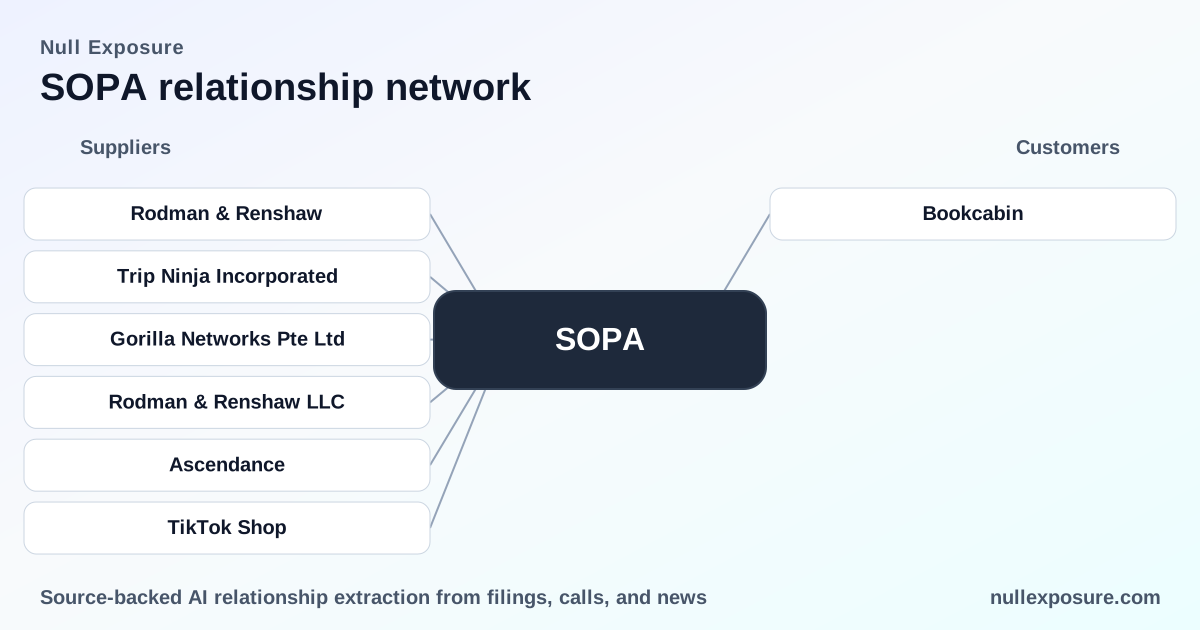
Society Pass (SOPA): Customer Relationships, Concentration, and Commercial Posture
Society Pass Inc. operates a Southeast Asia–focused e‑commerce and loyalty ecosystem that acquires and runs consumer and merchant platforms and monetizes through a mix of subscription software services, marketplace sales, digital marketing, and reseller commerce (notably through the Gorilla mobile plans and the NusaTrip travel platform). The company's revenue model combines recurring subscription fees, usage‑tied advertising and distribution revenue, and hardware/software sales, creating a hybrid cash flow profile that is sensitive to both platform engagement and a small number of large customer relationships. For deeper relationship intelligence, visit https://nullexposure.com/.
Business model in one paragraph: how SOPA actually makes money
Society Pass centralizes customers and merchants on regional platforms and captures value in three ways: (1) subscription fees from hotel and travel technology and mobile‑plan services recognized ratably over contract terms; (2) transaction‑level gross sales where the company acts as principal and therefore reports revenue on a gross basis; and (3) advertising and usage‑based services delivered during publication windows. The company also sells hardware and POS solutions in Vietnam and provides digital marketing and consulting services. This mix produces recurring revenue but leaves SOPA exposed to concentration and platform engagement volatility.
Operating posture and commercial constraints investors should price in
The company filings and public disclosures deliver a compact set of operating constraints that drive how customer relationships behave:
- Contracting posture: SOPA employs a blend of short‑term engagements (1–3 months), recurring subscriptions, and usage‑based advertising. That combination supports quick customer onboarding through short offers while locking in predictable revenue via subscriptions for travel and hotel platform services.
- Revenue concentration and criticality: SOPA’s own Note 20 on concentrations of risk shows a single customer (Customer A) represented approximately 49.3% of revenues in 2024 (US$3.5M), signaling material counterparty concentration and execution risk if that customer changes behavior. The company therefore carries significant single‑counterparty exposure even as it seeks regional diversification.
- Geographic footprint and settlement risk: Operations are predominantly APAC‑focused (Singapore, Vietnam, Indonesia, Philippines, Thailand, Malaysia, India), but reported revenue includes a sizable North American component; filings show meaningful U.S. revenue in 2023–2024, indicating cross‑border settlement, currency and tax complexity.
- Role in the transaction: SOPA generally acts as the principal (seller) for its e‑commerce flows — setting price, managing fulfillment and assuming collection risk — while also running reseller operations (Gorilla) for mobile data plans. This principal posture magnifies both topline and collection risk compared with agent models.
- Product and segment mix: The company’s offerings span software, services, hardware and distribution, with POS hardware/software sold in Vietnam and digital marketing/consulting services elsewhere, producing a patchwork of margin profiles and operational maturity across segments.
Together these signals imply a company that is commercially versatile but operationally concentrated: the mixed contract types permit both rapid top‑line growth and recurring revenue, but the heavy reliance on a few major customers and cross‑border revenue lines elevates downside volatility.
What the public record shows about the customer relationships in scope
Below I cover every relationship mentioned in the available results. Each entry is summarized in plain English and cites the underlying public source.
Bookcabin — strategic distribution partnership (The Manila Times / GlobeNewswire, March 10, 2026)
NusaTrip, SOPA’s majority‑owned travel platform, formed a strategic partnership with Indonesian online travel agency Bookcabin to integrate NusaTrip’s hotel and travel inventory onto Bookcabin’s platform, aimed at improving distribution across Southeast Asia. This was announced in a GlobeNewswire release and reported by The Manila Times on March 10, 2026.
Bookcabin — corroborating coverage (Investing.com, May 4, 2026)
Investing.com reported on May 4, 2026 that Society Pass’s investment activities supporting NusaTrip coincided with a partnership with Indonesia’s Bookcabin to expand hotel and travel options, reinforcing the narrative that NusaTrip is scaling distribution via local OTA integrations. The Investing.com piece connects the partnership to recent capital activity and the strategic objective of expanding travel inventory reach in SEA.
Why the Bookcabin relationship matters to investors
The Bookcabin partnership is a representative example of SOPA’s go‑to‑market playbook: use ownership stakes in vertical platforms (NusaTrip) to syndicate inventory across local storefronts and reseller channels, thereby monetizing through subscription and transactional flows while increasing platform liquidity. For shareholders, this dynamic can accelerate topline growth with limited incremental customer acquisition cost, but it also raises integration and execution risk — successful monetization depends on seamless inventory integration, pricing alignment, and marketing to local Indonesian demand.
Risk and opportunity synthesis: how customer structure shapes valuation
- Upside: The partnership model can deliver high marginal returns if platform cross‑selling increases take rates and occupancy for NusaTrip inventory, while reseller channels (Gorilla) provide additional customer acquisition funnels. Subscription revenue and ratable recognition from platform services add predictable cash flow that investors value.
- Downside: High customer concentration (one customer ~49% of revenues in 2024) and principal‑agent posture increase balance‑sheet and earnings volatility; short‑term contracts also permit rapid churn. Cross‑border operations create currency, tax and collections complexity that compresses realized margin. These factors should be reflected in discount rates and scenario analyses.
Tactical read for portfolio managers and operators
- For active investors: stress‑test models for scenarios where the top customer reduces spend by 25–50% and evaluate the company’s capacity to replace that demand through partnerships like Bookcabin and continued NusaTrip expansion.
- For operators and partners: emphasis should be placed on contract length and revenue granularity — convert short‑term engagements into longer subscription commitments where possible and focus on diversifying counterparty concentration in the U.S. and across APAC markets.
Bold takeaway: SOPA converts platform ownership into distribution and subscription revenue, but the stock is exposed to material concentration and cross‑border execution risk that must be priced aggressively.
For a structured relationship intelligence package and monitoring of SOPA’s evolving partner network, see the NuIlexposure relationship hub at https://nullexposure.com/.