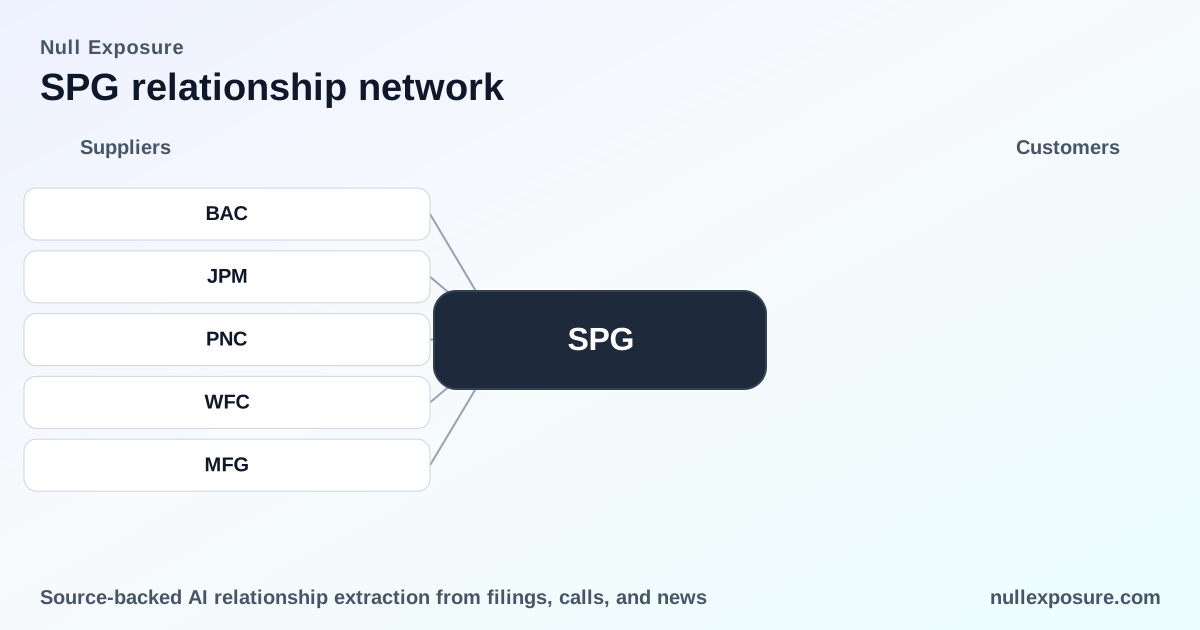
Simon Property Group (SPG): Tenant Relationships That Drive Cash Flow and Risk
Simon Property Group operates and monetizes as a landlord of dominant retail real estate: it generates recurring cash flow from long-term leases with retail, dining and entertainment tenants, supplements income through property services and marketing alliances, and extracts value from outparcels and media assets. The business is a high-margin, asset-centric REIT with concentrated exposure to national and luxury tenants whose rents and percentage rent provisions underpin cash flow and valuation. For a strategic investor briefing on tenant exposure and counterparty dynamics, read on. For more coverage of institutional customer relationships, visit https://nullexposure.com/.
What to watch: why tenant mix matters for SPG’s cash profile
Simon’s operating model is contractually oriented around long-term, operating leases, which places the company in the role of the lessor and secures predictable base rent plus variable rent tied to tenant sales. The company discloses that no individual tenant accounts for 5% or more of consolidated revenues, which translates into low single-tenant concentration but continued dependence on large, recognizable anchors and brands to maintain shopper traffic and variable rent upside. International footprint and high portfolio occupancy—96.5% leased in malls and Premium Outlets as of 2024—signal a mature, revenue-stable asset base that generates both fixed and performance-linked cash flows.
Key business-model signals for investors:
- Contracting posture: Predominantly long-term operating leases—stable base cash flows with upside from percentage rents.
- Counterparty profile: Tenants are largely large enterprises and national brands that function as anchors.
- Geographic diversification: Substantial U.S. concentration plus Premium Outlets exposure across Asia, Europe and Canada.
- Concentration and criticality: Low revenue concentration by tenant, but high criticality of anchor and luxury brands for traffic and rent premiums.
- Maturity: High portfolio occupancy and recurring CAM/fixed lease mechanics denote a mature operating portfolio.
- Spend scale: Simon reports over $100 million in lease income tied to certain retail investments, reflecting large-dollar counterparty economics.
The six tenant relationships in the latest coverage — what they mean
Below I summarize every tenant mention in the collected results and cite the reporting directly.
The Cheesecake Factory (CAKE) — new Concord Mills lease negotiations
Simon is negotiating a lease with The Cheesecake Factory for a restaurant at Concord Mills mall, indicating continued demand from national dining chains for inline and pad locations that drive foot traffic. A local news report covering April 2026 noted the lease talks as part of the Cheesecake Factory’s third Charlotte‑area expansion. (K1047, April 2026)
Gucci — luxury merchandising on a high-quality Vegas retail asset
CommercialSearch’s May 2026 coverage of a Las Vegas retail property financing described the asset as 90.3% leased to 49 tenants, explicitly naming Gucci among the luxury roster, which underscores Simon’s ability to attract top-tier luxury tenants that command premium rents and drive outlet/mall prestige. (CommercialSearch, May 2026)
Louis Vuitton — anchor-level luxury presence
Louis Vuitton was listed alongside other marquee luxury houses in the same CommercialSearch report, indicating that Simon’s asset commands high-end tenancy that supports pricing power and destination retail dynamics. (CommercialSearch, May 2026)
Dave & Buster’s (PLAY) — entertainment operator negotiating with mall owner
A Tri‑Cities Business News article from May 2026 referenced Simon Property Group as the mall owner/operator in connection with a proposed Dave & Buster’s site, illustrating Simon’s role as landlord to experiential entertainment operators that broaden non‑retail revenue drivers and lengthen shopper dwell time. The article noted standard outreach for comment to both parties. (Tri‑Cities Business News, May 2026)
Prada — luxury tenant in premium outlet composition
Prada was also named among the luxury tenants leasing the discussed Las Vegas retail property; inclusion of Prada reinforces the portfolio’s premium tenant mix and the presence of brands that typically participate in outlet and designer‑retailer ecosystems. (CommercialSearch, May 2026)
Hermès — top‑tier luxury tenant supporting destination traffic
Hermès appeared in the same CommercialSearch writeup, confirming that Simon’s asset hosts ultra‑luxury names that support both headline rents and destination status for high‑end retail clusters. (CommercialSearch, May 2026)
How these relationships translate into investor risk and opportunity
These tenant mentions illustrate three structural attributes of Simon’s customer base:
- Anchor and brand-led criticality: Luxury houses and national dining/entertainment operators are not revenue-equal, but they are traffic-equal—their presence materially supports the portfolio’s ability to command higher rents and maintain occupancy. That structural criticality is a positive for valuation multiples in high‑traffic properties.
- Revenue diversification with limited single-tenant concentration: Company disclosures indicate no single tenant contributes ≥5% of consolidated revenue, which dilutes counterparty concentration risk even while the economic health of anchors influences overall portfolio performance.
- Stable, contract-driven cash flow with variable upside: Long-term operating leases produce predictable base rent; variable rent tied to tenant sales provides inflation‑sensitive upside when retail performance is strong.
Operational constraints and what they signal about SPG’s customer relationships
Company-level excerpts reflect the following operational realities:
- Long-term operating lease posture reinforces predictability in rent streams and capital planning.
- Tenants are predominantly large enterprises and anchors, signaling that SPG’s customer book is institutionally scaled and credit-sensitive.
- Geographic reach is global, with meaningful Premium Outlets exposure in Asia, Europe and Canada in addition to a large U.S. footprint—this diversifies macro risk across regions.
- Occupancy and maturity are high (mid‑to‑high 90s leased GLA), indicating portfolio stability rather than early-stage development risk.
- Simon’s role extends beyond landlord to service provider and marketing partner, generating supplemental revenue from property services, media, sponsorships and outparcel monetization.
- The company reports significant lease income (>$100m) tied to certain retail investments, underscoring the scale of counterparty spend and the materiality of some retailer relationships to specific line items.
Bottom line for investors and operators
Simon Property Group’s revenue engine is a predictable, lease‑driven model anchored by national and luxury tenants that deliver both base rent and percentage rent upside. The tenant coverage in recent media highlights a mix of dining, entertainment and ultra‑luxury retail, reinforcing a strategy that balances traffic drivers with high‑margin specialty retail. Risks to monitor are tenant retail performance (which affects variable rent), luxury demand cycles in flagship markets, and regional macro trends across SPG’s international outlets.
For practitioners assessing counterparties, focus on lease terms and occupancy profiles at specific assets, plus the degree to which luxury anchors are clustered together—those dynamics determine both upside and downside under stress scenarios. For more client relationship intelligence and portfolio-level tenant analysis, see our homepage at https://nullexposure.com/.
Bold takeaways:
- Long-term leases + high occupancy = predictable cash flow.
- Luxury and experiential tenants increase traffic and pricing power but concentrate destination risk.
- No single tenant dominates revenue; risk is portfolio-wide rather than counterparty-specific.
For institutional inquiries or a tailored tenant exposure memo, visit https://nullexposure.com/ for additional research and services.