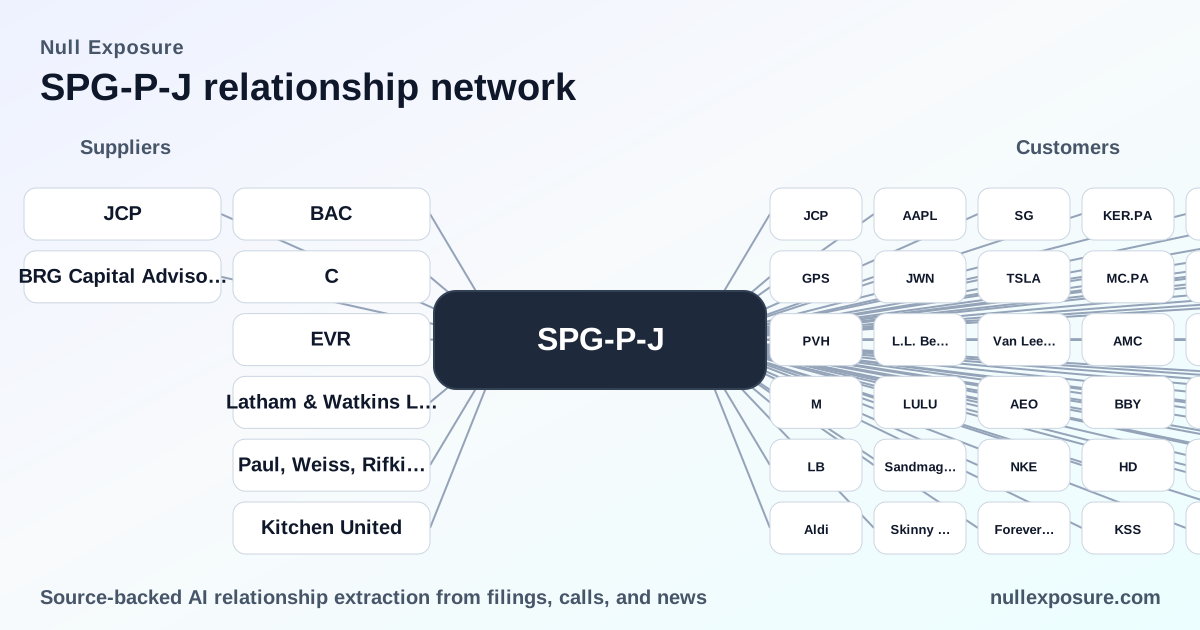
SPG-P-J: Tenant Map and What It Means for Preferred‑stock Investors
Simon Property Group operates and monetizes a nationwide portfolio of shopping malls, premium outlets and mixed‑use centers by leasing space to national and local retailers, redeveloping underperforming parcels into higher‑value uses, and extracting ancillary revenue from parking, advertising and hospitality. Revenue is driven by long‑dated lease cash flows and active asset management that converts vacant or big‑box footprints into higher‑yield retail, dining, entertainment and hotel assets. For an institutional view of Simon’s customer relationships, see NullExposure’s coverage at https://nullexposure.com/.
Key operating signals investors should take from Simon’s tenant footprint
Simon’s tenant list shows a clear, diversified retail mix that nevertheless concentrates economic exposure in a handful of categories and flagship brand relationships. Investors should treat these attributes as operating constraints and competitive drivers:
- Contracting posture: Simon operates predominantly as a long‑term landlord with standard triple‑net and retail lease structures; many tenants are flagship national chains with multi‑location commitments that stabilize cash flow.
- Concentration risk: A small number of national retailers (department stores, apparel anchors, and lifestyle brands) generate outsized rent and sales per square foot; this produces both pricing power and vulnerability to tenant distress.
- Criticality and optionality: Anchor stores and high‑sales specialty tenants (Apple, Tesla, luxury boutiques) act as traffic drivers and are highly critical to asset economics; Simon offsets risk through redevelopment and mixed‑use conversions.
- Maturity and evolution: The portfolio is in active transition — Simon is increasing experiential, F&B and hospitality components (hotels, entertainment) to lift NOI per acre and ESG resilience.
If you want a structured feed of tenant‑level signals and citations for diligence, visit NullExposure for the corporate view: https://nullexposure.com/.
Tenant relationships — single‑line readouts with sources
Below is a concise, itemized readout of each tenant relationship reported in Simon’s news coverage and filings in the sample dataset. Each line is a plain‑English 1–2 sentence observation with a source citation.
- GPS is cited as one of Simon’s top tenants by rent in Simon’s Q1 2021 earnings commentary (CNBC, May 10, 2021). (https://www.cnbc.com/2021/05/10/simon-property-group-spg-q1-2021-earnings.html)
- PVH (owner of brands like Calvin Klein) is listed among top rent contributors to Simon’s portfolio in 2021 earnings coverage (CNBC, May 10, 2021). (https://www.cnbc.com/2021/05/10/simon-property-group-spg-q1-2021-earnings.html)
- Macy’s is identified as a major department‑store tenant across Simon properties in Q1 2021 commentary (CNBC, May 10, 2021). (https://www.cnbc.com/2021/05/10/simon-property-group-spg-q1-2021-earnings.html)
- Gap Inc. is named among Simon’s top rent‑paying tenants in the company’s 2021 earnings narrative (CNBC, May 10, 2021). (https://www.cnbc.com/2021/05/10/simon-property-group-spg-q1-2021-earnings.html)
- L Brands is included in Simon’s list of large tenants contributing significant rent in 2021 earnings coverage (CNBC, May 10, 2021). (https://www.cnbc.com/2021/05/10/simon-property-group-spg-q1-2021-earnings.html)
- J.C. Penney is highlighted as a strategic tenant following Simon’s acquisition activity and bankruptcy exit plays (RetailDive, 2022). (https://www.retaildive.com/news/consumer-wariness-simon-owned-retailers/628648/)
- Savage x Fenty is announced as a new tenant at South Shore Plaza, marking geographic expansion for the brand (NEREJ, FY2024). (https://nerej.com/simon-property-group-adds-nine-retailers-to-south-shore-plaza)
- The Cheesecake Factory is cited as an existing dining anchor at South Shore Plaza in local redevelopment reports (NEREJ, FY2024). (https://nerej.com/simon-property-group-adds-nine-retailers-to-south-shore-plaza)
- Lululemon is recorded as a conventional retail addition in Northshore Mall’s redevelopment (REBusinessOnline, FY2025). (https://rebusinessonline.com/simon-completes-redevelopment-of-northshore-mall-in-peabody-massachusetts/)
- KER.PA (Kering) is mentioned as a long‑term tenant and strategic partner in a Simon transaction commentary that expects NAV accretion (Yahoo Finance, FY2025). (https://finance.yahoo.com/news/simon-property-group-inc-spg-071523245.html)
- Apple Store / AAPL is documented as having been expanded and remodeled at South Shore Plaza, reinforcing Apple’s role as a traffic driver (NEREJ, FY2024). (https://nerej.com/simon-property-group-adds-nine-retailers-to-south-shore-plaza)
- Nordstrom / JWN is listed as the South Shore’s only Nordstrom and as a top‑performing store in Brea Mall reporting (NEREJ; TheRealDeal, FY2024/FY2023). (https://nerej.com/simon-property-group-adds-nine-retailers-to-south-shore-plaza; https://therealdeal.com/la/2023/02/03/simon-seeks-to-redevelop-former-sears-site-at-brea-mall/)
- Uniqlo is among the arrivals at South Shore Plaza in recent tenant expansions (NEREJ, FY2024). (https://nerej.com/simon-property-group-adds-nine-retailers-to-south-shore-plaza)
- Akira is included in South Shore Plaza tenant additions (NEREJ, FY2024). (https://nerej.com/simon-property-group-adds-nine-retailers-to-south-shore-plaza)
- Box Lunch is cited as a new retailer at South Shore Plaza (NEREJ, FY2024). (https://nerej.com/simon-property-group-adds-nine-retailers-to-south-shore-plaza)
- Golf Lounge 18 is named as a leisure tenant in both South Shore Plaza and Long Island revamp plans (NEREJ; CommercialSearch, FY2024/FY2025). (https://nerej.com/simon-property-group-adds-nine-retailers-to-south-shore-plaza; https://www.commercialsearch.com/news/simon-eyes-long-island-shopping-mall-revamp/)
- Earthbound Trading is listed among South Shore Plaza arrivals (NEREJ, FY2024). (https://nerej.com/simon-property-group-adds-nine-retailers-to-south-shore-plaza)
- Turmeric House is reported as a food concept added to South Shore Plaza (NEREJ, FY2024). (https://nerej.com/simon-property-group-adds-nine-retailers-to-south-shore-plaza)
- Pho & Dough is named among South Shore Plaza entrants (NEREJ, FY2024). (https://nerej.com/simon-property-group-adds-nine-retailers-to-south-shore-plaza)
- Aerie is referenced as a brand present at Woodbury Common and as a potential lease for new Simon sites (WWD, FY2025). (https://wwd.com/business-news/real-estate/simon-bolstering-its-nashville-presence-1236892210/)
- Converse is called out among brands at Woodbury Common and as a possible tenant for new Simon developments (WWD, FY2025). (https://wwd.com/business-news/real-estate/simon-bolstering-its-nashville-presence-1236892210/)
- Forever 21 appears repeatedly as a tenant and as part of Simon’s ownership ventures (RetailDive, FY2021). (https://www.retaildive.com/news/malls-are-rebounding-but-q2-shows-how-cloudy-their-future-is/604922/)
- Gap Factory is cited among mid‑market brands at premium outlet properties (WWD, FY2025). (https://wwd.com/business-news/real-estate/simon-bolstering-its-nashville-presence-1236892210/)
- Gucci is listed among high‑end labels at Woodbury Common and other premium outlets (WWD, FY2025). (https://wwd.com/business-news/real-estate/simon-bolstering-its-nashville-presence-1236892210/)
- Loro Piana is included in the roster of luxury brands at Simon’s premium outlets (WWD, FY2025). (https://wwd.com/business-news/real-estate/simon-bolstering-its-nashville-presence-1236892210/)
- Saint Laurent is cited among designer tenants at Simon premium properties (WWD, FY2025). (https://wwd.com/business-news/real-estate/simon-bolstering-its-nashville-presence-1236892210/)
- Aldi is identified as a new anchor under construction at Liberty Tree Mall listings (CBS Boston, FY2022). (https://www.cbsnews.com/boston/news/liberty-tree-mall-danvers-sale/)
- AMC / AMC Theatre is listed as an anchor tenant at Liberty Tree Mall in sale listings (CBS Boston, FY2022). (https://www.cbsnews.com/boston/news/liberty-tree-mall-danvers-sale/)
- Best Buy is documented as a shadow anchor in Liberty Tree Mall marketing materials (CBS Boston, FY2022). (https://www.cbsnews.com/boston/news/liberty-tree-mall-danvers-sale/)
- Home Depot is noted as a shadow anchor at Liberty Tree Mall (CBS Boston, FY2022). (https://www.cbsnews.com/boston/news/liberty-tree-mall-danvers-sale/)
- Kohl’s is listed as a strong shadow anchor in local mall sale coverage (CBS Boston, FY2022). (https://www.cbsnews.com/boston/news/liberty-tree-mall-danvers-sale/)
- Marshalls is named among anchor tenants at Liberty Tree Mall in listings (CBS Boston, FY2022). (https://www.cbsnews.com/boston/news/liberty-tree-mall-danvers-sale/)
- Michaels is documented as part of Liberty Tree Mall’s anchor line‑up (CBS Boston, FY2022). (https://www.cbsnews.com/boston/news/liberty-tree-mall-danvers-sale/)
- Nordstrom Rack is referenced as a shadow anchor at Liberty Tree Mall (CBS Boston, FY2022). (https://www.cbsnews.com/boston/news/liberty-tree-mall-danvers-sale/)
- Target is listed as a nearby shadow anchor supporting mall economics (CBS Boston, FY2022). (https://www.cbsnews.com/boston/news/liberty-tree-mall-danvers-sale/)
- Total Wine & More is included in Liberty Tree Mall tenant descriptions (CBS Boston, FY2022). (https://www.cbsnews.com/boston/news/liberty-tree-mall-danvers-sale/)
- Bahama Breeze is cited among national dining tenants at a Long Island mall under consideration for revamp (CommercialSearch, FY2025). (https://www.commercialsearch.com/news/simon-eyes-long-island-shopping-mall-revamp/)
- Barnes & Noble is recorded in the Long Island mall tenant roster slated for revamp (CommercialSearch, FY2025). (https://www.commercialsearch.com/news/simon-eyes-long-island-shopping-mall-revamp/)
- Guess is listed among national retail tenants in Simon’s Long Island planning notes (CommercialSearch, FY2025). (https://www.commercialsearch.com/news/simon-eyes-long-island-shopping-mall-revamp/)
- H&M appears in the reported tenant mix for the Long Island revamp (CommercialSearch, FY2025). (https://www.commercialsearch.com/news/simon-eyes-long-island-shopping-mall-revamp/)
- Claire’s is cited as a tenant in the Long Island mall inventory (CommercialSearch, FY2025). (https://www.commercialsearch.com/news/simon-eyes-long-island-shopping-mall-revamp/)
- White House Black Market is included among national retailers in the Long Island property report (CommercialSearch, FY2025). (https://www.commercialsearch.com/news/simon-eyes-long-island-shopping-mall-revamp/)
- LoveSac is referenced in the Long Island mall tenant list (CommercialSearch, FY2025). (https://www.commercialsearch.com/news/simon-eyes-long-island-shopping-mall-revamp/)
- Dick’s Sporting Goods / DKS is repeatedly named as a new and planned “House of Sport” store in Northshore Mall redevelopment notes (REBusinessOnline, FY2025). (https://rebusinessonline.com/simon-completes-redevelopment-of-northshore-mall-in-peabody-massachusetts/)
- Sephora is listed as part of the Long Island mall tenant roster in redevelopment coverage (CommercialSearch, FY2025). (https://www.commercialsearch.com/news/simon-eyes-long-island-shopping-mall-revamp/)
- The LEGO Store is recorded among specialty retailers in Long Island mall planning (CommercialSearch, FY2025). (https://www.commercialsearch.com/news/simon-eyes-long-island-shopping-mall-revamp/)
- Ruth’s Chris Steakhouse is named as an on‑site dining tenant in Long Island coverage (CommercialSearch, FY2025). (https://www.commercialsearch.com/news/simon-eyes-long-island-shopping-mall-revamp/)
- Starbucks appears in the Long Island tenant roster and broader mall reports (CommercialSearch, FY2025). (https://www.commercialsearch.com/news/simon-eyes-long-island-shopping-mall-revamp/)
- Zara is announced as opening in Eastern Long Island under Simon’s revamp plan (CommercialSearch, FY2025). (https://www.commercialsearch.com/news/simon-eyes-long-island-shopping-mall-revamp/)
- Sur la Table is slated to open under Simon’s Long Island redevelopment timeline (CommercialSearch, FY2025). (https://www.commercialsearch.com/news/simon-eyes-long-island-shopping-mall-revamp/)
- Express / EXPR is mentioned in local reporting as operating factory outlet stores within Simon properties (IndyStar, FY2024). (https://www.indystar.com/story/news/local/2024/06/26/simon-joins-venture-to-buy-express-mall-retailer/74217712007/)
- Express Factory Outlet is specifically noted as operating at Indiana Premium Outlets (IndyStar, FY2024). (https://www.indystar.com/story/news/local/2024/06/26/simon-joins-venture-to-buy-express-mall-retailer/74217712007/)
- Saks Global / Saks Off 5th is involved in lease termination disputes at Woodbury Common, reflecting landlord enforcement actions (RetailDive, FY2026). (https://www.retaildive.com/news/saks-global-bankruptcy-rent-disputes-mall-landlords/812433/)
- Amazon / AMZN has been in reported talks with Simon to occupy vacant mall space, reflecting Simon’s adaptive leasing strategies (WFYI, FY2020). (https://www.wfyi.org/news/articles/simon-reportedly-in-talks-with-amazon-to-fill-vacant-space)
- Big Chicken is listed among new food tenants in Northshore Mall’s redevelopment (REBusinessOnline, FY2025). (https://rebusinessonline.com/simon-completes-redevelopment-of-northshore-mall-in-peabody-massachusetts/)
- Tesla / TSLA is noted to have debuted a showroom at Northshore Mall, highlighting nontraditional auto retail in malls (REBusinessOnline; TheRealDeal, FY2025/FY2021). (https://rebusinessonline.com/simon-completes-redevelopment-of-northshore-mall-in-peabody-massachusetts/; https://therealdeal.com/new-york/tristate/2021/07/15/heres-what-tenants-pay-and-make-at-the-westchester-mall-in-white-plains/)
- Van Leeuwen is scheduled to open at Northshore Mall as part of the new F&B lineup (REBusinessOnline, FY2025). (https://rebusinessonline.com/simon-completes-redevelopment-of-northshore-mall-in-peabody-massachusetts/)
- Skinny Pancake is reported as a planned local F&B addition at Northshore Mall (REBusinessOnline, FY2025). (https://rebusinessonline.com/simon-completes-redevelopment-of-northshore-mall-in-peabody-massachusetts/)
- Sweetgreen is documented among the updated food offerings at Northshore Mall (REBusinessOnline, FY2025). (https://rebusinessonline.com/simon-completes-redevelopment-of-northshore-mall-in-peabody-massachusetts/)
- Honeygrow is listed as part of the Northshore Mall food component (REBusinessOnline, FY2025). (https://rebusinessonline.com/simon-completes-redevelopment-of-northshore-mall-in-peabody-massachusetts/)
- Immersive Gamebox is included as an entertainment tenant in Northshore Mall’s redevelopment (REBusinessOnline, FY2025). (https://rebusinessonline.com/simon-completes-redevelopment-of-northshore-mall-in-peabody-massachusetts/)
- Gametime Lanes & Entertainment is cited as part of Northshore Mall’s entertainment roster (REBusinessOnline, FY2025). (https://rebusinessonline.com/simon-completes-redevelopment-of-northshore-mall-in-peabody-massachusetts/)
- It’Sugar is named among new retail entrants at Northshore Mall (REBusinessOnline, FY2025). (https://rebusinessonline.com/simon-completes-redevelopment-of-northshore-mall-in-peabody-massachusetts/)
- Life Time Fitness / LTH opened a large athletic resort inside Northshore Mall, marking a move into large experiential uses (REBusinessOnline, FY2025). (https://rebusinessonline.com/simon-completes-redevelopment-of-northshore-mall-in-peabody-massachusetts/)
- L.L. Bean is recorded as a new tenant in Northshore Mall redevelopment materials (REBusinessOnline, FY2025). (https://rebusinessonline.com/simon-completes-redevelopment-of-northshore-mall-in-peabody-massachusetts/)
- Residence Inn by Marriott (MAR) is under construction as a 142‑room hotel connected to Northshore Mall redevelopment (REBusinessOnline, FY2025). (https://rebusinessonline.com/simon-completes-redevelopment-of-northshore-mall-in-peabody-massachusetts/)
- Neiman Marcus is cited as an anchor that pays nominal rent per square foot at certain Simon properties, underscoring anchor lease economics (TheRealDeal, FY2021). (https://therealdeal.com/new-york/tristate/2021/07/15/heres-what-tenants-pay-and-make-at-the-westchester-mall-in-white-plains/)
- Lucky Brand is listed among brands Simon acquired or operates through joint ventures (RetailDive, FY2021). (https://www.retaildive.com/news/malls-are-rebounding-but-q2-shows-how-cloudy-their-future-is/604922/)
- Dillard’s appears in local mall coverage as a former anchor that left pre‑pandemic (ExpressNews, FY2021). (https://www.expressnews.com/business/article/Ingram-Park-Mall-on-West-Side-sells-for-100-7-16318135.php)
- JCPenney / JCP / JC Penney / J.C. Penney (multiple entries) are repeatedly referenced across filings and local reporting as anchors, ownership targets and strategic tenants after Simon/Brookfield transactions (WFYI; RetailDive; ExpressNews, FY2020–FY2024). (https://www.wfyi.org/news/articles/simon-reportedly-in-talks-with-amazon-to-fill-vacant-space; https://www.retaildive.com/news/consumer-wariness-simon-owned-retailers/628648/; https://www.expressnews.com/business/article/Ingram-Park-Mall-on-West-Side-sells-for-100-7-16318135.php)
- Morgan Stanley is referenced as an acquirer at foreclosure auction for an asset formerly owned by Simon, indicating capital markets activity around mall assets (ExpressNews, FY2021). (https://www.expressnews.com/business/article/Ingram-Park-Mall-on-West-Side-sells-for-100-7-16318135.php)
- Transformco / Sears / SHLWQ are mentioned in multiple reports as closing or redeveloping Sears space inside Simon malls (RetailDive; TheRealDeal, FY2021–FY2023). (https://www.retaildive.com/news/sears-to-close-the-last-department-store-in-its-home-state/606767/; https://therealdeal.com/la/2023/02/03/simon-seeks-to-redevelop-former-sears-site-at-brea-mall/)
- Aeropostale, Brooks Brothers, Lucky Brand, and other legacy mall brands are listed as retailers Simon owns or operates through ventures, reflecting vertical integration (RetailDive, FY2021). (https://www.retaildive.com/news/malls-are-rebounding-but-q2-shows-how-cloudy-their-future-is/604922/)
- David Yurman, Tourneau, Louis Vuitton, Tiffany & Co., Peloton, Nobu, Brunello Cucinelli, Prada, and similar luxury tenants are documented as high sales per square foot occupants at select Simon assets, underscoring the premium outlet and luxury cluster strategy (TheRealDeal; WWD, FY2021–FY2025). (https://therealdeal.com/new-york/tristate/2021/07/15/heres-what-tenants-pay-and-make-at-the-westchester-mall-in-white-plains/; https://wwd.com/business-news/real-estate/simon-bolstering-its-nashville-presence-1236892210/)
- Arhaus is recorded as a new tenant in Northshore Mall’s redevelopment list (REBusinessOnline, FY2025). (https://rebusinessonline.com/simon-completes-redevelopment-of-northshore-mall-in-peabody-massachusetts/)
- David Yurman and other specialty luxury tenants are again noted for high sales density at top Simon malls (TheRealDeal, FY2021). (https://therealdeal.com/new-york/tristate/2021/07/15/heres-what-tenants-pay-and-make-at-the-westchester-mall-in-white-plains/)
(If your model or underwriting process requires tenant‑level links and time‑stamped source extracts for each of these lines, NullExposure provides a consolidated access point for institutional clients at https://nullexposure.com/.)
Bottom line for investors in SPG‑P‑J
Simon’s tenant roster demonstrates scale, category diversification, and active asset optimization — all central to sustaining preferred dividend coverage over time. The portfolio shows concentration in large national tenants and increasing exposure to experiential and hospitality uses, which both support upside in NOI but introduce execution risk during redevelopments. Monitor anchor tenant lease economics, legal disputes (e.g., Saks Off 5th), and the pace at which Simon converts vacated big‑box footprints into higher‑yield commercial and mixed‑use assets.
For structured tenant signals, legal filings, and time‑series monitoring of these relationships tailored to credit and preferred‑stock analysis, visit NullExposure’s institutional portal: https://nullexposure.com/.