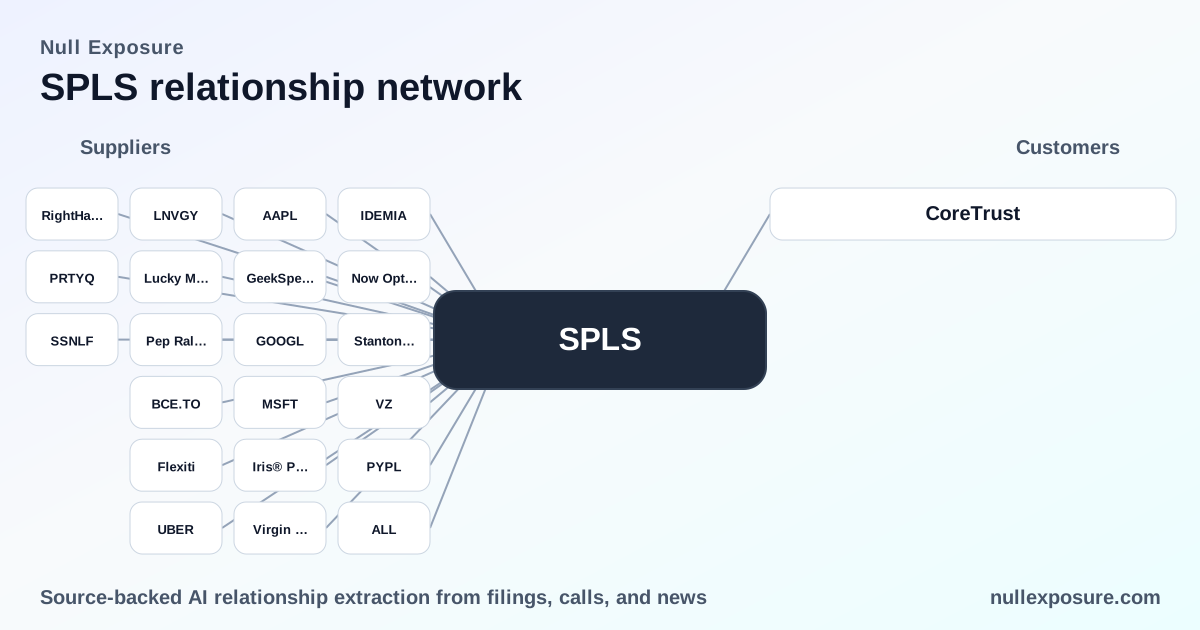
Staples (SPLS) — customer relationships that drive recurring revenue and procurement stickiness
Thesis: Staples monetizes through a mix of direct product sales and higher-margin services tied to procurement and payments — corporate procurement partnerships and card/loyalty arrangements convert one-off purchases into recurring cash flows and embedded spend. Customer contracts and payment partnerships are primary levers for predictable revenue and margin expansion; investors should value Staples not only as a retail merchandiser but as a procurement and payments platform for business customers. For further analysis and continuous monitoring, visit https://nullexposure.com/.
Why customer relationships change the Staples investment case
Staples’ core economics hinge on two complementary revenue engines. First, large procurement relationships lock in repetitive corporate spend, stabilizing topline and enabling negotiated margins through scale purchasing and preferred-service fees. Second, card and rewards partnerships convert customers into persistent users, generating interchange, co-branded marketing revenue, and incremental volume. These dynamics push the company away from pure commodity retailing toward a services-enhanced model with higher lifetime value per customer.
Operationally, this implies a contracting posture that favors multi-year agreements and platform-style integrations with institutional customers; concentration of revenue toward large procurement partners is an active risk but also a source of predictable cash flows when contracts are sticky. Staples’ customer relationships sit at the intersection of transactional retail and contract-backed procurement, positioning the company as a mature counterparty for business buyers.
What the record shows: every customer relationship in the results
The sample of customer-level records includes two relationships flagged in the provided results. Each relationship below is covered with a concise statement and source.
CoreTrust — procurement partnership
Procurement Magazine reports CoreTrust characterizes Staples as a trusted procurement partner, delivering value, service and expertise to its members, demonstrating Staples’ role in institutional purchasing channels (Procurement Magazine, March 2026). This coverage signals Staples’ direct participation in organized procurement programs that aggregate member demand and create recurring purchase flows (source: https://procurementmag.com/procurement-strategy/coretrust-staples-15-years-procurement-partnership).
AVBC (Avidia Bank card reference) — card rewards linkage
A CardRates profile referencing a bank card program lists “Staples: 3 bonus points per $1”, indicating Staples is an explicit rewards-eligible merchant in at least one co-branded/partnered card offering and benefits from credit-card-driven incentives that drive spend concentration (CardRates, citing FY2020 terms; seen March 2026). This demonstrates Staples’ exposure to card rewards channels that incent customer loyalty and incremental spend (source: https://www.cardrates.com/news/avidia-bank-cards-offer-competitive-rates-and-rewards/).
Operating-model signals and company-level constraints
The results contain no customer-specific constraints flagged in the record. Treated as a company-level signal, the absence of constraint excerpts in this feed suggests a clean slate in terms of disclosed customer disputes or formally flagged procurement limitations during the covered sample period. From an operational perspective, investors should interpret this as follows:
- Contracting posture: Staples conducts business through established procurement agreements and payments partnerships rather than purely spot retail transactions. That posture implies longer sales cycles but higher revenue visibility once agreements are in place.
- Concentration: Procurement relationships are typically higher concentration lines relative to retail storefronts; a handful of large institutional contracts can drive meaningful revenue and therefore amplify counterparty risk if renewal terms weaken.
- Criticality: For partners like CoreTrust, Staples is positioned as a critical supplier of office goods and procurement services — this increases retention power and pricing leverage within negotiated frameworks.
- Maturity: The presence of both procurement and card programs indicates a mature commercial model that blends low-margin distribution with higher-margin contractual services and partnership revenue.
Investment implications and risk framing
- Revenue predictability improves with procurement exposure. Institutional partnerships convert ad-hoc orders into recurring commitments, improving cash-flow visibility and enabling operational planning at scale. Investors should attribute higher forward revenue certainty to the procurement book relative to pure retail.
- Margin leverage comes from services and payments. Card partnerships and procurement services introduce fee-based and interchange-like margins that expand gross profitability beyond product margin alone.
- Concentration is a double-edged sword. While large contracts lift revenue quality, they increase client-specific risk. Active monitoring of contract renewal cadence and procurement-program dynamics is essential.
- Customer relationships are strategic assets. Staples’ integration into procurement ecosystems and rewards programs functions as a competitive moat: switching costs for organizational buyers and incentive-driven consumer behaviors reduce churn and increase lifetime value.
For investors and operators who want a structured feed of customer relationship signals and constraint monitoring, NullExposure curates verified customer and supplier linkages to inform contract risk and revenue concentration decisions. Visit https://nullexposure.com/ for ongoing coverage.
Final read: what to watch next
- Renewal cadence and pricing in large procurement agreements. Contract renewals will directly affect revenue projections and margin assumptions for the procurement channel.
- Expansion of card and payments partnerships. Broader or deeper co-branded card programs will increase recurring revenue per customer through incentive-driven spend.
- Disclosure of customer concentration in financial filings. Any explicit company reporting that identifies top customers or material procurement contracts will materially update the risk profile.
Conclusion: Staples’ customer relationships in the record underscore its dual identity as a retailer and a procurement/payments platform. These partnerships are core inputs to future revenue stability and margin expansion, and they warrant focused monitoring by investors looking to separate operationally durable revenue from cyclical retail exposure.