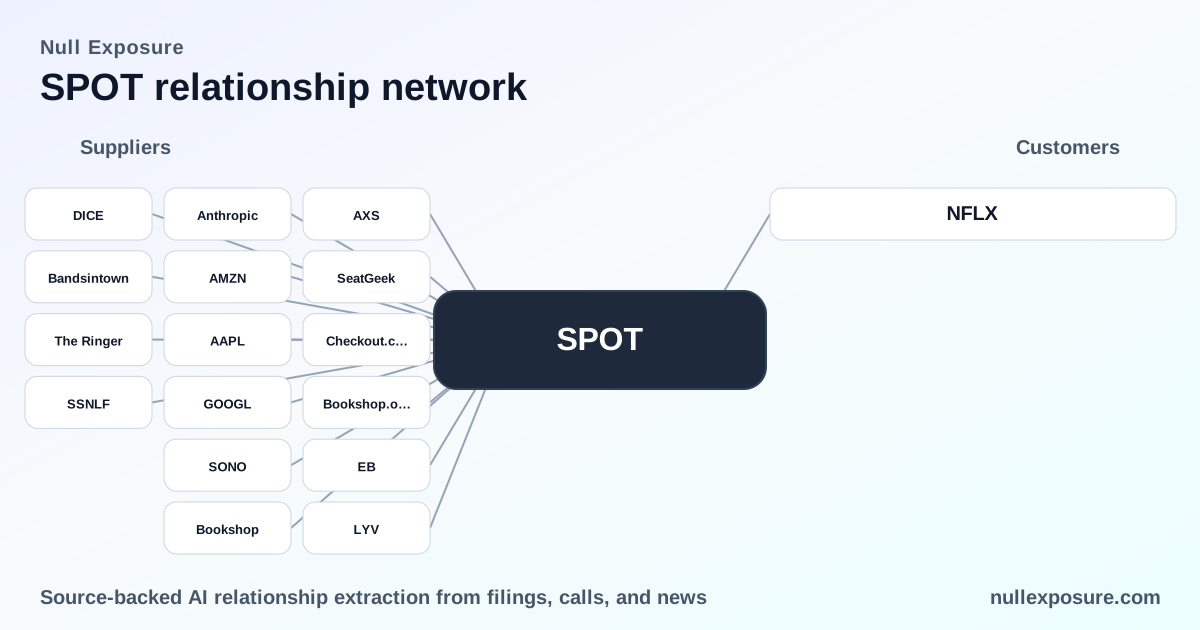
Spotify’s customer map: audio monetization through distribution and advertising
Spotify is a two-sided audio platform that monetizes through subscription fees and advertising sales, with advertising revenue increasingly driven by targeted audio ads and podcast syndication deals that expand audience reach and advertiser inventory. For investors and operators, the recent customer relationships show Spotify executing a diversification strategy across local advertisers, podcast networks, and strategic syndication partners to grow ad yield and non-subscription revenue. This set of customer signals underscores Spotify’s role as both a marketplace for listeners and a distribution partner for content and brands.
Explore broader coverage at https://nullexposure.com/ for related counterparty intelligence.
What these customer relationships mean in one line
Spotify converts listener attention into revenue by selling reach—through geo-targeted audio ads, distribution placements for podcasters, and integrations that place music and podcasts inside third‑party apps and devices. The relationships below collectively reflect ad sales, podcast distribution, and platform integrations as active revenue channels.
Customer relationships on the record
Hanover Bank (HNVR) — local ad buyer for geo-targeted audio
Hanover Bank ran a geo-targeted audio ad campaign on Spotify that reached listeners within a 10‑mile radius of bank branches, demonstrating Spotify’s ability to sell localized ad inventory to regional advertisers (Hanover press release, March 2026: https://www.theglobeandmail.com/investing/markets/stocks/HNVR/pressreleases/33958541/hanover-bank-launches-inaugural-radio-digital-audio-campaign-to-reinforce-community-commitment-growth-strategy/).
PodcastOne (PODC) — distribution partner and audience amplification (QuiverQuant)
PodcastOne cites Spotify among the platforms that help it reach over 1 billion monthly impressions, confirming Spotify’s role as a major distribution channel for podcast publishers and a source of monetizable impressions (QuiverQuant news, FY2026: https://www.quiverquant.com/news/PodcastOne+Reports+Record+FY+2026+Q4+Revenue+of+Over+%2415M+and+%242.3M+Adjusted+EBITDA%2C+Driven+by+Growth+Strategies).
Netflix (NFLX) — syndication partner for video podcasts (Finviz)
Spotify has a syndication deal that will place Spotify’s top video podcasts onto Netflix, indicating cross‑platform content monetization and a strategic avenue to grow podcast audiences beyond audio channels (Finviz report, March 2026: https://finviz.com/news/299307/the-sound-of-money-how-spotify-turned-audio-into-profit-power).
Netflix Inc (NFLX) — same syndication note (duplicate source record)
The same Finviz coverage reiterates the syndication arrangement between Spotify and Netflix to extend video podcast distribution onto Netflix’s platform, reinforcing the strategic importance of non‑audio distribution for podcast monetization (Finviz report, March 2026: https://finviz.com/news/299307/the-sound-of-money-how-spotify-turned-audio-into-profit-power).
Match Group / Tinder (MTCH) — product integration with Spotify for Music Mode
Tinder introduced a Music Mode that allows users to add songs to their profiles through a partnership with Spotify, demonstrating Spotify’s role as an integrated content provider inside other consumer apps and a channel for music discovery that supports engagement and retention (ProactiveInvestors coverage, FY2026: https://www.proactiveinvestors.com/companies/news/1088885/match-group-s-tinder-push-builds-momentum-but-analysts-remain-cautious-1088885.html).
PodcastOne (PODC) — distribution network mention (MarketScreener)
MarketScreener reports PodcastOne’s distribution network reaches over one billion listeners a month across properties that include Spotify, underscoring Spotify’s substantial share of podcast distribution and the scale advertisers and producers access through the platform (MarketScreener, March 2026: https://www.marketscreener.com/news/podcastone-raises-full-year-fiscal-2026-guidance-revenue-expected-60-million-to-62-million-ce7e5ddadf89f527).
Sonos (SONO) — platform compatibility that sustains streaming reach
Sonos cited Spotify among music services that “thrive” on its platform, highlighting Spotify’s embedded presence in consumer hardware and the persistent value of device partnerships for listener access and retention (Strata‑Gee coverage, FY2025: https://www.strata-gee.com/calling-year-transitional-sonos-reports-fiscal-2025-results-revenues-decline-losses-increase/).
Key takeaways for investors and operators
- Advertising flexibility: Localized campaigns like Hanover Bank’s show Spotify sells granular geo‑targeted audio inventory that commands premium ad rates versus broad audio buys.
- Podcast monetization through distribution: Multiple entries for PodcastOne and the Netflix syndication highlight a two‑pronged podcast strategy—direct ad sales on Spotify and external syndication to expand audience and licensing revenue.
- Platform integrations drive reach: Integrations with Tinder and Sonos demonstrate growth channels that improve engagement metrics and indirect monetization opportunities.
- Cross‑media partnerships: Syndication to Netflix signals Spotify is executing a content licensing strategy that leverages video and non‑audio distribution to scale podcast IP.
Operating model and business‑model characteristics (company‑level signals)
Spotify’s commercial posture is that of a high‑volume, low‑marginal‑cost distribution platform: contracts are standardized for ad buys but scale-dependent for pricing and yield. Relationship concentration is low on the advertiser side—Spotify sells to many regional and national buyers—but higher on strategic distribution partners and device integrators because a handful of platform integrations materially affect reach. Criticality is asymmetric: content and distribution partners are more critical for audience growth than any single advertiser, while device partnerships are mission‑critical for daily active user engagement. Maturity is mixed—advertising and music streaming are mature revenue streams, whereas podcast syndication and video podcast licensing are emerging high-leverage channels driving incremental monetization.
Risks tied to these customer relationships
- Revenue sensitivity to ad demand: Local ad buyers and podcast advertisers can fluctuate with macro cycles, directly affecting ad revenue.
- Platform dependency: Spotify’s value to partners is tied to its active listener base; any meaningful audience contraction would degrade its ad yields and bargaining power.
- Partner consolidation: Syndication and integration deals with dominant platforms like Netflix or major hardware vendors concentrate bargaining leverage with a few counterparties.
Bottom line for investors
Spotify’s customer signals show a deliberate push to monetize attention beyond subscriptions—geo‑targeted audio ads, podcast distribution scale, and cross‑platform syndication are all active levers. These relationships confirm Spotify is transitioning podcasting from a promotional channel into a diversified revenue engine while preserving subscription economics. For deeper counterparty and relationship intelligence, visit https://nullexposure.com/ to see how these signals integrate into supplier and customer risk profiles.
Bold moves in distribution and ad inventory engineering will determine whether Spotify sustains its premium valuation multiple through recurring ad revenue growth and higher monetization per user.