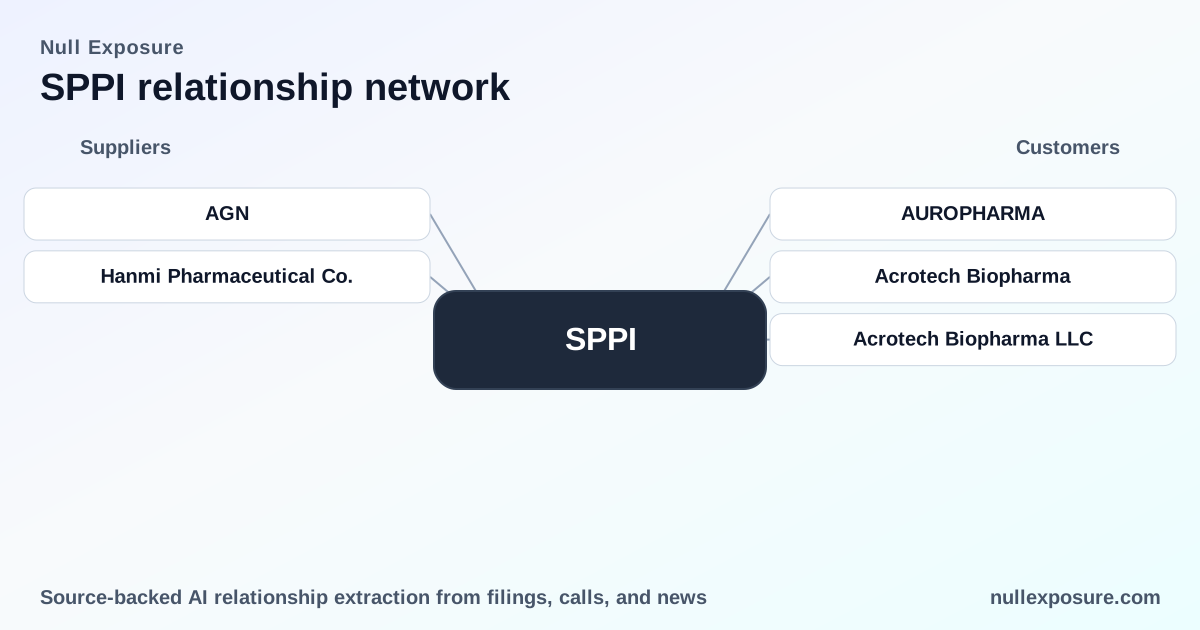
Spectrum Pharmaceuticals (SPPI) — The customer map that explains how value is harvested
Spectrum Pharmaceuticals monetizes value by selectively licensing and selling marketed oncology assets and by out‑licensing regional commercialization rights for branded drugs. The company’s cash generation profile is dominated by one‑off portfolio transactions and deal receipts rather than recurring volume from a large in‑market commercial footprint, so investors should value future cash flow more on deal cadence and milestone visibility than steady product sales. Learn how the customer and licensee relationships below drive liquidity events and reposition SPPI’s operating profile: https://nullexposure.com/
What the customer relationships actually tell investors
Spectrum’s customer relationships collectively describe an asset‑monetization strategy: the company consistently transfers commercialization rights to third parties or sells entire portfolios to generate material cash. That pattern creates concentration of counterparty risk (large, discrete buyers/licensees) and transactional revenue volatility, while reducing the company’s in‑market execution burden. Key implications for investors:
- Revenue is event‑driven: large up‑front payments and milestone tranches replace steady commercial royalties for many assets.
- Counterparties are strategic buyers or regional licensees: Aurobindo/Acrotech and CASI are examples of buyers who internalize U.S. or China commercialization.
- Rolloff of marketed brands reduces operational scale and shifts SPPI toward a development/licensing profile.
If you want a concise map of counterparties and how each deal altered Spectrum’s commercial exposure, read on. For full platform access and more relationship analytics, visit https://nullexposure.com/
Catalogue of listed customer relationships (each result in the record)
CASI Pharmaceuticals, Inc. (FY2014)
Spectrum granted CASI exclusive rights in Greater China to two commercial oncology drugs (Zevalin and Marqibo) and a Phase 3 candidate (CE melphalan) for development and commercialization across China, Taiwan, Hong Kong and Macau. This is a regional licensing transaction that hands China commercialization to a local specialist. Source: PR Newswire release (FY2014).
Acrotech Biopharma (FY2019) — item 1
Acrotech Biopharma (Aurobindo’s US subsidiary) agreed to purchase Spectrum’s seven FDA‑approved hematology/oncology products in a transaction that transfers marketed U.S. brands to a third‑party commercial platform. Source: BioSpace coverage (FY2019).
ASRT (FY2024)
Assertio (ticker ASRT) is noted as the acquirer in a prior Spectrum buyout referenced for a drug acquired in a $248 million transaction, indicating Spectrum has been a source of saleable IP and marketed products to specialty pharmaceutical buyers. Source: FiercePharma (FY2024).
Acrotech Biopharma (FY2019) — item 2
Media coverage reiterated that Spectrum sold its seven marketed products to Acrotech Biopharma, underlining that the company completed a near‑total marketed portfolio divestiture to Aurobindo’s US vehicle. Source: FiercePharma (FY2019).
AUROPHARMA (FY2019)
Aurobindo (reported as AUROPHARMA) acquired seven marketed oncology injectable products from Spectrum for about $300 million, including up‑front and milestone components, demonstrating a major liquidity event through asset sale. Source: Economic Times coverage (FY2019).
UNCY (FY2025) — item 1
MarketScreener cites that Oxylanthanum Carbonate and UNI‑494 were originally developed by and licensed from Spectrum, indicating Spectrum’s role as an originator that licenses early‑stage assets to other developers. Source: MarketScreener (FY2025).
Wyeth (FY2011)
Fusilev (a Spectrum product) was marketed in Europe and Japan primarily by Wyeth, reflecting historical regional commercialization partnerships with large multinational pharma. Source: RTTNews (FY2011).
Acrotech Biopharma (FY2019) — item 3
Aurobindo’s press noted that the Acrotech acquisition included the purchase of a branded U.S. commercial infrastructure, implying Spectrum’s transaction transferred not just products but assembled go‑to‑market capability. Source: Economic Times (FY2019).
Aurobindo Pharma (FY2019) — item 1
Aurobindo Pharma confirmed the acquisition structure and the headline commercial economics (up to $300 million total consideration), underscoring the scale of Spectrum’s portfolio divestiture. Source: Economic Times (FY2019).
Acrotech Biopharma LLC (FY2019)
Livemint reported that Acrotech Biopharma LLC, a wholly‑owned Aurobindo subsidiary, acquired the assets on a debt‑free, cash‑free basis with $160 million up‑front and up to $140 million in milestones, clarifying consideration mechanics. Source: LiveMint (FY2019).
Aurobindo Pharma Ltd (FY2019)
LiveMint’s separate listing of Aurobindo Pharma Ltd reiterates the parent company’s role and confirms the strategic motive: securing branded oncology injectables and U.S. commercial capability. Source: LiveMint (FY2019).
AUROPHARMA (FY2019) — item 2
Duplicate reporting under the AUROPHARMA ticker underscores market recognition of the same acquisition and confirms cross‑market coverage of the deal. Source: LiveMint (FY2019).
Acrotech Biopharma (FY2019) — item 4
Additional coverage highlighted that the Acrotech acquisition delivered an experienced branded commercial infrastructure in the U.S., indicating Spectrum’s exit included operational assets. Source: Economic Times (FY2019).
UNCY (FY2025) — item 2
A second MarketScreener note reiterates that certain products were initially developed at Spectrum and later licensed, supporting the characterization of Spectrum as an originator of assets that other companies commercialize. Source: MarketScreener (FY2025).
Sanofi‑Aventis (FY2011)
RTTNews noted that Fusilev is marketed in Europe and Japan by Sanofi‑Aventis, pointing to multi‑party regional commercialization arrangements for Spectrum’s products. Source: RTTNews (FY2011).
Takeda Pharmaceuticals (FY2011)
RTTNews also notes Takeda’s regional marketing role for Fusilev, confirming that Spectrum historically relied on major multinationals for non‑U.S. commercialization. Source: RTTNews (FY2011).
How these relationships shape Spectrum’s operating constraints
There are no explicit contractual constraints provided in the record as standalone excerpts, but the relationship pattern generates clear company‑level signals:
- Contracting posture: Spectrum operates primarily as a licensor and seller of oncology assets — contracts are structured for transfers of commercialization rights and milestone payments rather than long‑term distribution agreements.
- Concentration: Value realization depends on a small number of large counterparties (e.g., Aurobindo/Acrotech, CASI), creating counterparty concentration risk and binary revenue outcomes per deal.
- Criticality: For SPPI, counterparties are critical in delivering market access; commercial success of licensed assets becomes the licensee’s responsibility, reducing SPPI’s operating leverage but also its direct commercial exposure.
- Maturity: Relationships span a long time horizon (FY2011 to FY2025 entries), showing an evolution from multinational co‑promotion to outright portfolio exits and regional licensing.
These signals should inform risk‑adjusted valuation: price in the timing of future asset sales and milestones, not stable product cash flows.
Bottom line for investors
Spectrum’s customer map is a playbook for monetization through asset transfers and regional licenses. Investors should treat SPPI as an asset‑sale engine with episodic cash inflows and counterparty concentration, not a traditional diversified commercial oncology operator. For ongoing monitoring and deeper relationship analytics, visit https://nullexposure.com/ for extended coverage and update alerts.