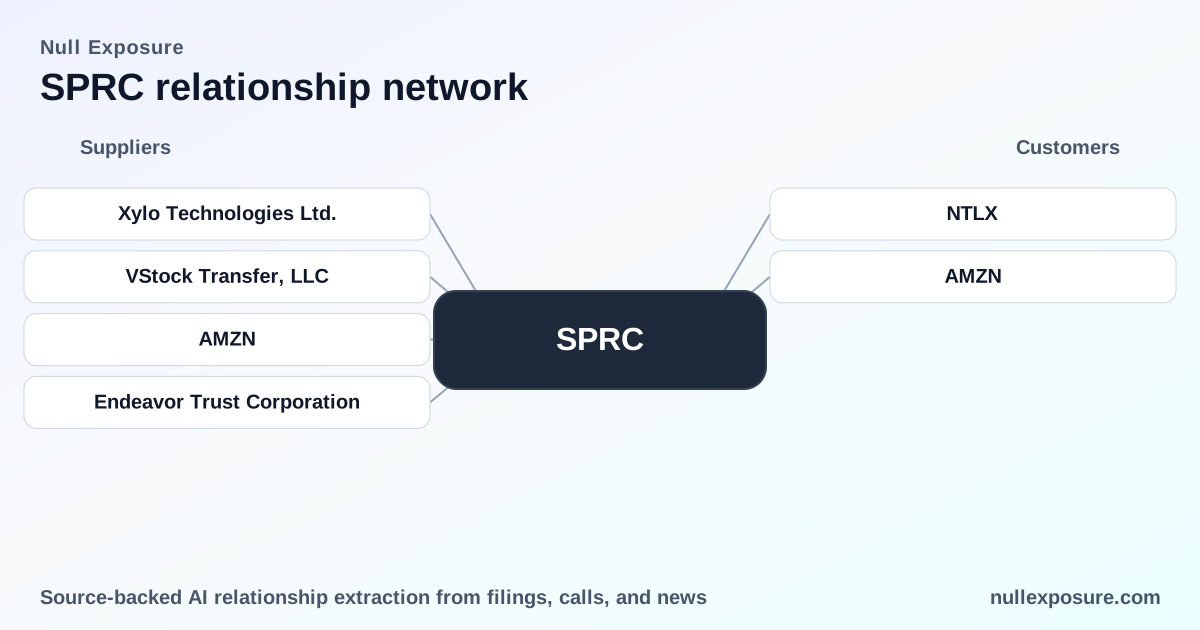
SciSparc (SPRC) Customer Relationships: Subsidiary-Led Commercial Links and Strategic Collaborations
SciSparc is a clinical-stage specialty pharmaceutical company that develops cannabinoid-based therapeutics and monetizes through strategic asset transfers, equity stakes in operating subsidiaries, licensing and patent activity, and select consumer product sales handled by those subsidiaries. Revenue and near-term commercial activity derive less from SciSparc’s direct product sales and more from the company’s control of operating subsidiaries (notably NeuroThera) and the monetization of intellectual property and minority/majority stakes. For a deeper dive into relationship exposures and what they imply for investor risk and upside, visit https://nullexposure.com/.
How the relationship map defines SciSparc’s operating model
SciSparc’s customer and partner footprint is capital-light and subsidiary-driven rather than built around large, repeat corporate contracts. The company concentrates commercial activity through controlled subsidiaries, which centralizes counterparty and operational risk but also enables asset sales and licensing as primary monetization levers. Contracting posture is transactional and corporate—SciSparc transfers portfolios and equity stakes, enters share purchase agreements via subsidiaries, and pursues patents and licensing rather than direct mass-market distribution under the parent brand.
Key business-model characteristics:
- Concentration: Commercial revenue and operations are concentrated inside a small number of subsidiaries and equity stakes rather than diversified direct channels.
- Criticality: Subsidiary transactions (asset transfers, IP filings, divestitures) are critical levers for near-term cash flow and strategic repositioning.
- Maturity: The core pharmaceutical assets remain clinical-stage, so product commercialization timelines are long and subject to clinical/regulatory risk; consumer product sales reported via subsidiaries are supplemental and lower margin.
- Contracting posture: SciSparc operates as a corporate counterparty—selling assets, taking controlling stakes, and pursuing licensing and IP protection—rather than as a large-volume supplier to blue-chip customers.
Relationship roll call — what every named partner means for investors
Below I cover each relationship surfaced in the available filings and press reports; each entry includes a concise plain-English summary and its source.
NeuroThera Labs Inc. (NTLX)
SciSparc received a controlling interest in NeuroThera Labs Inc. and transferred its advanced clinical-stage pharmaceutical portfolio and approximately a 51% stake in SciSparc Nutraceuticals Inc. into NeuroThera as part of the agreement described to shareholders. This transaction effectively moves SciSparc’s clinical assets and certain equity positions under NeuroThera’s corporate umbrella. According to SciSparc’s SEC filing (Exhibit 99.1, filed March 2026): https://www.sec.gov/Archives/edgar/data/1611746/000121390025102348/ea026258401ex99-1_scisparc.htm.
NTLX (ticker reference for NeuroThera)
The company’s public-market identifier NTLX is the TSXV ticker for NeuroThera Labs Inc., reflecting that SciSparc’s transferred assets now sit inside a TSXV-listed vehicle in which SciSparc controls a majority stake. The SEC filing describing the transfer references NeuroThera’s TSXV listing and the equity structure for the transferred assets. Source: SciSparc SEC filing (Exhibit 99.1, March 2026): https://www.sec.gov/Archives/edgar/data/1611746/000121390025102348/ea026258401ex99-1_scisparc.htm.
Clearmind Medicine Inc.
NeuroThera, in which SciSparc holds a controlling interest, is collaborating with Clearmind Medicine Inc. on a combination therapy for major depressive disorder that pairs Clearmind’s MEAI with Palmitoylethanolamide (PEA) sourced by NeuroThera; Clearmind filed a related patent application in Hong Kong. This underscores SciSparc’s indirect exposure to collaborative IP development through its NeuroThera stake. Reported by market outlets covering the May 2026 announcement: https://www.bitget.com/amp/news/detail/12560605268020 and finance outlets in May 2026: https://finance.yahoo.com/news/scisparc-neurothera-labs-clearmind-medicine-122000442.html.
Amazon.com / Amazon.com Marketplace / AMZN
Through NeuroThera, SciSparc controls a subsidiary that sells hemp seed oil-based consumer products on the Amazon marketplace, creating a retail sales channel distinct from its clinical pipeline. That consumer-facing business is marketed via Amazon’s Marketplace rather than under SciSparc’s direct brand. GlobeNewswire and subsequent press coverage in early 2026 detail the subsidiary’s Amazon activity and its role in the corporate structure: https://www.globenewswire.com/news-release/2026/01/12/3217342/0/en/SciSparc-Announces-Receipt-of-Nasdaq-Notification-of-Minimum-Stockholders-Equity-Non-Compliance.html.
N2OFF
SciSparc announced the closing of the sale of its majority-owned subsidiary MitoCareX to N2OFF, a transaction that advances the divestiture strategy and repositioning of assets related to oncology drug discovery. This sale is an example of SciSparc monetizing non-core or portfolio subsidiaries to focus on core therapeutic programs. Market coverage of the closing was noted on investor pages and aggregator sites in May 2026: https://finviz.com/quote?t=SPRC.
Polyrizon (PLRZ)
SciSparc signed a global agreement with Polyrizon for pain therapy—an example of strategic partnering for commercial development and potentially global licensing of therapeutic approaches. This agreement signals SciSparc’s preference for partner-led commercialization pathways for certain indications. The Polyrizon collaboration was reported in industry press and aggregated in May 2026: https://finviz.com/quote?t=SPRC.
Operational signals and company-level constraints
The dataset provides no explicit constraints entries; treat the following as company-level business model signals rather than relationship-specific constraints.
- Liquidity and scale constraint: Market capitalization and shares outstanding indicate a micro-cap profile; SciSparc will rely on asset sales, subsidiary dividends, or capital raises to fund development rather than large product revenues.
- Concentration of operational risk: Control of multiple activities through NeuroThera concentrates delivery risk inside a small number of legal entities; investors should treat subsidiary governance and asset transfers as central to SciSparc’s execution.
- Commercial maturity mismatch: Clinical-stage therapeutic assets imply long lead times to revenues, while consumer sales via Amazon provide immediate but limited commercial exposure and profitability.
- Investor base and governance signal: Low institutional ownership and limited float suggest governance and insider control dynamics that influence strategic decisions, including divestitures and cross-entity transactions.
Midway assessment: SciSparc’s model is deliberately transactional—the parent company is less a direct operating commercial enterprise and more a holding-and-transaction vehicle for IP, clinical assets, and controlled subsidiaries. For investors focused on counterparty exposure or supplier/customer concentration, SciSparc’s relationships should be viewed through the lens of subsidiary governance and asset-monetization events rather than traditional large-scale customer contracts. Learn more about how we map corporate relationships at https://nullexposure.com/.
Investment implications: what to watch next
- Track NeuroThera filings and public disclosures (NTLX) for operational results and any revenue recognition from the transferred assets. The parent’s upside and downside correlate heavily with subsidiary milestones and divestiture outcomes.
- Monitor IP activity and licensing agreements (e.g., Clearmind collaboration and patent filings) for potential non-dilutive value crystallization.
- Watch cashflow impact from divestitures such as the sale to N2OFF and any recurring revenue generated by Amazon marketplace sales.
Bottom line: SciSparc is a clinical-stage, asset-led company that monetizes through subsidiary control, IP activity, and selective divestitures; investors should prioritize subsidiary disclosures, IP milestones, and corporate-level liquidity events when modeling value and downside.