SPX Corp (SPXC) — Customer Relationships and Contracting Posture
SPX Corporation sells infrastructure equipment and engineered systems across HVAC, sensing & measurement, power transmission, and industrial markets, monetizing through product sales, long-term project contracts and recurring service/subscription arrangements tied to complex installations and aftermarket support. Scale is material — roughly $2.35 billion in trailing revenue against a $10.1 billion market capitalization — and the company’s commercial model mixes point‑of‑sale hardware revenue with multi‑period contract economics. For a concise, machine‑independent view of partner exposure and contracting characteristics, see NullExposure’s platform. https://nullexposure.com/
Quick investment thesis: predictable hardware base, accretive project backlog, and service optionality
SPX’s core economics derive from engineered hardware sales that generate high gross margins when combined with aftermarket service and long‑term contracts that smooth delivery risk. The business is primarily North American and project‑driven, yet increasingly supported by software and service revenue streams that lengthen revenue duration and lift lifetime value. Key investor implications are concentration control (no single customer >10% of revenue), exposure to government prime contractor dynamics, and geographic diversification concentrated in the U.S.
What the official filings say about customers and contracts
SPX discloses a mixed recognition profile: most revenue is recognized at shipment, but certain complex long‑term and subscription/service contracts are recognized over time, signaling a hybrid contracting posture that blends transactional hardware sales with durable service or project contracts. The company also states that no single customer accounted for more than 10% of consolidated revenue in the periods presented, supporting a low customer‑concentration risk profile. These points are drawn from SPX’s FY2024 form 10‑K disclosure (filed for the fiscal year ending December 31, 2024).
Relationship roundup — every customer relationship flagged in the filing
SPX’s customer‑relationship extraction for the customer scope returns one explicit partner reference. Below is coverage of that relationship with a direct, plain‑English summary and the filing source.
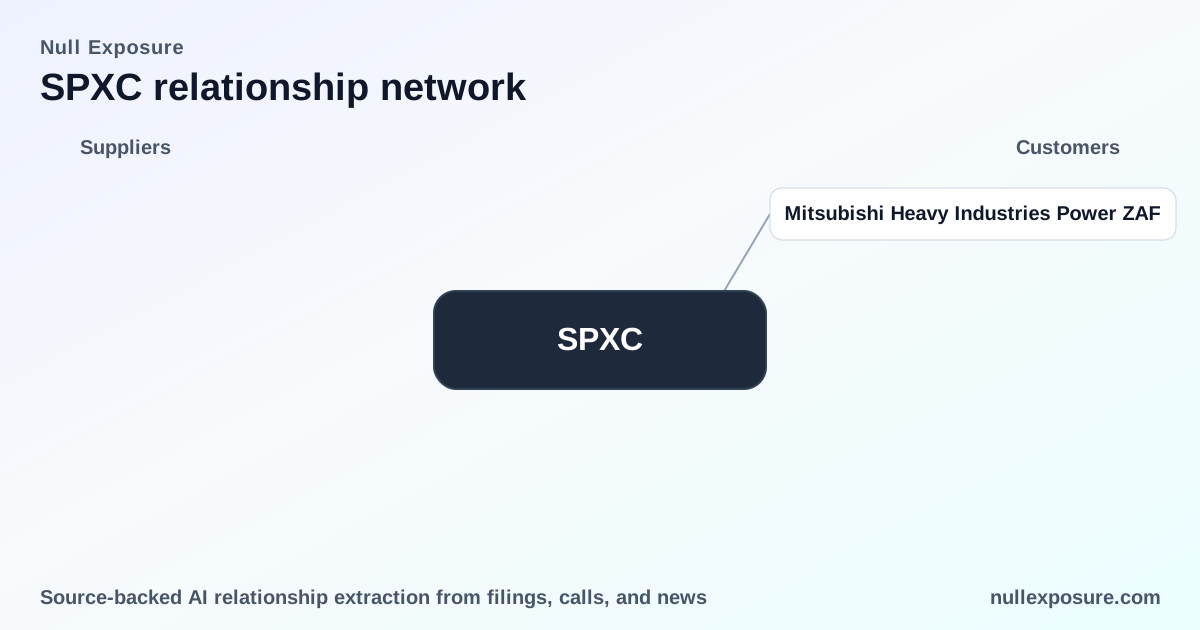
- Mitsubishi Heavy Industries Power ZAF
SPX is identified as continuing work with Mitsubishi Heavy Industries Power ZAF as the remaining prime contractor on two large projects, indicating SPX is engaged downstream of a major industrial prime in power sector infrastructure projects. This relationship is noted in SPX’s FY2024 10‑K (referenced in the company’s public filings). (Source: SPX Corporation, FY2024 Form 10‑K disclosure, referenced Feb 2026.)
How to interpret that relationship in context
The Mitsubishi Heavy Industries Power ZAF mention reflects SPX’s role in heavy industrial project delivery rather than simple product resale. When SPX is a supplier to a prime contractor on large projects, contract economics typically shift toward milestone or over‑time revenue recognition, higher working capital intensity, and greater program management requirements. The filing’s language places this example squarely within project contracting dynamics rather than routine distributor interactions.
Company‑level signals investors should weigh (constraints translated into commercial insights)
The filing produces several company‑level constraints that define how SPX transacts and where risks concentrate. These are not tied to any single counterparty unless explicitly named, and they should be read as strategic and operational characteristics of the business:
- Contracting posture: SPX operates a hybrid model. Most revenue is point‑in‑time (shipment/delivery), but SPX also captures value through long‑term and subscription/service contracts that are recognized over time. This implies a mix of one‑time capital sales and recurring or multi‑period project earnings that can lift revenue visibility but increase contract management complexity.
- Customer concentration: No customer exceeds 10% of consolidated revenue, establishing a diversified customer base and muting counterparty concentration risk.
- Counterparty mix: SPX explicitly flags government agency exposure and sales to prime contractors, which introduces public‑sector contracting risks such as compliance, certification, and procurement timelines.
- Geographic footprint: Approximately 83% of revenue is generated inside the United States, with meaningful operations in Canada, the U.K., China and other regions; the company describes serving North America, Europe, Asia and Africa. This is a global supplier profile with North American revenue dominance, which concentrates macro and policy risk in the U.S. while retaining international diversification.
- Commercial roles and channels: SPX sells direct and through intermediaries — independent reps, third‑party distributors and retailers — and acts both as a licensor and licensee of patents, reinforcing an IP‑anchored product portfolio and a mix of direct and channel sales.
- Business segments: The company frames its offering across infrastructure and hardware, with an active intent to expand software and specialized solutions, signaling a strategic shift to higher‑value, integrated product + software/service offerings.
Investment implications and risk framework
- Revenue quality: The mix of one‑time hardware sales with over‑time contract recognition improves revenue durability where service or subscription components scale, but also increases execution risk on multi‑year projects.
- Concentration and counterparty risk: Customer concentration is low, reducing single‑counterparty downside, but government and prime‑contract relationships add procurement and compliance risk that can delay cash flows on major projects.
- Geographic exposure: Heavy U.S. revenue weighting (circa 83%) concentrates SPX’s earnings to North American demand cycles and policy shifts, even as modest international exposure provides upside in selected markets.
- Strategic optionality: SPX’s push into software and expanded specialized products increases margin expansion potential and improves aftermarket capture, but execution and integration of software into historic hardware offerings will define returns.
Bottom line for investors and operators
SPX is a scaled industrial supplier whose customer base is diversified and predominantly North American, with an operating model that blends transactional hardware sales and longer‑duration project or service contracts. The Mitsubishi Heavy Industries Power ZAF reference is emblematic of SPX’s role on complex industrial programs where program management and over‑time recognition are critical. Investors should balance the company’s low customer concentration and rising service orientation against the working capital and contract execution risks inherent to large projects and government prime‑contractor channels.
For a practical breakdown of partner exposures and to track changes in SPX’s customer footprint over time, NullExposure provides curated relationship intelligence and constraints visualization. Visit https://nullexposure.com/ for coverage updates and to benchmark SPX against peer supplier networks.