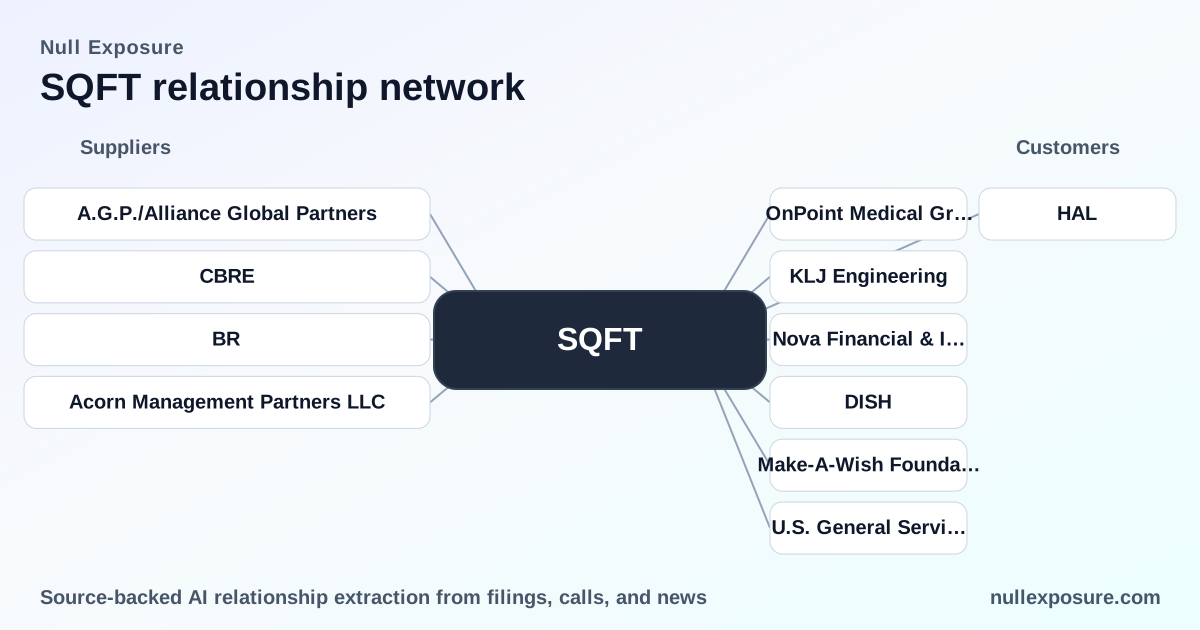
Presidio Property Trust (SQFT): Customer Relationships That Drive Rent—and Risk
Presidio Property Trust operates as an internally managed diversified REIT that acquires, leases and manages commercial and model‑home properties. The business monetizes primarily through base rents, with a mix of short‑term office, industrial and triple‑net model‑home leases that generate recurring cashflow but create turnover and re‑leasing exposure. For active investors, the customer book is the core revenue engine and the primary source of both stability and concentration risk. Learn more about how these relationship signals affect valuation at https://nullexposure.com/.
Investment thesis — anchored on rent roll economics
Presidio’s revenue model is straightforward: it owns properties across several U.S. states and receives base rent under leases that are largely one‑ to five‑year terms. That structure provides frequent re‑pricing opportunities but also exposes the company to tenant turnover and localized market cycles. The interplay between short lease terms, geographic concentration in a handful of states, and a mix of credit profiles among tenants defines both upside from re‑leasing and downside if occupancies soften. Investors should value SQFT on an asset‑level basis with explicit assumptions for lease renewal rates and local market rent trajectories.
Key operating-model signals that shape customer risk
- Contracting posture: short to medium‑term leases dominate. The company discloses that substantially all revenue comes from leases with terms typically between one and five years, which implies a pro‑active leasing function and frequent cashflow resets.
- Geographic concentration across five states. Properties are located primarily in Colorado, North Dakota, California, Maryland and Texas, which concentrates exposure to regional office and industrial markets rather than national diversification.
- Revenue criticality and concentration. Base rents represent the bulk of revenue, making tenant performance and occupancy central to cashflow stability.
- Service and transaction roles. Presidio operates both as a lessor for commercial tenants and as a triple‑net lessor for model‑home builders; that dual role signals different credit and operational mechanics across segments.
- Spend dispersion and materiality signals. Disclosed billings range from low‑five‑figure tenant charges to six‑figure reimbursements, showing a mix of immaterial and material customer line items for financial reporting.
These characteristics imply a highly operational REIT profile: active leasing, asset management and local market execution determine near‑term earnings.
Customer relationships — what every investor should know
Below are the customer relationships reported in the public record. Each relationship is summarized in plain English with the cited source.
-
KLJ Engineering (10‑K): KLJ signed a long‑term lease on December 7, 2022 for approximately 33,296 usable square feet at Grand Pacific Center in Bismarck, ND, with a 122‑month term and starting annualized rent of $532,736. According to Presidio’s 2024 Form 10‑K, this lease removed the asset from held‑for‑sale status.
Source: Presidio Property Trust Form 10‑K for the year ended December 31, 2024. -
Nova Financial & Investment Corporation (10‑K): Nova Financial was subleasing space to OnPoint Medical Group until Nova’s lease expired in January 2025, per the company’s 2024 10‑K disclosure. This indicates transitional occupancy and short‑run renegotiation exposure in that asset.
Source: Presidio Property Trust Form 10‑K for the year ended December 31, 2024. -
OnPoint Medical Group Holdings, LLC (10‑K): OnPoint had a direct lease for 2,543 sq ft in the Shea Center since October 2024, and in January 2025 it assumed an additional 11,831 sq ft from Nova with a three‑year lease—a near‑term occupancy consolidation.
Source: Presidio Property Trust Form 10‑K for the year ended December 31, 2024. -
DISH (news via FINVIZ / Accesswire): Presidio publicized that DISH Wireless moved into a San Diego office building, a corporate tenant headline reported in June 2022, signaling the Trust’s ability to attract national telecommunications tenants to its Southern California assets.
Source: Accesswire release reported on FINVIZ, June 8, 2022. -
DISH Wireless (duplicate news record): The same Accesswire item appears again in news feeds confirming DISH Wireless’s presence as a named occupant of Presidio’s San Diego properties, underlining the tenant’s brand presence in that market.
Source: Accesswire release reported on FINVIZ, June 8, 2022. -
KLJ Engineering LLC (news via MarketScreener): A MarketScreener notice reported that KLJ commenced occupancy of the 33,296 sq ft Grand Pacific Center space in December 2023, confirming the move‑in timeline and cashflow commencement from that lease.
Source: MarketScreener report (Presidio update on KLJ lease), reported in 2024/2025 filings and press. -
Make‑A‑Wish Foundation San Diego (news via SimplyWallSt): Press coverage documents a lease signed with Make‑A‑Wish Foundation San Diego, reflecting non‑profit tenancy among Presidio’s leasing mix and diversification into mission‑oriented occupants.
Source: SimplyWallSt press listing (lease announcement), reported historically. -
U.S. General Services Administration (news via SimplyWallSt): A prior announcement indicated a major lease with the U.S. General Services Administration, signaling government tenancy at some Presidio properties and the credit stability that brings.
Source: SimplyWallSt press listing (GSA lease announcement), reported historically. -
Halliburton / HAL (10‑K): Halliburton was Presidio’s largest tenant until its lease expired December 31, 2022, occupying Shea Center II in Colorado and representing approximately $536,080 of annual base rent when active. The expiration of a large tenant lease creates re‑letting and cashflow replacement risk for that property.
Source: Presidio Property Trust Form 10‑K for the year ended December 31, 2024. -
HAL (duplicate 10‑K record): The 10‑K repeats the Halliburton (HAL) disclosure, reinforcing that the firm’s departure was material to the rent roll and occupancy metrics for the affected asset.
Source: Presidio Property Trust Form 10‑K for the year ended December 31, 2024.
What investors should price in now
- Re‑letting risk and upside: Short‑term lease structure creates frequent re‑pricing opportunities; investors should model conservative renewal rates alongside localized rent growth assumptions for Colorado, North Dakota and Southern California.
- Tenant mix heterogeneity: The rent roll includes corporate tenants (DISH, Halliburton historically), government (GSA), non‑profit (Make‑A‑Wish) and medical users (OnPoint), which spreads credit risk but requires tailored leasing strategies by asset.
- Materiality of base rents: With base rents contributing substantially to reported revenue, tenant disruptions or large expirations (as with Halliburton) have immediate earnings impact. Stress test the balance sheet for a vacancy or rent‑step down lasting one to two lease cycles.
If you want a systematic read on how tenant signals should flow into valuation models, explore prescriptive analytics and lease roll translation at https://nullexposure.com/.
Bottom line
Presidio’s customer relationships reflect a transactional, asset‑centric REIT where short lease terms and concentrated geographic exposure create both active management opportunities and re‑letting risk. Investors should value SQFT on a lease‑by‑lease basis while emphasizing local market fundamentals and tenant credit quality; headline tenants and government leases offset modestly elevated turnover risk, but material expirations demand explicit replacement assumptions in any cashflow model.