Presidio Property Trust (SQFTP) — tenant relationships and what they tell investors
Presidio Property Trust is an internally managed, diversified REIT that monetizes real estate through leasing a mixed portfolio of office/industrial, retail and model-home assets, collecting base rents (primarily 1–5 year leases) and occasional reimbursements for services. The company reported $16.8 million in revenue (TTM) with negative EPS and compressed margins, underscoring the income sensitivity of its small, geographically concentrated portfolio. For investors, the core question is whether Presidio can replace large expirations and sustain cash flow from short-tenor leases while managing related‑party activity and geographic concentration. Learn more about the coverage at https://nullexposure.com/.
Operational and contractual profile: Presidio runs an active leasing model anchored by short-to-medium term leases, supplemented by occasional longer-dated instruments and related-party arrangements that affect cash receipts and occupancy.
How Presidio’s lease book is structured and what that implies
Presidio’s filings portray a lean operating model that depends on base rent from multiple short-duration leases. The 2024 Form 10‑K states that substantially all revenues come from base rents under leases that “generally have terms that range from one to five years,” and that the firm leases model homes to builders under triple-net arrangements for two to three years. This contracting posture creates higher renewal risk than long locked-in portfolios, but also provides repricing opportunities when markets tighten.
At the same time, Presidio holds other contractual instruments with longer tenors — for example, equity-linked warrants described in filings with five‑year expirations — which signal a mix of short-term operating cashflows and multi-year capital arrangements. Geographically, the portfolio is concentrated in the U.S. West and selected Sun Belt states, with commercial properties in Colorado, North Dakota, California, Maryland and Texas, and model-home properties primarily in Texas (with some in Florida and Arizona). These location choices concentrate market risk by region and sector (office/industrial and model homes), rather than diversifying nationally.
Company-level relationship signals from the 2024 filing also include related‑party leasing of corporate headquarters to an entity owned by the CEO and modest payroll reimbursements tied to affiliate services — items that are small in absolute dollars but important qualitatively for governance and cashflow transparency.
Customer relationships: who occupies Presidio’s properties
Below are the tenant relationships disclosed in Presidio’s 2024 Form 10‑K; each entry is a concise, plain-English summary with the filing as the source.
-
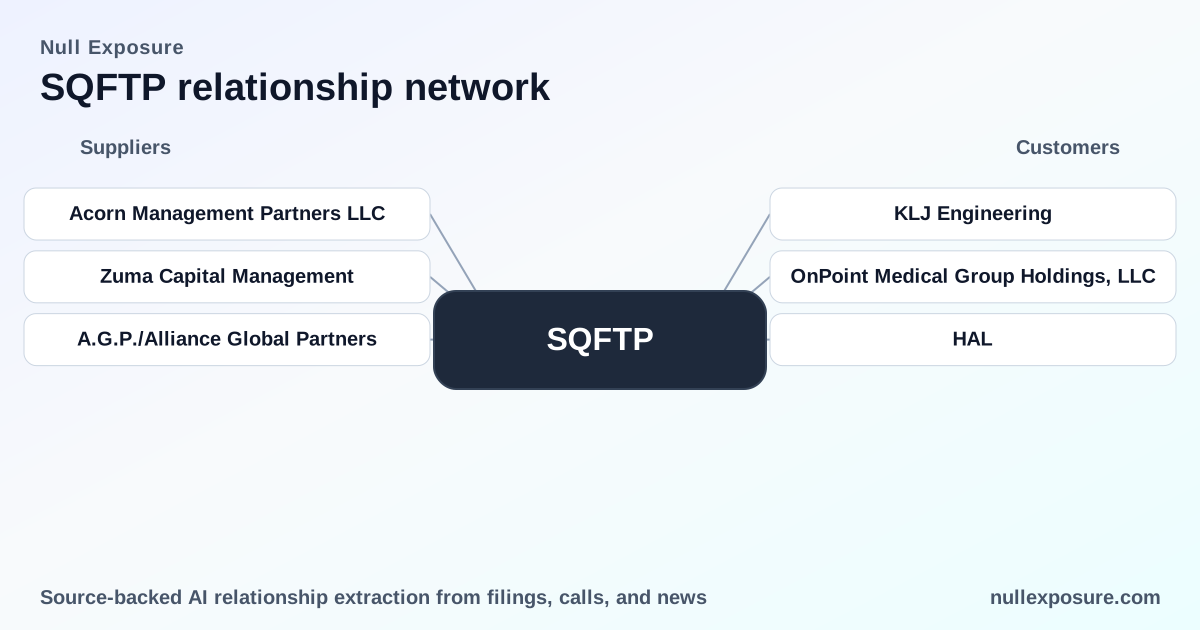
KLJ Engineering — Presidio reported that Grand Pacific Center in Bismarck, ND was retained off hold-for-sale after signing a major lease with KLJ Engineering on December 7, 2022 covering approximately 33,296 usable square feet. According to Presidio’s 2024 Form 10‑K (FY2024), this lease materially affected the status of that asset in the portfolio.
-
OnPoint Medical Group Holdings, LLC — Since October 2024, OnPoint leased a 2,543 square foot space in Presidio’s Shea Center building, representing a small but active medical tenant in the portfolio. This is noted in Presidio’s 2024 Form 10‑K (FY2024).
-
HAL (inferred symbol HAL) — The filing lists HAL as an identified tenant term: Presidio discloses that the lease for its largest tenant, Halliburton, expired on December 31, 2022. The company’s disclosure in the 2024 Form 10‑K (FY2024) flags this expiration as a material event for occupancy and revenue concentration.
-
Halliburton — Presidio explicitly states that the lease for its largest tenant, Halliburton, expired on December 31, 2022; the company highlights this in the 2024 Form 10‑K (FY2024), underscoring the portfolio impact of that departure.
(Each item above is drawn from Presidio Property Trust’s Form 10‑K filing for the fiscal year ended 2024.)
Why each relationship matters to valuation and risk
The KLJ Engineering lease for a substantial block in Bismarck is a meaningful positive for asset-level cashflow and stabilizes a previously hold‑for‑sale property — it reduces near-term disposition pressure. By contrast, the expiration of Halliburton’s lease is a concentration and vacancy risk: Presidio explicitly identifies Halliburton as its largest tenant and records the lease expiration as a material event, which increases near-term lease-up and re-leasing execution risk.
Smaller tenants such as OnPoint Medical provide diversification by industry and tenancy size but do not offset the income impact of a large tenant expiration on their own. Taken together, the roster indicates a portfolio reliant on active leasing and tenant turnover, with upside from successful re-leasing but downside if vacancy persists or market rents are weak.
Contract, spend and governance signals investors should track
- Contract tenor mix: The company openly relies on short-to-medium term leases (1–5 years) for the bulk of revenue while holding some five-year capital instruments; this creates recurring renewal risk but offers regular repricing opportunities (Presidio 2024 Form 10‑K, FY2024).
- Geographic concentration: Properties are concentrated primarily in the western U.S. and select Sun Belt states, which focuses market exposure rather than spreading it.
- Related-party flows and small-dollar reimbursements: The 10‑K discloses leases to an entity owned by the CEO and payroll reimbursements totaling roughly $141k–$155k across 2023–2024, plus modest rent billed to certain affiliates in the low tens of thousands—company-level items that require governance oversight.
- Active relationship posture: The business is operationally active — leases turnover and model-home rentals are ongoing, so cashflow visibility is transactional and renewal-dependent.
Collectively, these constraints describe a high-activity, mid-cycle REIT where management must execute leasing and portfolio management consistently to maintain revenues and margins.
What to watch next (and how to position)
Investors should monitor three levers closely: (1) lease-up progress and timing for the Halliburton‑vacated space, (2) rent reversion outcomes on re-leases, and (3) governance transparency on related-party transactions and service reimbursements disclosed in succeeding filings. Given the short-tenor leasebook, quarterly occupancy and rent-roll updates will move the valuation materially.
If you want deeper tracking of Presidio’s tenant dynamics and a consolidated view of lease expirations, consider broader coverage and alerting tools at https://nullexposure.com/.
Bottom line
Presidio Property Trust runs a compact, actively managed portfolio that generates revenue through short-to-medium term leases and occasional longer capital instruments. The key investment dichotomy is execution risk versus repricing opportunity: short tenors mean recurring renewal risk but also frequent opportunities to reset rents; the Halliburton lease expiration is the single largest near-term uncertainty. For investors and operators, the immediate focus is on leasing traction, regional market conditions, and governance around related-party flows, all of which will determine whether cashflow stabilizes or remains volatile.