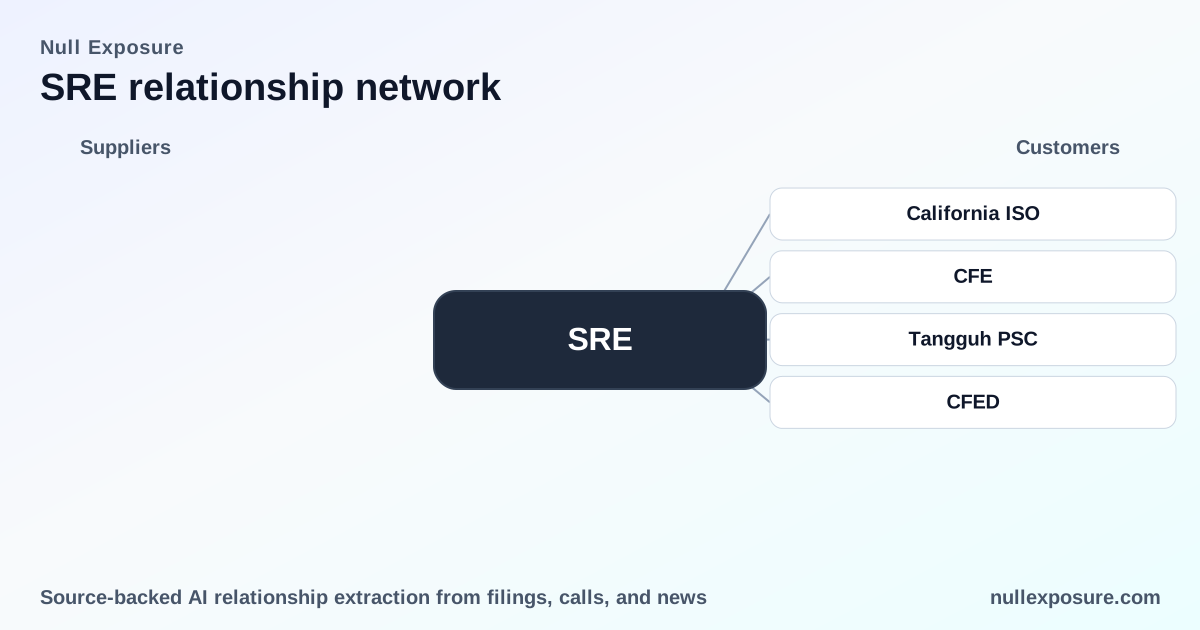
Sempra’s customer map: long-term contracts, regulated cashflows and strategic partners that underwrite growth
Sempra Energy operates as a North American energy infrastructure holding company that monetizes through two complementary engines: regulated utility cashflows from SDG&E and SoCalGas and fee-like, long-duration revenue from Sempra Infrastructure’s pipelines and LNG projects. Investors should value Sempra as a hybrid utility/infrastructure growth story—stable rate-base returns balanced against multi‑decade LNG sales and capacity contracts that provide predictable, project-level cashflows. Learn more about our coverage at NullExposure.
How Sempra’s customer mix drives predictable earnings and capital intensity
Sempra’s operating model blends regulated retail relationships with large, credit-backed commercial contracts. This creates a clear set of business-model characteristics:
- Contracting posture: predominantly long-term. Sempra’s infrastructure businesses rely on decades-long supply and transportation agreements that lock in volumes and pricing mechanics, providing revenue visibility essential to support heavy capital investment. This is a company-level signal drawn from multiple regulatory and contract excerpts.
- Usage-based and regulatory recovery mechanisms coexist. Regulated utilities recover authorized costs as services are delivered; balancing accounts and rate proceedings create periodic adjustments that link receipts to actual delivery and regulatory approvals.
- Counterparty mix spans individual retail customers to sovereign and corporate counterparties. The group serves millions of residential and small commercial end-users while also holding long-term offtake contracts with national utilities and global energy companies.
- Geographic concentration and strategic diversification. North America is the core footprint with material presence in Mexico and Latin America, creating a mix of regulated U.S. revenue and dollar-/peso-denominated infrastructure receipts.
- Role diversity across the organization. Sempra acts as seller, service provider and distributor across different legal entities, so credit exposure and regulatory risk are layered by entity.
These characteristics explain why investors treat Sempra as both a defensive yield vehicle and a capital-intense growth platform.
The relationships that matter — counterparty-by-counterparty review
Below are the counterparties identified in Sempra’s customer universe together with concise takeaways and sources.
Tangguh PSC
Sempra Infrastructure uses its 50% capacity at the ECA Regas Facility to fulfill an LNG SPA obligation with Tangguh PSC through 2029; ECA LNG Phase 1 will be sole user thereafter. Source: Sempra 2024 Form 10‑K (FY2024).
California ISO
SDG&E has an arrangement allowing the California ISO to control its high‑voltage transmission lines for FERC‑approved prices, reflecting regulated transmission coordination. Source: Sempra 2024 Form 10‑K (FY2024).
CFE (Comisión Federal de Electricidad)
Sempra sells natural gas under supply agreements to the CFE, with prices referenced to the SoCal Border index; the 10‑K notes these contracts as part of long‑term pipeline and supply arrangements. Source: Sempra 2024 Form 10‑K (FY2024).
CFE (listed again in filings as CFED)
Sempra Infrastructure explicitly uses LNG‑produced natural gas to supply a contract for sale to the CFE at SoCal Border‑indexed prices, reinforcing the bilateral physical supply relationship. Source: Sempra 2024 Form 10‑K (FY2024).
KKR
A March 2026 market report noted Sempra is finalizing a transaction selling a 45% stake in Sempra Infrastructure Partners to KKR and the Canada Pension Plan Investment Board as part of a $10 billion capital recycling to fund construction without issuing equity. Source: FinancialContent/MarketMinute (Feb–Mar 2026 coverage).
SREA / Bechtel / Baker Hughes (Port Arthur LNG supply chain)
Offshore‑Energy reported that Baker Hughes won a contract to supply main refrigerant compressors for Port Arthur LNG Phase 1, and that project financing and EPC notices (Bechtel) supported project execution. This underscores heavy OEM and EPC supplier relationships tied to the Port Arthur development. Source: Offshore‑Energy.biz (report on Port Arthur LNG, FY2023 context).
ConocoPhillips
Sempra Infrastructure and ConocoPhillips have a definitive 20‑year offtake agreement for Port Arthur LNG Phase 2, binding a major international producer as a long‑dated buyer. Source: Sempra company releases and newsroom citations (publicized agreement; aggregated in FY2026 collection).
EQT Corporation
Sempra Infrastructure and EQT announced a 20‑year LNG sales agreement tied to Port Arthur LNG Phase 2, adding a U.S. producer as a commercial anchor for the project. Source: Sempra company releases and newsroom citations (publicized agreement; aggregated in FY2026 collection).
INEOS Energy Trading Ltd.
Sempra Infrastructure and INEOS signed a heads‑of‑agreement for LNG supply (public press release dated June 22, 2022 referenced on Sempra’s site), signaling engagement with large energy trading houses for flexible commercial outlets. Source: Sempra press release (newsroom, June 22, 2022).
JERA Co., Inc.
Sempra Infrastructure announced a 20‑year sale and purchase agreement with JERA for U.S. LNG from Port Arthur LNG Phase 2, bringing a major Japanese utility/commodity buyer into the project’s long‑term commercial structure. Source: Sempra company releases (FY2026 aggregated reporting).
What the mix of customers means for valuation and risk
Sempra’s customer roster produces several investment-relevant implications:
- Revenue visibility is high where long-term SPAs and capacity contracts exist. The packaging of 20‑ to 35‑year commercial deals supports project finance and reduces merchant exposure on a substantial share of expected cashflows.
- Regulated utility cashflows provide downside protection but carry regulatory and balancing risk. Authorized cost recovery mechanisms reduce volume risk but introduce regulatory timing and refund exposures (for example, CPUC/FERC actions that can trigger retroactive refunds).
- Counterparty credit and project delivery risk remain focal points. Where counterparties are national power companies and major global energy corporates, counterparty credit supports financing; where OEMs and EPCs are concentrated, execution risk is operational and schedule‑sensitive.
- Geographic mix creates currency and policy vectors. North American rate‑based earnings are stable, while Mexican peso‑denominated operations and Latin American exposures introduce policy and FX considerations.
Investment takeaway and next steps
Sempra is a dual‑engine utility-infrastructure company whose customer relationships — from millions of retail customers to multidecade LNG buyers and strategic financial partners — underpin both stability and growth. Investors should weigh the certainty of regulated returns against the execution and commodity exposure of large LNG projects, and monitor capital recycling transactions as they materially influence leverage and funding flexibility.
For a deeper look at counterparties, contract structure and how Sempra’s commercial relationships affect project-level cashflow, visit NullExposure for our full coverage and model assumptions.