Sensus Healthcare (SRTS): Customer relationships, concentration and what the SkinCure suit reveals
Sensus Healthcare manufactures and sells the SRT-100 family of superficial radiation therapy devices and runs a leasing arm through Sensus Healthcare Services, LLC to place equipment into dermatology and oncology clinics. The company monetizes through device sales, multi-year equipment leases and ancillary services — a model that creates recurring cashflows but concentrates credit exposure and customer revenue. For a concise, data-driven view of Sensus’s customer relationships and attendant risks, see Null Exposure’s coverage at https://nullexposure.com/.
Why customer relationships drive the investment case
Sensus’s economics are driven by two linked facts: the SRT-100 is the firm’s core product and the company executes long-term leasing arrangements that lock customers into 60-month initial terms with automatic renewals. This structure generates predictable contract life but concentrates commercial and counterparty risk. Company filings show 96% of sales in the U.S. (2024) and a single U.S. customer accounted for 73% of revenue in 2024, creating a binary sensitivity to a small number of counterparties. The balance between stable lease revenue and outsized customer concentration defines both the upside and the principal downside for investors.
If you want ongoing tracking of Sensus customer activity and litigation developments, visit https://nullexposure.com/ for regular updates.
What the public record identifies — the customer relationships
Below I cover every customer-related relationship in the public results set and summarize what each means for Sensus’s revenue and risk profile.
SkinCure Oncology, LLC — unpaid equipment dispute and litigation (FY2026)
Sensus filed a breach-of-contract lawsuit against SkinCure Oncology in the Circuit Court for the Fifteenth Judicial Circuit in Palm Beach County, Florida, alleging unpaid amounts for equipment that had been delivered, accepted and deployed into clinical use. According to a company press release covered by BusinessWire and republished by FinancialContent on March 27, 2026, the complaint centers on unpaid balances on devices Sensus supplied. Investing.com also reported the filing on May 4, 2026, emphasizing the same breach and collection issue.
Sources: BusinessWire / FinancialContent press release (March 27, 2026) and Investing.com coverage (May 4, 2026).
SkinCure Oncology LLC — corroborating press reports (FY2026)
Independent reporting replicated the company’s disclosure that the relationship moved to litigation over receivables for deployed devices, signaling that a customer placement has become a credit event rather than a routine payment negotiation. This litigation converts commercial counterparty risk into legal and collection risk, with immediate revenue recognition and cashflow implications for Sensus until resolution.
Source: Investing.com news report (May 4, 2026).
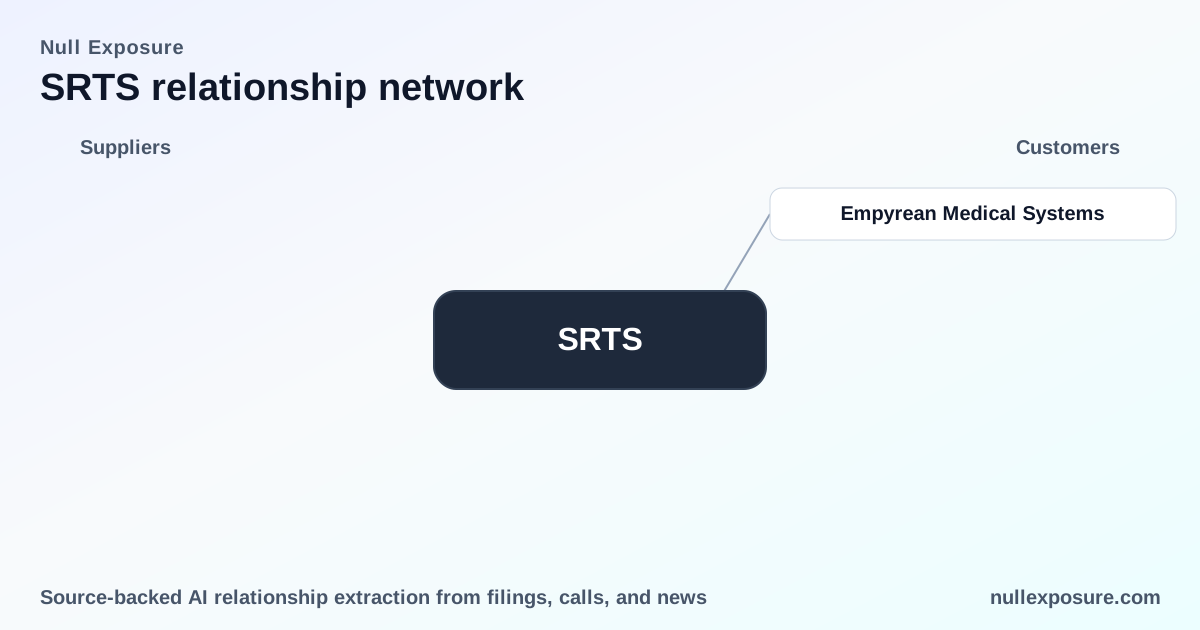
Empyrean Medical Systems — Sculptura asset sale (FY2022)
Sensus sold its Sculptura targeted directional anisotropic radiation therapy (ART) and brachytherapy assets to Empyrean Medical Systems for $15 million, a transaction reported by MPO Magazine on March 10, 2026 and documented as a FY2022 asset disposition. The sale removed non-core asset exposure and crystallized proceeds that altered Sensus’s product mix, leaving the SRT line as the commercial focus.
Source: MPO Magazine report (March 10, 2026) referencing the FY2022 transaction.
Operating constraints and what they imply for investors
The public filings and the relationship evidence combine into a clear set of company-level constraints that drive valuation and risk.
- Contracting posture — long-term leases: Sensus’s leasing subsidiary executes initial lease terms of five years with automatic one-year renewals. This produces predictable revenue duration but enlarges receivable duration and amplifies the impact of individual customer non-payment.
- Geographic concentration — U.S.-centric sales: The business is heavily domestic with 96% of sales in the U.S. for 2024. International diversification is minimal, so regulatory, reimbursement and market dynamics in the U.S. dominate company outcomes.
- Revenue concentration — material single-customer exposure: One U.S. customer represented 73% of revenue in 2024 and 61% in 2023, a structural concentration that creates high idiosyncratic risk on customer performance or contract renewal.
- Relationship stage — active placements with leasing rollouts: Since mid-2024, the company has actively placed leased devices through its services subsidiary, making the lifecycle of lease receivables a central monitoring metric.
- Core product dependency — SRT central to revenue: SRT is the firm’s historic and current core revenue generator; divestitures such as the Sculptura sale confirm a narrowed product focus.
These constraints position Sensus as a niche medical-device vendor with recurring lease revenue but high counterparty concentration and credit risk. Investors should treat customer receivables and legal disputes as fundamental drivers of near-term cashflow volatility rather than peripheral events.
Risk and return — how the relationships change the profile
The SkinCure litigation converts a commercial placement into a contested receivable, which is meaningful given the company’s revenue concentration and negative operating margins. Sensus’s most recent financials show Revenue TTM of $27.48 million and negative EBITDA of $9.92 million, so a sizable unpaid balance linked to a major customer would push working capital and liquidity metrics into focus. The Sculptura sale to Empyrean reduced strategic breadth and generated a one-time cash inflow, but it also narrowed future revenue levers to the SRT product line.
Key investment implications:
- Upside: The lease model creates recurring revenue and potential for aftermarket services. If Sensus stabilizes collection performance and grows placements, revenue visibility improves.
- Downside: High concentration and active litigation create asymmetric downside. A single large counterparty default or protracted legal dispute will materially affect cashflow given the company’s scale and margin profile.
- Operational monitoring: Watch accounts receivable trends, lease default rates, and the outcome of the SkinCure litigation for direct read-through to near-term liquidity.
What investors should watch next
- Legal outcomes and any material reserve or write-downs in Sensus filings related to the SkinCure suit. Company disclosures and court dockets will be the primary read-throughs.
- Quarterly receivable aging and any shifts in the identity of the top revenue customer; a migration away from extreme concentration would be a de-risking event.
- Lease placement velocity and renewal behavior from existing customers; this is the best real-time proxy for recurring revenue resilience.
- Use of proceeds from prior asset sales and balance-sheet flexibility against negative EBITDA and working capital demands.
For ongoing surveillance of Sensus customer events and litigation developments, Null Exposure maintains a focused feed at https://nullexposure.com/.
Bottom line
Sensus Healthcare operates a concentrated, lease-forward business centered on the SRT-100 product. The SkinCure litigation converts commercial exposure into legal and cash collection risk at a time when a single customer already accounts for a dominant share of revenue. The Sculptura divestiture simplified the product set but did not remove the core challenge: the company’s growth and valuation depend on successful lease rollouts, reliable collections, and diversification away from single-counterparty concentration. Investors should treat forthcoming filings and receivable disclosures as decisive inputs to valuation and downside risk management.