Neuronetics (STIM): Customer relationships that drive recurring, clinic-based revenue
Thesis: Neuronetics monetizes the NeuroStar Advanced Therapy System through a hybrid commercial model—capital sales (including three- to four-year rent-to-own arrangements), recurring treatment-session revenue, service and warranty contracts, and direct clinic revenue following strategic acquisitions—creating a revenue base that is concentrated in the U.S. and weighted toward predictable per‑session economics.
If you want a consolidated view of customer relationships and what they imply for revenue durability, visit https://nullexposure.com/ for our aggregated coverage and signals.
The commercial model in one paragraph investors need to remember
Neuronetics sells a Class II medical device and then extracts the highest margin and predictability from recurring treatment sessions and service. Long‑term equipment contracts and buyout options convert one‑time hardware sales into multi‑year customer relationships, while clinic operations (through the Greenbrook acquisition) add point‑of‑service cash flows. This combination creates a revenue mix where equipment sales drive adoption and recurring sessions drive lifetime value.
Company‑level operating constraints that shape customer risk and opportunity
- Contracting posture: Neuronetics uses long‑term equipment arrangements—rent‑to‑own leases with three‑ or four‑year terms and customer purchase options—that lock in equipment placement and provide predictable replacement windows and service upsell opportunities. This is a company‑level signal supporting recurring revenue visibility.
- Geographic concentration: U.S. revenue dominates (approximately 97% historically) and the business is sold primarily through a direct U.S. sales force, which concentrates regulatory, reimbursement and commercial risk domestically.
- Revenue criticality and mix: The firm’s financials indicate the majority of revenue is derived from recurring treatment sessions, with additional contributions from capital sales, service and warranty contracts, and clinic revenue—making payer relationships and utilization rates critical to topline stability.
- Customer roles and go‑to‑market: The customer base is primarily clinicians (psychiatrists, with some primary care and pain specialists), and the company uses independent distributors outside the U.S.; Neuronetics is therefore both a hardware seller and a services operator.
- Relationship maturity: Neuronetics reports active sales and clinic operations supported by a direct sales force and personnel headcount, reflecting an operationally mature, commercial‑stage business where growth depends on adoption and payer coverage expansion.
Customer relationships on the radar (straightforward takeaways)
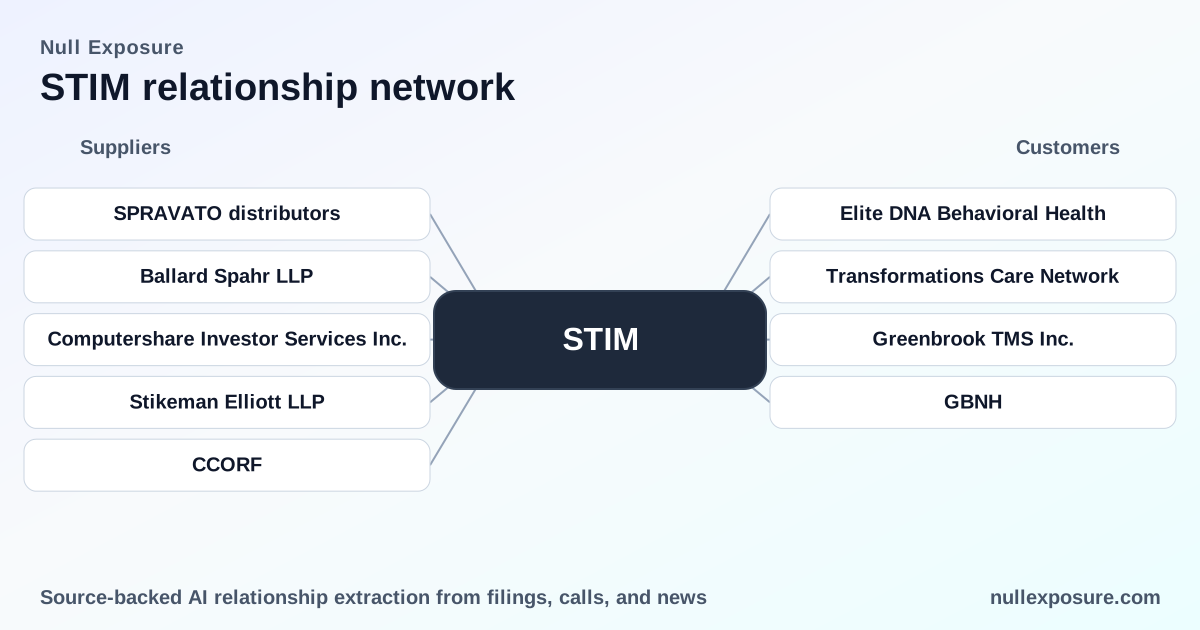
Elite DNA Behavioral Health
Neuronetics signed an exclusive three‑year agreement to be the sole provider of TMS devices across Elite DNA’s more than 30 Florida locations, expanding access through a major regional behavioral network. This strategic exclusive partnership drives multi‑location device placements and recurring treatment volume. According to the company press release on GlobeNewswire (October 30, 2025), Neuronetics will supply NeuroStar systems across Elite DNA’s footprint.
Transformations Care Network
Transformations Care Network continues to expand its multi‑state footprint of NeuroStar systems under an ongoing relationship, representing sustained demand from multi‑clinic behavioral networks that scale treatment sessions. The arrangement was referenced in an RTTNews report discussing Neuronetics’ revenue outlook for FY2022 and its continuing multi‑state deployments.
Greenbrook TMS Inc.
Greenbrook figures centrally to Neuronetics’ clinic strategy: the acquisition added U.S. clinic revenue that materially increased reported clinic sales, and Neuronetics adjusted historical results and closed non‑performing clinics post‑acquisition as part of integration. The company’s preliminary results and press commentary detail the inclusion and subsequent rationalization of Greenbrook clinics in FY2024–FY2025 (see QuiverQuant press coverage of FY2026 preliminary results and CityBiz reporting on Q3 2025 results and the CEO transition).
Greenbrook TMS (alternate reporting)
Multiple press pieces describe Greenbrook as the nation’s largest TMS provider and the centerpiece of Neuronetics’ national account strategy; Neuronetics has cited an exclusive agreement with Greenbrook in investor communications about scaling clinic access. CityBiz coverage (announcing Q3 2025 results and leadership changes) references this strategic partnership and its contribution to U.S. clinic revenue.
GBNH (ticker reference to Greenbrook)
Investor‑oriented articles and company announcements reference the Greenbrook transaction under the shorthand GBNH, with commentary focused on how assumed Greenbrook sales were treated in Neuronetics’ financials and how clinic closures affected comparative periods. See the CityBiz profile and related investor coverage that connects Neuronetics’ revenue movement to the Greenbrook (GBNH) integration.
UnitedHealthcare
UnitedHealthcare (UHC) expanded clinical policy parameters to broaden who can order and administer TMS, which increases addressable commercial lives and potential utilization of NeuroStar therapy for covered members. Neuronetics highlighted this change in reports discussing FY2026 policy updates; local reporting on the policy change appears in MyChesco (May 2026).
United Behavioral Health
United Behavioral Health updated clinical policy alongside UHC and Optum to allow psychiatric mental health nurse practitioners to deliver TMS, thereby expanding provider capacity and patient access within major managed‑care networks, according to MyChesco (May 2026).
Optum
Optum’s policy change is a material distribution and access lever: by enabling psychiatric mental health nurse practitioners to order and administer TMS across Optum’s footprint, NeuroStar therapy access expands across approximately 34.8 million Optum/UHC/UBH commercial covered lives, per the GlobeNewswire release on April 13, 2026, and corroborating media reports in early May 2026.
Optum/United Healthcare/United Behavioral Health (group reporting)
The collective policy update by Optum, UnitedHealthcare and United Behavioral Health is significant because it removes a procedural bottleneck and increases the pool of clinicians able to deliver TMS care, directly supporting higher session utilization rates and clinic throughput; the joint announcement and press reporting in April–May 2026 document the payer coverage expansion and its potential impact on access.
What this all means for investors and operators
- Predictable, recurring economics: The combination of long‑term equipment placements and payor policy expansion supports recurring per‑session revenue growth if clinics maintain utilization.
- Concentration risk is real: With nearly all revenue originating in the U.S., payers and domestic policy updates are the single greatest levers for upside or downside.
- Scale through strategic partnerships and clinic ownership: Exclusive agreements with networks like Elite DNA and the Greenbrook acquisition are explicit plays to capture referral flow and session volume—critical for turning installed bases into sustainable lifetime value.
- Operational execution matters: Post‑acquisition clinic rationalization at Greenbrook shows management is willing to optimize the clinic footprint to protect margins and quality; operators should expect continued emphasis on clinic performance and payer relationships.
If you want a concise, signal‑weighted summary of how these relationships affect revenue durability and payer exposure, explore our broader analysis at https://nullexposure.com/.
Bold takeaway: Neuronetics’ revenue durability hinges on converting device placements into sustained session throughput—and payer policy expansions and strategic clinic partnerships are the immediate levers that determine whether that conversion succeeds.