Stellantis (STLA): How customer linkages inform capital and operational risk
Stellantis designs, engineers and manufactures passenger cars, trucks, SUVs and light commercial vehicles, and monetizes through global vehicle sales, parts and services, and increasingly through manufacturing services and strategic equity partnerships that extend its production capabilities and aftermarket platforms. Investors should view Stellantis as an industrial OEM that generates the majority of cash flow from vehicle volume while leveraging manufacturing scale and technology partnerships to capture adjacent revenue streams. Learn more at https://nullexposure.com/.
Why the customer map matters for valuation and operational risk
Stellantis' customer relationships are not limited to retail dealers; they include corporate fleet buyers, coachbuilders, software and connectivity vendors, and even nontraditional manufacturing partners. These linkages influence margin cyclicality, working capital exposure and capital allocation — especially when Stellantis commits tooling, personnel or capital to scale third‑party production. Customer concentration with dealer groups and deep manufacturing engagements with growth-stage partners are the two structural themes investors should track.
The relationships that change the risk profile
Archer Aviation (ACHR / ACHR-WS): contract manufacturing and compensation
Stellantis has moved beyond supplier status into an active contract manufacturer for Archer’s Midnight eVTOL program, providing capital, advanced manufacturing technology and personnel intended to scale output to 650 aircraft annually by 2030; Archer’s disclosures also record non‑cash warrant costs issued to Stellantis in connection with services provided. According to Archer investor releases and trade coverage in 2025–2026, Stellantis is finalizing arrangements to act as Archer’s exclusive contract manufacturer and received warrants as part of the commercial terms (Archer investor release, FY2025; AssemblyMag and SmartCitiesDive coverage, 2024–2025).
Asbury Automotive Group (ABG): dealer dependence and retail headwinds
Asbury’s management identified a material share of its stores tied to Stellantis brands and described those locations as a challenging portion of operations during 2025, indicating dealer‑level exposure to Stellantis retail performance that affects both wholesale inventory flow and local service revenues. This comment comes from Asbury’s Q4 2025 earnings call transcripts published in early 2026 (InsiderMonkey / The Globe and Mail, FY2026).
Ituran (ITRN): connected‑vehicle services partnership
Stellantis contracted Ituran to deliver an end‑to‑end Fiat Connect platform in South America, including embedded hardware, connected services, backend operations and the end‑user mobile app, positioning Stellantis to outsource and scale its telematics and subscription offerings in the region. The agreement was announced via PR Newswire in 2026 (PR Newswire, FY2026).
Zhejiang Leapmotor / Leapmotor: equity, JV and local production options
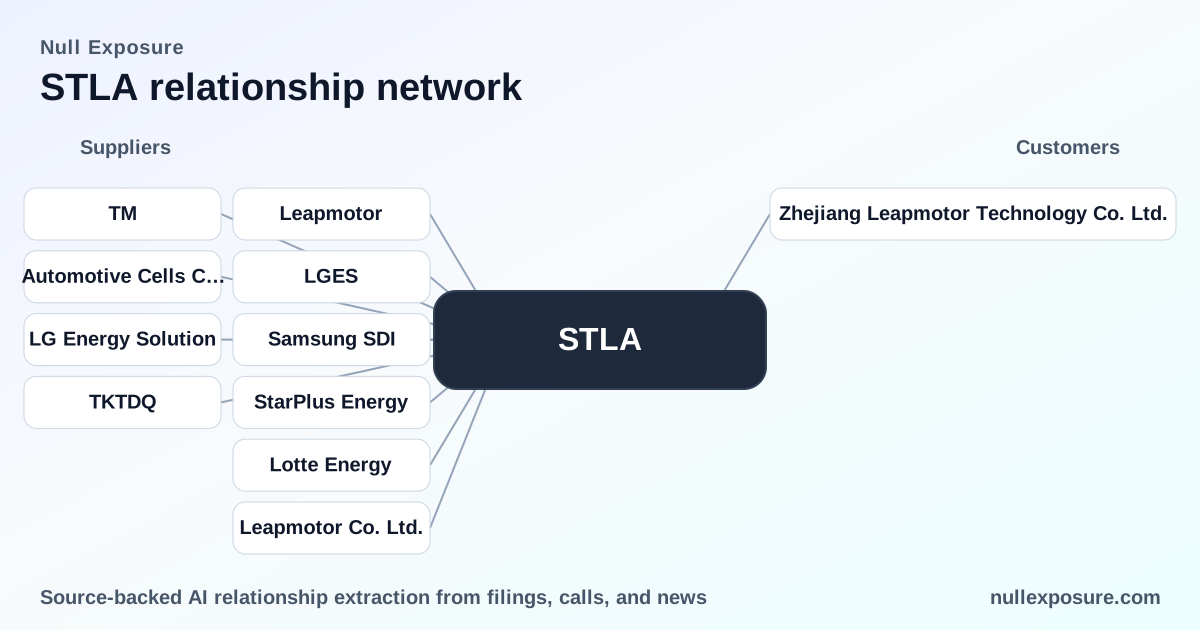
Stellantis holds a strategic interest in Zhejiang Leapmotor Technology, including a 20% investment and a joint venture to distribute Leapmotor EVs beyond China, and is exploring early-stage plans with Leapmotor to produce EVs at idled Canadian capacity. That combination signals a two‑track approach of equity investment plus contract manufacturing to access lower‑cost EV platforms (Detroit News and CNEVPost coverage, FY2026).
The Shyft Group (SHYF): production timing and upfit impacts
Shyft referenced a prolonged planned retool of a Stellantis plant in Saltillo, Mexico as a driver of timing disruptions for vehicle upfit and its Velocity product line, illustrating how Stellantis plant downtime transmits directly to body‑builder and upfitter revenues and delivery schedules. This issue was discussed on a Shyft earnings call transcript archived in 2022 (The Motley Fool transcript, FY2022).
Winnebago (WGO): chassis supply for recreational vehicles
Winnebago’s Lineage LVP1 debuted on a high‑roof Ram ProMaster chassis, a Stellantis platform, demonstrating the OEM role of Stellantis as a primary chassis supplier for RV and specialty vehicle OEMs and the embedded revenue stream from platform sales and components. Product notes and coverage appeared in early 2026 (Sahm Capital press coverage, FY2026).
AN (likely a major dealer or retail group): core vehicle supply concentration
AN’s FY2025 10‑K states that approximately 89% of the new vehicles it sold in 2025 were manufactured by Stellantis, marking a very high supplier concentration for that retailer and underscoring Stellantis’ commercial importance in certain dealer networks. This disclosure is recorded in AN’s 10‑K filing for the year ended 2025 (AN 10‑K, FY2025).
What these relationships imply about Stellantis’ operating model
- Contracting posture: Stellantis actively signs manufacturing and services contracts that include capital contributions and technical transfers; the Archer relationship shows Stellantis acting as an equity‑compensated contract manufacturer rather than a simple supplier.
- Concentration: Several retail and fleet customers have substantial exposure to Stellantis platforms (AN’s 89% figure and Asbury’s dealer comments), creating both pricing leverage and revenue concentration risk at the retail channel level.
- Criticality: Stellantis plant availability is operationally critical for adjacent suppliers and upfitters (Shyft example) and for OEMs that rely on Stellantis chassis (Winnebago). Plant shutdowns or retools propagate directly to partner earnings and delivery schedules.
- Maturity and diversification: Stellantis’ relationships span legacy OEM supply and rapidly evolving strategic ventures — from connectivity outsourcing (Ituran) to equity and JV deals with Leapmotor and contract manufacturing for Archer — indicating a deliberate shift to monetize manufacturing expertise and software/connected services beyond pure vehicle sales.
Financial context that underpins customer risk
Stellantis reported trailing revenue of roughly $155.8 billion with a market capitalization near $20.5 billion, but reported negative EBITDA and diluted EPS in the most recent trailing periods, which tightens the capital allocation tradeoffs when endorsing capital‑intensive customer arrangements. Investors should weigh the operational upside of scaling third‑party manufacturing and services against current earnings pressures and capital requirements (Stellantis company metrics, latest quarter 2026‑03‑31).
Bottom line for investors and operators
Stellantis is using its manufacturing scale and balance sheet to extend into contract manufacturing, software/connectivity partnerships and equity stakes — activities that can unlock higher‑margin services but increase execution and capital risk. Monitor progress on the Archer manufacturing agreement, the geographic footprint and idled plants that could be repurposed for EV partners (Leapmotor), and dealer concentration metrics reported by large retail partners.
If you want a concise vendor‑level view or a deeper customer‑risk report tailored to a specific partner, review our full coverage and tools at https://nullexposure.com/.
Key takeaways: Stellantis’ customer relationships are simultaneously a revenue anchor and a lever for strategic diversification; they require active monitoring of plant uptime, contractual compensation (including warrants and equity), and counterparty concentration at the retail level.