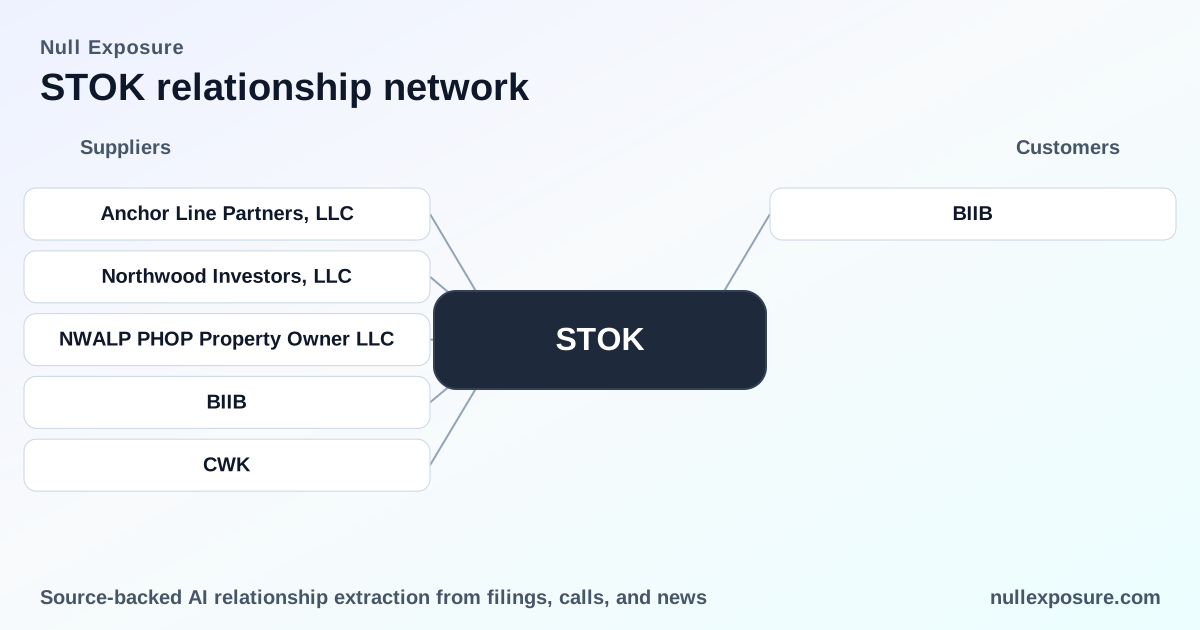
Stoke Therapeutics: The Biogen Collaboration as a Commercial Lever
Stoke Therapeutics develops antisense oligonucleotide therapies and monetizes primarily through clinical-stage product development and strategic partnerships that allocate commercialization rights by geography. The company advances zorevunersen for Dravet syndrome through a strategic collaboration with Biogen that splits global rights—Stoke retains North American rights while Biogen holds rest-of-world commercialization—creating near-term revenue optionality from milestones and long-term upside from product sales in its retained territories. For a concise view of counterparty exposures and relationship documents, visit https://nullexposure.com/.
Why the Biogen deal matters for revenue and valuation
The Biogen partnership is the single most visible commercial relationship in the public record for Stoke. The structure—territorial exclusivity combined with shared clinical development—de-risks market access outside North America while concentrating Stoke’s commercial upside in the U.S., Canada and Mexico. That setup transforms a research-stage R&D program into a prospective revenue stream that can be monetized through upfront and milestone payments plus royalties or product sales in Stoke’s territories.
City reporting and company communications repeatedly emphasize the split of rights: exclusive North American commercialization for Stoke; exclusive rest-of-world rights for Biogen. The arrangement positions Stoke to capture premium pricing and payer negotiations in its home market while leveraging Biogen’s global commercial scale elsewhere.
What the record shows — itemized relationship mentions
-
Stoke’s strategic collaboration with Biogen to develop and commercialize zorevunersen for Dravet syndrome is cited in a PharmiWeb press release (April 8, 2026). The release describes the collaboration in the context of a conference presentation. (PharmiWeb, 2026-04-08: https://www.pharmiweb.com/press-release/2026-04-08/stoke-therapeutics-to-present-at-the-25th-annual-needham-virtual-healthcare-conference)
-
A press release distributed around the 36th International Epilepsy Congress reiterates the collaboration and references clinical data presentations for zorevunersen, underscoring active clinical-stage development under the Biogen partnership. (NTB/press release, FY2026: https://kommunikasjon.ntb.no/pressemelding/18630107/biogen-and-stoke-therapeutics-announce-presentations-of-clinical-data-from-studies-of-zorevunersen-for-the-potential-treatment-of-dravet-syndrome-at-the-36th-international-epilepsy-congress?publisherId=4954260&lang=en)
-
A CityBiz article notes that Stoke “retains exclusive rights for zorevunersen in the United States, Canada, and Mexico; Biogen receives exclusive rest of world commercialization rights,” making the territorial split explicit and public. (CityBiz, FY2026: https://www.citybiz.co/article/829607/stoke-therapeutics-appoints-clare-kahn-to-board/)
-
A corporate update carried on Yahoo Finance restated the collaboration and the territorial rights while providing timeline updates related to development. The release serves as a company-facing investor update on program timing and partner roles. (Yahoo Finance, 2026-03-10: https://finance.yahoo.com/news/stoke-therapeutics-announces-updates-timelines-190000453.html)
-
The same Yahoo Finance item appears again in the record as a separate mention, reflecting distribution across channels of the same investor update and reinforcing that Stoke’s public narrative centers on the Biogen collaboration as the primary commercial mechanism for zorevunersen. (Yahoo Finance duplicate listing, 2026-03-10: https://finance.yahoo.com/news/stoke-therapeutics-announces-updates-timelines-190000453.html)
Operational implications and company-level constraints
-
Geographic revenue concentration: Stoke primarily generates revenue in North America and manages long-lived assets in that region. This is a company-level signal: North America is the core economic base for Stoke’s commercialization efforts, consistent with its retention of U.S./Canada/Mexico rights for zorevunersen. (Company disclosures, FY2026)
-
Contracting posture: The firm operates an alliance-driven commercialization model—Stoke focuses on discovery and clinical development while relying on partner scale for global commercialization. The Biogen deal demonstrates a deliberate trade-off: retain high-value North American rights and outsource global commercialization.
-
Concentration and criticality: Biogen constitutes a material counterparty for Stoke’s lead program. For investors, that elevates counterparty risk and upside tied to Biogen’s execution of rest-of-world regulatory filings and launch activities, while Stoke’s own commercial risk concentrates on North American market access and payer negotiation.
-
Maturity and timing: The relationship sits at a clinical-to-precommercial stage, with multiple public presentations and timeline updates in FY2026. This indicates the partnership has progressed beyond early optioning discussions into coordinated clinical data generation and regulatory planning.
Risks and value levers to monitor
-
Clinical readouts and regulatory milestones will drive the most immediate valuation moves; the partnership converts those scientific outcomes into commercial milestones and potential payments to Stoke. Positive clinical data and regulatory path clarity will materially de-risk revenue forecasts.
-
Concentration risk with Biogen: Stoke’s commercial prospects for zorevunersen are tied to a single major partner for international markets and internal commercialization plans in North America; any partner execution shortfall or strategic reprioritization by Biogen would directly affect global rollout cadence.
-
Payer negotiation exposure in North America: Retaining North American rights concentrates pricing and reimbursement negotiations on Stoke’s internal or partner-supported capabilities; effective commercialization execution on this front is essential to realize retained-territory revenue.
For a streamlined counterparty map and monitoring workflow tailored to healthcare partnerships, see more at https://nullexposure.com/.
Bottom line for investors
Stoke’s commercial strategy is partnership-first with localized ownership of high-value territorial rights. The Biogen collaboration is the dominant customer/partner relationship in public filings and press activity through FY2026, providing both a clear commercialization path and a concentrated exposure that amplifies both upside and execution risk. Investors should focus on upcoming clinical milestones, regulatory timelines, and evidence of coordinated commercialization planning between Stoke and Biogen as the proximate drivers of valuation.