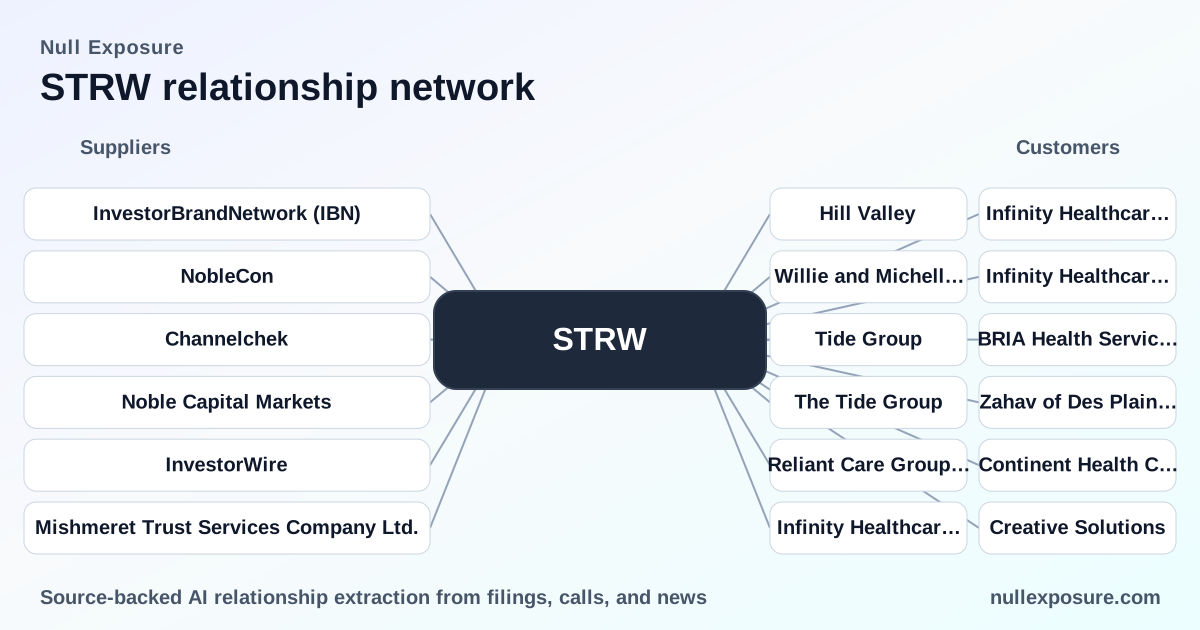
Strawberry Fields REIT (STRW): Customer Relationships Drive a Triple‑Net, Master‑Lease Model
Strawberry Fields REIT operates and monetizes as a self‑managed, self‑administered healthcare REIT that acquires skilled nursing and post‑acute properties and leases them to third‑party operators, generating recurring cash flow primarily through long‑term, triple‑net leases and a portfolio of master leases. For investors, the company’s revenue profile is defined by lease structure, geographic diversification across Midwestern and Southern states, and concentrated exposure to a relatively small set of master‑lease counterparties. For a high‑level map of counterparties and operating constraints, see NullExposure for the full relationship visualization: https://nullexposure.com/.
How the business actually collects cash (and where the leverage lives)
Strawberry Fields’ core monetization is straightforward: buy real estate used as skilled nursing facilities, then lease those assets under long‑term, non‑cancelable triple‑net agreements so tenants shoulder taxes, insurance and most operating capital. The company also relies on master leases that bundle groups of facilities under single counterparties; these master leases include cross‑default and cross‑collateralization provisions that make them economically critical to performance. According to company disclosures, approximately 84.1% of annualized rental revenue is derived from 15 master leases, and all properties are managed by independent operators with experienced management teams (company filings and 2025 fiscal commentary).
If you underwrite STRW, price the long terms of the leases, the concentration in master leases, and related‑party rent exposure into forward cash flow.
Operating constraints that govern customer risk and partner economics
Strawberry Fields’ operating model is characterized by a few hard constraints that shape risk and return:
- Contracting posture: Predominantly long‑term, triple‑net leases with master‑lease frameworks across groups of facilities. The company reports initial master‑lease terms of ten years with multiple five‑year extension options in new agreements (company earnings call and filings, FY2025–FY2026).
- Concentration and criticality: Fifteen master leases account for the vast majority of rental revenue and include cross‑default provisions; this creates critical single‑counterparty risk despite broad geographic spread.
- Geographic diversification: Assets are spread across eleven U.S. states—Arkansas, Illinois, Indiana, Kansas, Kentucky, Michigan, Missouri, Ohio, Oklahoma, Tennessee and Texas—reducing localized market risk but not eliminating counterparty concentration.
- Maturity and stage: The portfolio is active and growing; as of March 2025, the company reported roughly 130 tenants across 31 lease agreements and ownership of 120 properties, indicating a scale‑up phase where new master leases materially alter recurring rent.
- Related‑party exposure: Company filings disclose substantial related‑party rental income (historically over half of base rent in certain periods), a material company‑level signal for governance and collection risk.
These constraints should be modeled as structural features of cash flow rather than ephemeral characteristics.
For institutional access to the firm’s counterparty map and filing‑level evidence, visit NullExposure: https://nullexposure.com/.
Relationship roll call — every named tenant and operator in the disclosures
Below are concise, source‑anchored descriptions of each counterparty mentioned in the company’s public results and press coverage. Each entry is limited to one or two plain‑English sentences.
Hill Valley
Hill Valley is identified as a new tenant with operational experience in skilled nursing, described in the company’s 2025 Q4 earnings call as a “great fit” for the portfolio. (STRW 2025 Q4 earnings call, first reported March 7, 2026.)
Willie and Michelle Novotny of Advenicare
Strawberry Fields executed a triple‑net master lease with Willie and Michelle Novotny of Advenicare that has an initial ten‑year term and two five‑year extension options, reflecting the company’s preference for long initial terms with built‑in renewal potential. (STRW 2025 Q4 earnings call, March 2026.)
Tide (TIDE)
TradingView noted that re‑tenanting and new master leases with operators such as Tide contributed to increased rent stability; Tide is cited as a primary operator in recent master‑lease additions. (TradingView news item, May 4, 2026.)
Reliant Care Group L.L.C.
An affiliate of Reliant Care Group L.L.C. leased the ninth facility added to a master lease, increasing Reliant‑related annual rent by approximately $0.6 million. (SAHM Capital summary of 2025 results; GlobeNewswire press release, Feb 19–20, 2026.)
Tide Group
Eight facilities were leased to the Tide Group and added to a master lease entered in August 2024, a transaction the company says increased Tide Group’s annual rents by $5.5 million. (SAHM Capital and GlobeNewswire press releases summarizing 2025 year‑end results, Feb 2026.)
The Tide Group
Press coverage across multiple outlets references The Tide Group as the operator tied to a cluster of recently acquired Missouri facilities leased under a long‑term arrangement expected to lift annual rents materially. (Intellectia.ai and GlobeNewswire reporting on FY2025 results, March 2026.)
Infinity Healthcare of Illinois
Infinity Healthcare of Illinois is listed among operators in Strawberry Fields’ portfolio, indicating it runs one or more of the leased healthcare facilities the REIT owns. (Intellectia.ai news coverage of 2025 results, March 2026.)
BRIA Health Services
BRIA Health Services is recorded as an operator in the portfolio summary, showing Strawberry Fields’ exposure to regional multi‑facility operators. (Intellectia.ai reporting on FY2025, March 2026.)
Infinity Healthcare of Indiana
Infinity Healthcare of Indiana appears in the portfolio list of operators, reflecting the company’s strategy of leasing to multiple Infinity branded entities across states. (Intellectia.ai, March 2026.)
Infinity Healthcare of Tennessee
Infinity Healthcare of Tennessee is similarly included among named operators, underlining the geographic footprint of Infinity entities across Strawberry Fields’ holdings. (Intellectia.ai, March 2026.)
Zahav of Des Plaines
Zahav of Des Plaines is mentioned as one of the tenant/operators in the portfolio, representing localized operators within Strawberry Fields’ asset base. (Intellectia.ai, March 2026.)
Creative Solutions
Creative Solutions is cited among the REIT’s operating partners and is part of the operator mix that drives rental income across the portfolio. (Intellectia.ai coverage of FY2025 results, March 2026.)
Continent Health Care
Continent Health Care is named in the company’s list of operators and contributes to the diversified operator roster that Strawberry Fields leases to. (Intellectia.ai, March 2026.)
Reliant (RFNS)
A TradingView item referenced Reliant (inferred symbol RFNS) among operators in the company’s lease strategy commentary, echoing other press reports about Reliant‑affiliated facilities and lease additions. (TradingView, May 4, 2026.)
Investment implications and near‑term monitoring checklist
- Positive: Long lease terms and triple‑net structure produce predictable base rent and transfer most capex/operational cost risk to tenants. Master leases scale that predictability across portfolios.
- Watchlist: The business is highly concentrated in a handful of master‑lease counterparties (15 master leases = 84.1% of rent) and carries material related‑party rental exposure; model stress scenarios for master‑lease default and related‑party disruption.
- Operational: Track new master‑lease signings and the geographic mix of acquired assets; additions like the Tide Group Missouri transaction materially changed annual rent run‑rate in FY2025–FY2026 (public filings and press releases).
Bottom line: Strawberry Fields is a lease‑centric healthcare REIT whose risk/return profile is dominated by master‑lease counterparties and long triple‑net contracts; underwriting must center counterparty credit and master‑lease structure, not just cap‑rate. For a connected map of counterparties, filings and event timing, visit NullExposure: https://nullexposure.com/.