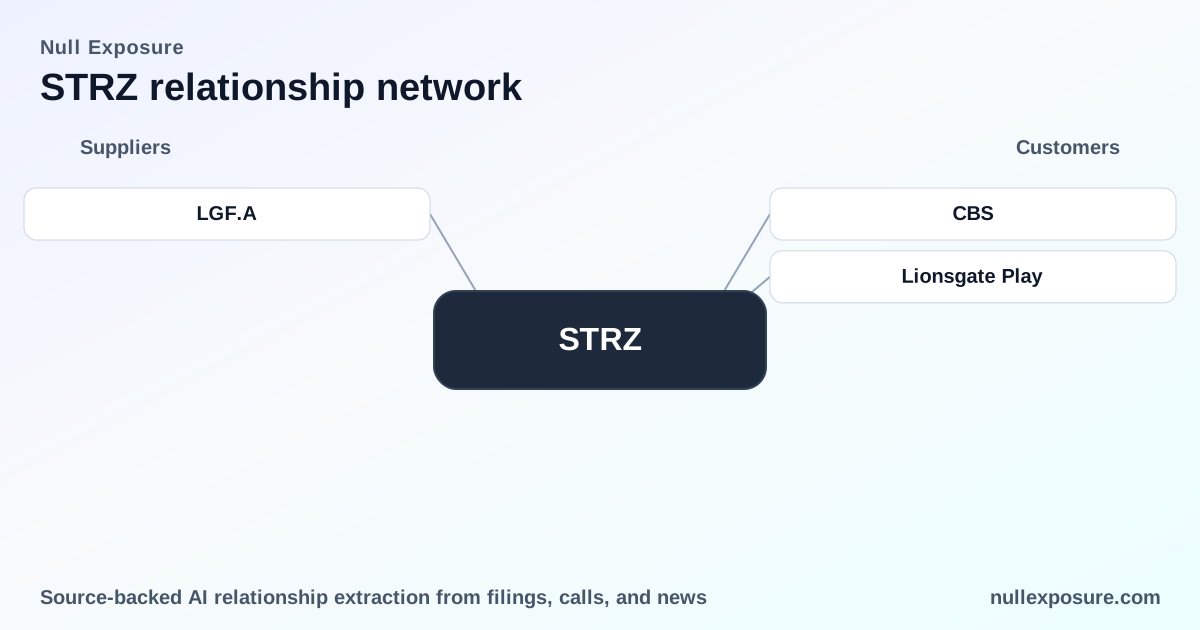
Starz Entertainment (STRZ): Customer relationships, contract posture, and commercial levers
Starz Entertainment monetizes a premium subscription video business by selling branded streaming services directly to consumers and through distributors (MVPDs and OTT partners), collecting recurring subscription fees and licensing content under multi-year distribution arrangements. Revenue mixes across subscriptions, distributor payments, and usage-based royalties create a hybrid cash flow profile that amplifies scale benefits while concentrating commercial risk with a few large partners. For a deeper look at how commercial relationships translate into operational exposure, visit https://nullexposure.com/.
How Starz makes money and how contracts shape cash flow
Starz’s core business is the distribution of premium video services through three channels: the Starz App (direct-to-consumer), OTT aggregators and app stores, and traditional multichannel video programming distributors (MVPDs). Contracts skew toward recurring subscription economics, with distributors and platform partners reporting subscriber counts and remitting monthly or ratable payments. Financial disclosures document (1) subscription billing recognized ratably, (2) usage-based/variable royalties tied to distributor sales, and (3) multi-year, staggered agreements with annual rate adjustment provisions — a structure that creates predictable revenue arcs but also dependency on renewal cadence and partner reach.
Key operating model characteristics:
- Contracting posture: Predominantly subscription-based, supplemented by usage-based royalty arrangements and long-term distributor contracts that renew on a rolling basis.
- Concentration: Commercial concentration is material — one customer (Amazon and its subsidiaries) represented 29.7% of revenue in FY2025, highlighting single-counterparty revenue risk.
- Criticality: Distributor relationships are strategic and often critical to reach (MVPDs and app stores); content licensing and brand-licensing deals extend the footprint but are generally secondary revenue lines.
- Maturity: Agreements are typically multi-year and staggered, creating renewal predictability but exposing the company to episodic renegotiation risk and price elasticity pressures.
Who Starz is dealing with right now — the relationship roll call
Below are the customer and partner relationships surfaced in public sources and news coverage. Each item is summarized in plain English with a concise source reference.
Morgan Stanley — institutional holder via ETFs
Morgan Stanley-managed funds, including the Pathway Small‑Mid Cap Equity ETF, list Starz shares among holdings, indicating institutional exposure through active and index-like vehicles. According to a TradingView ETF holdings listing (May 4, 2026), Morgan Stanley vehicles include STRZ in their small‑mid cap allocations.
CBS — historical M&A interest reported
CBS engaged in discussions historically about acquiring the Starz network when it was part of Lionsgate, reflecting strategic buyer interest from legacy media owners; these conversations were publicly reported in 2019. A CNBC report from May 2019 documented CBS’s ongoing talks with Lionsgate regarding purchase options for Starz’s premium network.
BlackRock, Inc. — passive exposure through iShares funds
BlackRock’s iShares funds, notably small-cap and value ETFs, include Starz in their portfolios, signaling passive investor demand and index-driven liquidity. TradingView ETF holdings data (May 4, 2026) show BlackRock-managed vehicles holding STRZ.
Lionsgate Play — brand licensing and library access in APAC
Lionsgate Play, Starz’s regional streaming arm for South and Southeast Asia, was sold to its president as part of a restructuring; Starz retains a multi‑year brand‑licensing and content access agreement with the service. A WhalesBook report (March 10, 2026) describes the sale and the ongoing multi-year licensing deal for brand and library access.
Lionsgate Play — operational separation and regional focus
A separate mention emphasized that the transaction enables Lionsgate Play to operate independently and focus on regional expansion while Starz continues to license content and brand rights under multi‑year terms. The same WhalesBook coverage (March 10, 2026) reiterated these operational arrangements.
Fubo — distribution channel expansion via channel store
Fubo’s Channel Store offers standalone premium plans including Starz, enabling Starz to reach cord‑cutting sports and streaming audiences without a base Fubo subscription. A PPS Land article covering Fubo’s product changes (November 5, 2025) notes Starz is available as a standalone premium add‑on on Fubo’s channel store.
Allen Family Capital — significant equity purchase
Allen Family Capital purchased 1,803,786 common shares of Starz at $13.86 per share, representing a material private investment into the company’s equity base. A Pulse2 report (May 4, 2026) documents this $25 million investment for approximately a 10.7% stake.
Dimensional Holdings, Inc. — small-cap value inclusion
Dimensional’s small-cap value ETF holdings include Starz, indicating allocation from value-focused portfolios and another channel of institutional passive/quant exposure. TradingView ETF holdings (May 4, 2026) list Dimensional US Small Cap Value ETF holdings that contain STRZ.
Commercial risk and concentration: what investors should stress-test
- Top-client concentration is tangible. The FY2025 disclosure that Amazon and its subsidiaries accounted for 29.7% of revenue is a headline risk that requires scenario analysis for any change in Amazon distribution economics or placement decisions.
- Revenue quality is recurring but blended. Subscription billing produces ratable revenue recognition, while variable distribution fees create a usage-linked revenue stream that can amplify volatility during periods of fluctuating viewing or distribution performance.
- Geographic footprint has been rationalized. Starz has executed international exits (Europe, Latin America, Japan and other territories) and maintains a strong North American focus — a signal that management is consolidating where economics are most attractive.
- Contract maturity reduces surprise but raises renewal stakes. Multi-year, staggered deals smooth cash flow timing but concentrate renegotiation risk at contract expiry windows.
What this means for investors and operators
For investors, Starz is a subscription-first media asset with concentrated distribution dependencies and defensible content assets that can be monetized through licensing and aggregator channels. The balance sheet and margin profile will hinge on subscriber growth/retention and the company’s success expanding distribution partnerships beyond a small set of large counter‑parties. For operators and partners, the commercial posture implies long-term negotiation levers (annual rate increases, usage-based royalties) and a priority on preserving carriage relationships.
If you'd like a structured risk map or counterparty analysis for STRZ, NullExposure provides curated relationship intelligence and partner concentration analytics at https://nullexposure.com/.
Bottom line: investable strengths and strategic watchpoints
Starz’s business combines stable subscription cash flows with concentration risk and structured distributor contracts that both protect and expose revenue. Institutional holders such as Morgan Stanley, BlackRock, and Dimensional indicate market access and liquidity, while strategic moves like the Lionsgate Play license in APAC demonstrate a pragmatic approach to international monetization. Monitor Amazon‑related revenue exposure, renewal cycles with MVPDs and OTT platform partners, and the company’s ability to broaden distribution storefronts as the principal near-term value drivers.