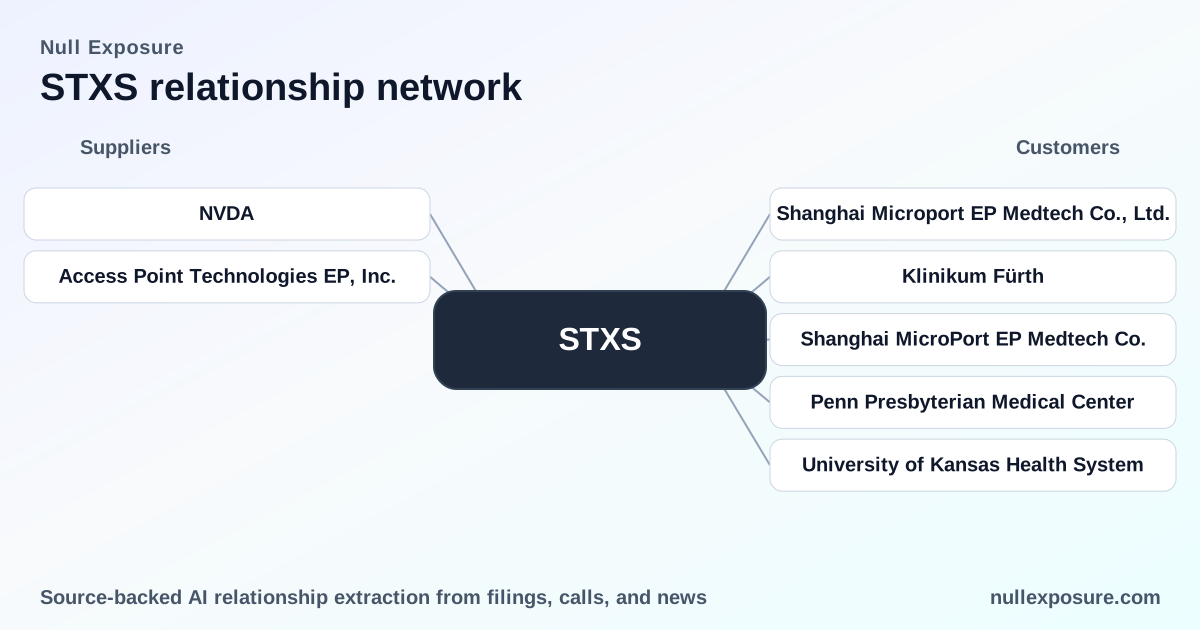
Stereotaxis (STXS): customer footprint and what it tells investors about scale, risk, and growth
Stereotaxis designs and sells robotic magnetic navigation systems for electrophysiology and endovascular procedures, and monetizes through a two-tier model: capital equipment sales (robotic platforms and compatible imaging systems) plus recurring consumables, software, and service tied to its installed base. This combination creates higher-margin recurring revenue when adoption ramps, while the initial sale is capital-intensive and typically negotiated as part of larger hospital projects. For investors, the key questions are adoption velocity, installed-base monetization, and geographic scale of distribution. Learn more about how we track these relationships at https://nullexposure.com/.
Why customer names in press releases matter to valuation
Stereotaxis’ recent press activity maps to two observable strategic moves: expanding international distribution through partners and enlistment of leading academic and community hospitals as early adopters for new catheters and platform upgrades. Customer wins cited in 2025–2026 releases function as validation points for both regulatory momentum and commercial penetration. Each named institution signals where Stereotaxis expects recurring device sales and services to follow an installed system.
Customer relationships: who’s buying and why
Below I list every customer relationship cited in the recent coverage, with a plain-English summary and the source.
Shanghai MicroPort EP Medtech Co., Ltd.
Stereotaxis has a distribution and commercialization collaboration in China, where MicroPort EP is the exclusive distributor for Robotic Magnetic Navigation electrophysiology products. According to DiCardiology and The Robot Report, this partnership began in 2021 and was reiterated in March 2026 as the exclusive China distributor for the technology. (DiCardiology, March 10, 2026; The Robot Report, March 2026.)
Klinikum Fürth (Fürth, Germany)
Klinikum Fürth launched a robotic electrophysiology program using Stereotaxis systems, demonstrating European clinical adoption and institutional endorsement. A GlobeNewswire release announcing the program in February 2026 quoted the company and CEO David Fischel on the partnership. (GlobeNewswire, February 9, 2026.)
Baptist Health Lexington
Baptist Health Lexington is an early U.S. adopter cited for performing first MAGiC procedures and routinely using robotic magnetic navigation for complex arrhythmias, positioning the hospital as a reference center for clinical outcomes with the new catheter. The center and Dr. Gery Tomassoni provided commentary in the April 22, 2026 GlobeNewswire release. (GlobeNewswire, April 22, 2026.)
Allina Health Minneapolis Heart Institute / Abbott Northwestern Hospital
Allina Health’s Minneapolis Heart Institute is listed among the first sites to modernize catheter labs with Synchrony and SynX platforms when a new surgical and critical care center opens later in the year, signaling an institutional upgrade tied to launch timing. The April 6, 2026 GlobeNewswire release carried commentary from Dr. Daniel Melby. (GlobeNewswire, April 6, 2026.)
Oregon Health & Science University (OHSU) and OHSU School of Medicine
OHSU clinicians performed the first MAGiC procedure in the U.S., using the system on complex congenital heart disease patients—an illustrative case for high-acuity use and proof-of-concept in difficult anatomies. Coverage appeared across GlobeNewswire, InsiderMonkey, and TradersUnion in April 2026. (GlobeNewswire, April 22, 2026; InsiderMonkey, April 22, 2026; TradersUnion, April 2026.)
Penn Presbyterian Medical Center
Penn Presbyterian was reported as the first hospital in the U.S. Northeast to adopt advanced Stereotaxis robotic technology, an example of regional expansion into high-volume clinical centers. This was documented in a DiCardiology article summarizing the company’s 510(k) clearance activity in May 2024 and cited in later reporting. (DiCardiology, May 30, 2024; referenced in March 2026 coverage.)
University of Kansas Health System
Physicians at the University of Kansas Health System were among the first to treat patients with Stereotaxis’ Genesis system, illustrating early academic adoption and clinical trialing of the platform. The Robot Report noted these cases in its March 2026 coverage of regulatory approvals and clinical rollouts. (The Robot Report, March 2026.)
University Hospitals Harrington Heart & Vascular Institute (Case Western Reserve affiliation)
University Hospitals Harrington Heart & Vascular Institute is highlighted as an early pioneer interested in Synchrony and SynX for intraoperative remote collaboration and training, signaling a use case beyond single-site treatment toward networked EP lab workflows. GlobeNewswire quoted Dr. Mauricio Arruda in April 2026. (GlobeNewswire, April 6, 2026.)
What these relationships tell us about Stereotaxis’ operating model and constraints
- Geographic reach is global: The company positions itself as serving hospitals in the United States and internationally, and its distribution agreement in China demonstrates active pursuit of scale outside North America. This is a company-level signal drawn from firm disclosures indicating global marketing and clinical penetration.
- Customer concentration is low: Public disclosures state that no single customer accounted for more than 10% of revenue for 2023–2024, which implies revenue diversification across many hospitals rather than reliance on a handful of large accounts.
- Contracting posture is capital-sale driven with recurring follow-on revenue: The business sells capital equipment (robotic systems, Odyssey solutions, compatible x-ray systems) often as part of larger hospital capital projects, and then drives recurring sales of disposables, software, and service to the installed base—an important structural revenue characteristic for valuation.
- Relationship role is both buyer and seller: Hospitals and distributors buy capital systems; Stereotaxis sells equipment and ongoing consumables and services, which supports a blended revenue profile.
- Materiality at the customer level is immaterial: Given the no-single-customer >10% disclosure, individual hospital relationships are strategic for clinical validation and downstream volume but not material to top-line stability on their own.
- Product segment emphasizes hardware: The company’s core offering is hardware (robotic platforms) with an attach strategy for disposables and software—this places emphasis on deployment cycles and capital budgeting environments.
Investment implications: growth levers and risks
- Growth levers: Regulatory clearances (FDA and China), a broad distributor partnership in China, and adoption by leading U.S. academic and regional hospitals create a pathway to recurring revenue as installed bases scale. Clinical proof points at centers like OHSU, University of Kansas, and Allina amplify commercial credibility.
- Key risks: The model is capital-cycle dependent—downtimes in hospital capital spending can delay new-system placements. While customer concentration is low, commercial success depends on converting installs into recurring disposable and software revenue. International distribution adds scale but introduces execution risk tied to partners and regulatory environments.
Final read: where customer news fits into valuation
The recent string of press announcements shows momentum on both regulatory and commercial fronts—the critical next step for investors is visible conversion of these reference installs into recurring device and service revenue and steady international rollouts under distributor agreements. For a company with a capital-heavy sales cycle, these named hospital partners and the MicroPort distribution relationship are leading indicators rather than immediate revenue inflection points.
If you want a consolidated view of these customer relationships and how they affect revenue cadence, visit https://nullexposure.com/ for our analytical briefings and tracking tools.