STZ-B: How Constellation Brands Converts Brand Power into Margin
Constellation Brands (STZ-B) runs a brand-led beverage alcohol business that monetizes through premium brand ownership, licensing and distribution partnerships, and selective divestitures of lower‑margin assets. The company sells finished products through retailers and fast-growing e‑commerce channels, co‑brands and manufactures for partners, and has repositioned its portfolio toward higher‑growth, higher‑margin premium wines and spirits while farming out mainstream wine assets to specialist buyers. For a compact, investor‑grade view of customer linkages and recent deal activity, see https://nullexposure.com/.
How the business model actually operates (and what that means for investors)
Constellation generates revenue primarily from branded product sales and related distribution agreements; its economic sensitivity is driven by retail placement, e‑commerce reach, and the relative margin of premium versus mainstream SKUs. The company pursues a contracting posture that balances internal manufacturing and co‑pack arrangements with third‑party distribution and strategic brand sales; these moves reduce exposure to low‑margin SKUs and concentrate working capital against premium franchises. No constraint excerpts were provided in the underlying signals, so this is presented as a company‑level operating signal rather than a relationship‑specific finding.
Key operating characteristics investors should track:
- Concentration toward premium brands after recent divestitures increases average margin per case but raises brand concentration risk if consumer tastes shift.
- Critical reliance on retail and e‑commerce partners for shelf presence and on‑demand fulfillment; distribution reach equals revenue reach.
- Mature, cash generative core with ongoing portfolio reshaping via strategic sales rather than organic mass-market expansion.
For a single-page overview of product and channel exposure, visit Null Exposure.
Retail and e‑commerce partners that drive sell‑through
- Drizly — e‑commerce placement and direct‑to‑consumer fulfillment: Svedka Tropics and other Constellation SKUs are distributed through Drizly, giving Constellation instant consumer access in markets that use rapid alcohol delivery. A March 2022 report in The Spirits Business noted Svedka Tropics is available via Drizly. (TheSpiritsBusiness, March 2022)
- Instacart — grocery delivery distribution: Instacart provides grocery channel e‑commerce reach for packaged Constellation brands such as Woodbridge and Svedka Tropics, expanding retail penetration. FoodDive and TheSpiritsBusiness both cite Instacart listings for RTD and wine SKUs. (FoodDive, 2022; TheSpiritsBusiness, March 2022)
Strategic buyers and portfolio reallocations — how Constellation is reshaping risk
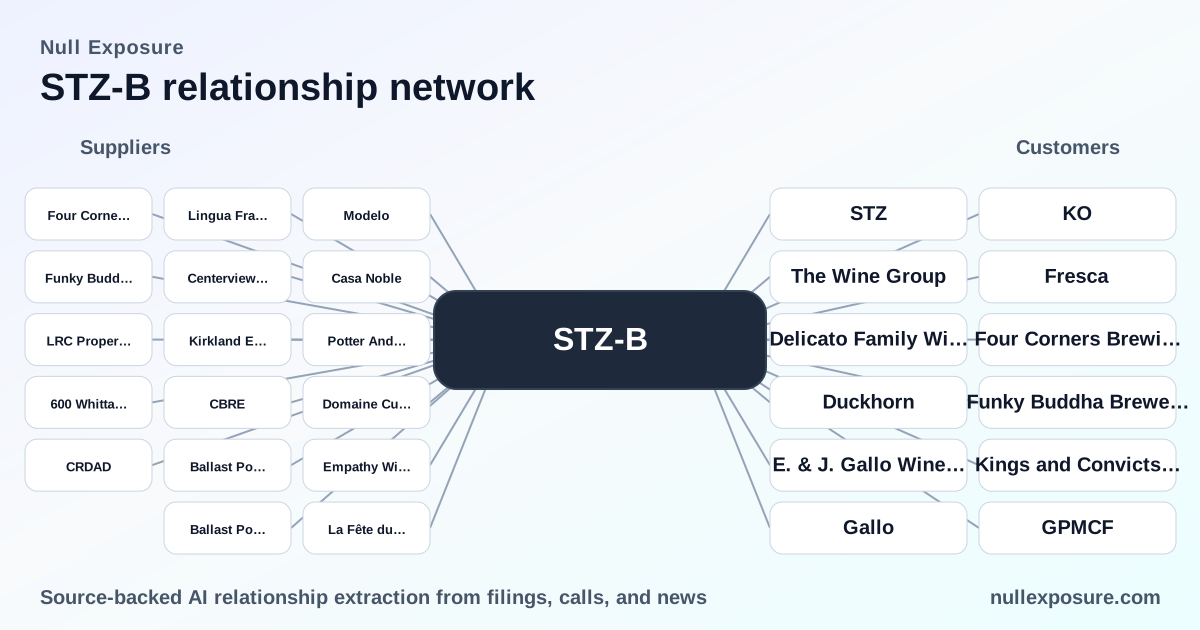
- The Wine Group — acquirer of mainstream wine assets: Constellation completed a transaction to divest primarily mainstream wine brands and associated inventory, facilities and vineyards to The Wine Group as part of its strategy to focus on higher‑growth, higher‑margin brands. GlobeNewswire and Drinks-Intel reported the closing and intent in FY2025. (GlobeNewswire, April–June 2025)
- E. & J. Gallo Winery — previous buyer of lower‑end brands: In 2021 Constellation sold a substantial slate of mainstream wines (principally sub-$11 retail) to E. & J. Gallo for roughly $810 million, a move highlighted in coverage of its wine strategy. (BeverageDaily, FY2024 reporting)
- Delicato Family Wines & Duckhorn — reported bidders/recipients in portfolio splits: Industry reporting identified Delicato and Duckhorn as parties in the reallocation of certain wine brands in FY2025, reflecting competitive demand for mainstream and niche wine assets. (VinePair, FY2025)
- Gallo (general mentions) — repeat counterpart in portfolio transfers: Coverage repeatedly cites prior sales and structural competition with Gallo, underscoring the industry’s consolidation around specialist wine houses. (BloombergLineia / local reporting, FY2022–FY2025)
Co‑branding and manufacturing partnerships that expand reach
- Coca‑Cola / KO and Fresca — co‑branding and RTD launches: Constellation partnered with Coca‑Cola on a Fresca‑branded line of ready‑to‑drink cocktails, under an agreement where Constellation produces, markets and distributes the alcohol product. FoodDive and local reporting documented the Fresca launch and partnership. (FoodDive; WHEC, FY2022)
- Fresca — brand partner in alcohol line: Fresca serves as the consumer brand for the co‑branded RTD initiative; the operational model is production and distribution by Constellation against Coca‑Cola’s brand equity. (WHEC, FY2022)
Craft and regional brands — divestitures back to founders or acquirers
- Four Corners Brewing — sale back to founders: Constellation divested Four Corners Brewing back to its original owners as part of a pullback from certain craft holdings, demonstrating a de‑risking of noncore craft exposure. (CraftBrewingBusiness, FY2023)
- Funky Buddha Brewery — founders reacquisition: The founders of Funky Buddha reacquired the brewery from Constellation, signaling a systematic unwind of selected craft platform investments. (CraftBrewingBusiness, FY2023)
- Kings and Convicts Brewing Co. — Ballast Point references and craft transfers: Historical transactions cited include sales of Ballast Point and other craft assets, illustrating a pattern of buying then selling craft brands as strategic fit evolves. (CraftBrewingBusiness, FY2023)
Manufacturing footprint and international volume exposure
- Grupo Modelo / GPMCF — Mexico production investment: Constellation earmarked approximately $1 billion of investment in Mexico to expand production for Grupo Modelo brands sold in the U.S., underscoring capital deployment tied to high‑volume beer franchises. BloombergLinea reported the planned investment in FY2023. (BloombergLinea, FY2023)
Corporate self‑placement and product availability
- STZ (Constellation Brands) — retail and e‑commerce availability: Constellation’s Svedka Tropics lines are marketed through national retailers and digital platforms, supporting rapid shelf expansion and consumer access. TheSpiritsBusiness documented Svedka Tropics availability across retailers and via Drizly and Instacart. (TheSpiritsBusiness, March 2022)
What this relationship map means for risk and return
- Positive: premiumization increases unit economics. Divesting mainstream wine lowers low‑margin exposure and improves margin profile per case. Evidence: multiple FY2024–FY2025 filings and press releases describing sales to The Wine Group and Gallo. (GlobeNewswire; BeverageDaily)
- Negative: concentrated franchise exposure and channel dependency. Leaner portfolios put strategic weight on fewer premium brands and on partners such as Drizly and Instacart for on‑demand reach; execution risk around retail placement becomes more material. (TheSpiritsBusiness; FoodDive)
- Operational signal: active portfolio management as the default strategy. Repeated divestitures and co‑branding deals indicate a deliberate posture of trading noncore scale for concentrated margin. (Drinks‑Intel; VinePair)
Bottom line for investors and operators
Constellation has shifted from a broad‑based wine and craft aggregator to a focused portfolio manager that leverages distribution partnerships and strategic co‑brands to monetize premium growth. Monitor retail/e‑commerce penetration metrics, margin trends on retained premium brands, and any further asset sales that reshape concentration risk. For an up‑to‑date snapshot of customers and counterparty activity, visit Null Exposure.