Suncor’s customer footprint: distribution strength, infrastructure contacts, and what investors should price in
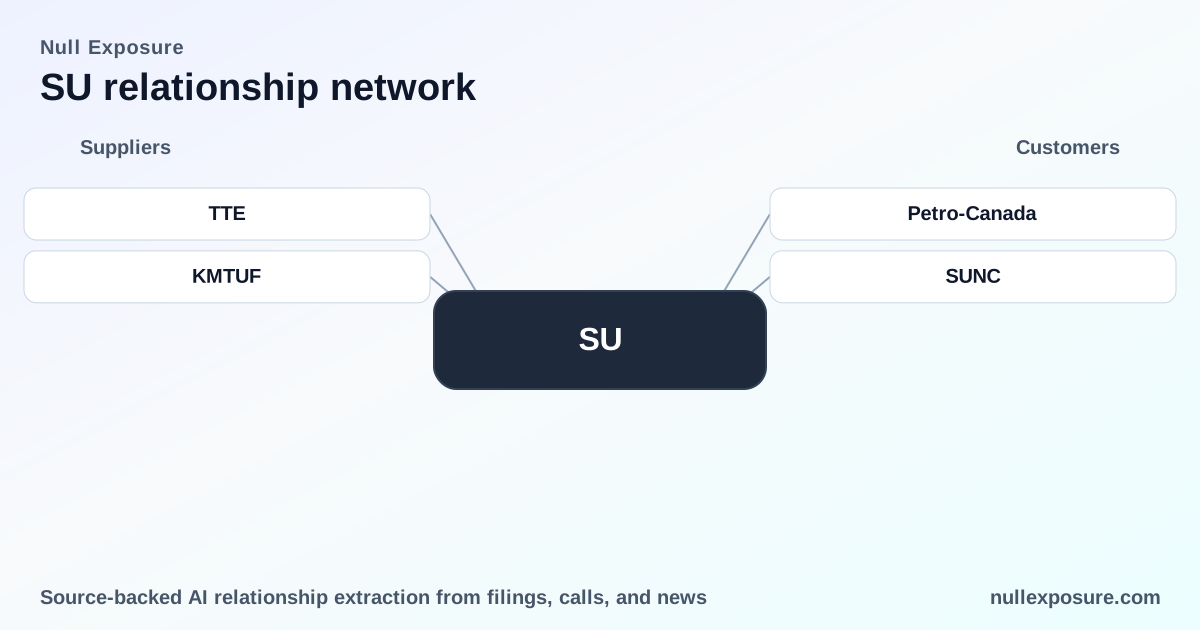
Suncor Energy operates as an integrated energy company that monetizes through upstream production, onsite refining, and an extensive downstream retail network, distributing fuels under Petro‑Canada and Sunoco brands while returning cash to shareholders via dividends and buybacks. For investors evaluating customer relationships, the most actionable signals are Suncor’s downstream channel control and the peripheral infrastructure engagements that track the energy-to-grid transition. Explore Suncor customer intelligence
Key takeaways
- Downstream control is a core revenue driver: Suncor’s Refining & Marketing arm routes product through Petro‑Canada and Sunoco retail networks, anchoring refined-margin exposure and retail margin capture.
- Customer diversity lowers single‑counterparty dependence: retail networks plus wholesale channels dilute concentration risk relative to single large offtakes.
- Infrastructure partners and adjacent industry news matter: mentions of grid and data‑centre infrastructure signal areas investors should monitor for capex, integration costs, or new service agreements.
Customer relationship roll call — what the record shows and where the signals come from
PCG‑P‑B (PG&E preferred) — grid services mention
A PG&E press release highlights Schneider Electric’s DERMS (distributed energy resource management system) as providing "critical visibility, forecasting, and control to streamline grid connections for customers with dynamic power needs" (March 2026). This entry documents a grid‑services narrative that intersects the broader energy ecosystem and is relevant to Suncor insofar as grid integration and electrification trends reshape fuel demand and downstream infrastructure needs. Source: PG&E investor press release (March 2026) — https://investor.pgecorp.com/news-events/press-releases/press-release-details/2025/New-PGE-Service-Offering-Makes-It-Easier-and-Faster-to-Connect-EV-Chargers-EV-Fleets-and-Big-Batteries-to-the-Grid/default.aspx
Petro‑Canada — core retail channel for refined products
A TradingView summary of Zacks research (March 2026) describes Suncor’s Refining and Marketing division as operating refineries across Canada and the U.S. and distributing fuels through the Petro‑Canada retail network, confirming that Petro‑Canada is a principal downstream distribution channel for Suncor’s refined output. This relationship underpins retail margin capture and recurring fuel revenue streams. Source: TradingView / Zacks commentary (March 2026) — https://www.tradingview.com/news/zacks:adfbc4bd2094b:0-suncor-s-record-run-time-to-hold-or-lock-in-profits-for-investors/
SMCI — infrastructure and construction capability mention
A market article (Stocktwits, March 2026) reports that Schneider Electric will deliver MEP infrastructure design and construction capabilities to support growing AI demand in data centers. The SMCI entry documents an infrastructure services narrative relevant to capital‑intensive installations; investors should read this as a sector signal about industrial partner activity rather than as a direct Suncor customer contract. Source: Stocktwits (March 2026) — https://stocktwits.com/news-articles/markets/equity/smci-stock-struggles-to-break-out-will-a-new-ai-data-center-deal-revive-bulls/cZd9hifRI5h
SUNC (ticker / Sunoco reference) — downstream retail partner
The Zacks/TradingView note repeats that Suncor’s Refining and Marketing division distributes fuels through Sunoco retail networks in addition to Petro‑Canada, affirming Sunoco’s role as a downstream distribution outlet for Suncor‑refined products across the U.S. market. This relationship is a direct channel for retail fuel sales and brand presence outside Canada. Source: TradingView / Zacks commentary (March 2026) — https://www.tradingview.com/news/zacks:adfbc4bd2094b:0-suncor-s-record-run-time-to-hold-or-lock-in-profits-for-investors/
Sunoco — retail distribution and margin capture
The same TradingView coverage references Sunoco explicitly as part of Suncor’s retail network, consolidating the picture that Suncor controls meaningful retail distribution points in North America, which stabilizes refined product placement and exposure to retail margins. Source: TradingView / Zacks commentary (March 2026) — https://www.tradingview.com/news/zacks:adfbc4bd2094b:0-suncor-s-record-run-time-to-hold-or-lock-in-profits-for-investors/
Operating model characteristics investors must weigh
- Contracting posture: Suncor’s business is organized around integrated, long‑duration commercial flows—upstream production feeding owned and contracted refining, and distribution through franchised or company‑operated retail networks—favoring contract stability over purely spot sales.
- Customer concentration and diversity: The presence of both Petro‑Canada and Sunoco retail networks indicates a diversified downstream channel mix that reduces single‑counterparty sales risk and supports volumetric resilience across geographies.
- Criticality to counterparties: Fuel distribution is critical infrastructure for mobility and industrial customers; the retail network relationship implies high priority and stickiness, which supports predictable cash flow even when refining margins fluctuate.
- Maturity and scale: Company financials show large scale and healthy cash generation (Revenue TTM: 48.9B; Market Cap: ~81.6B; EBITDA: 14.9B), supporting long‑term commercial commitments and capital allocation toward sustaining or expanding retail and refining capacity.
(Company‑level note: the reviewed relationship records include no captured contractual constraints, so there are no explicit third‑party covenant flags or special contracting terms reported in this dataset.)
How these relationship signals inform investment positioning
- Core thesis reinforcement: Downstream retail relationships materially de‑risk production volumes by internalizing more stages of the value chain; investors should value Suncor on an integrated basis rather than as a pure E&P play.
- Exposure to refining economics: Retail networks smooth volatility but do not eliminate exposure to refining margins and feedstock costs; monitor refinery utilization and crack spreads for near‑term earnings sensitivity.
- Transition and infrastructure linkages: Mentions of grid and industrial infrastructure firms in the relationship list are sector‑level signals that electrification and large‑scale industrial projects influence capex and partner selection; these trends affect demand composition and potential capital requirements.
- Counterparty and execution risk: Operational execution across refineries and retail networks remains the primary operational risk—distribution network performance, regulatory shifts, and regional demand shocks drive downstream results far more than individual customer credit risk.
Practical next steps for investors
- Monitor quarterly Refining & Marketing disclosures and utilization metrics to track where retail relationships convert into stable cash flow.
- Track crack spreads and retail same‑store fuel volumes for near‑term margin insight.
- For deeper analysis, reference Suncor’s investor materials and the relationship summaries above. Access Suncor coverage and relationship analytics
Conclusion
Suncor’s customer landscape is defined by owned and affiliated retail networks (Petro‑Canada, Sunoco) that deliver predictable downstream throughput and by sector infrastructure signals that shape future capex and integration needs. Investors should price Suncor as an integrated energy operator where retail distribution provides strategic margin capture and resilience, while refining economics and capital integration determine short‑to‑medium term earnings variability.