SuperX’s Japan push: customer relationships that signal where revenue will come next
SuperX AI Technology Limited sells and integrates AI data‑center infrastructure — high‑performance servers, modular system architecture and power systems — and monetizes through hardware deliveries, system integration contracts and partner-led project rollouts. The company is transitioning from development to commercial sales in Japan, executing a localized supply‑center strategy that generates immediate product revenue while building recurring integration and services opportunities.
Learn more about connection maps and relationship risk at NullExposure.
What the Japan activity tells investors about the operating model
SuperX’s public disclosures and press coverage establish a clear commercial posture: project‑based contracting with strategic local partners, not a broad channel play. SuperX is positioning its Japan Global Supply Center to deliver finished server units and to lead integration for multi‑vendor projects — an operating model that drives front‑loaded hardware revenue and a follow‑on pipeline of services and power integration fees.
Key business‑model characteristics to keep in mind:
- Contracting posture: Project and partner‑led, with SuperX taking a lead integrator role on modular architecture and power systems for named partners in Japan.
- Concentration: Commercial activity is concentrated in a small number of announced partnerships in Japan, which accelerates go‑to‑market but increases counterparty execution risk.
- Criticality: Deliveries and system integration are operationally critical — SuperX supplies hardware and systems that partners depend on to stand up AI capacity.
- Maturity: Early commercial stage — first batch deliveries have started, signaling commercialization but not yet scale.
These signals come from the company’s FY2026 press activity and related coverage: SuperX is shipping servers and formalizing MOUs to lead integration on local projects, which supports an early‑revenue, build‑and‑deploy trajectory for FY2026.
Who SuperX is working with in Japan — relationship-by-relationship review
Below are the relationships surfaced in company and media reports. Each entry is a concise investor‑oriented description with the primary source.
-
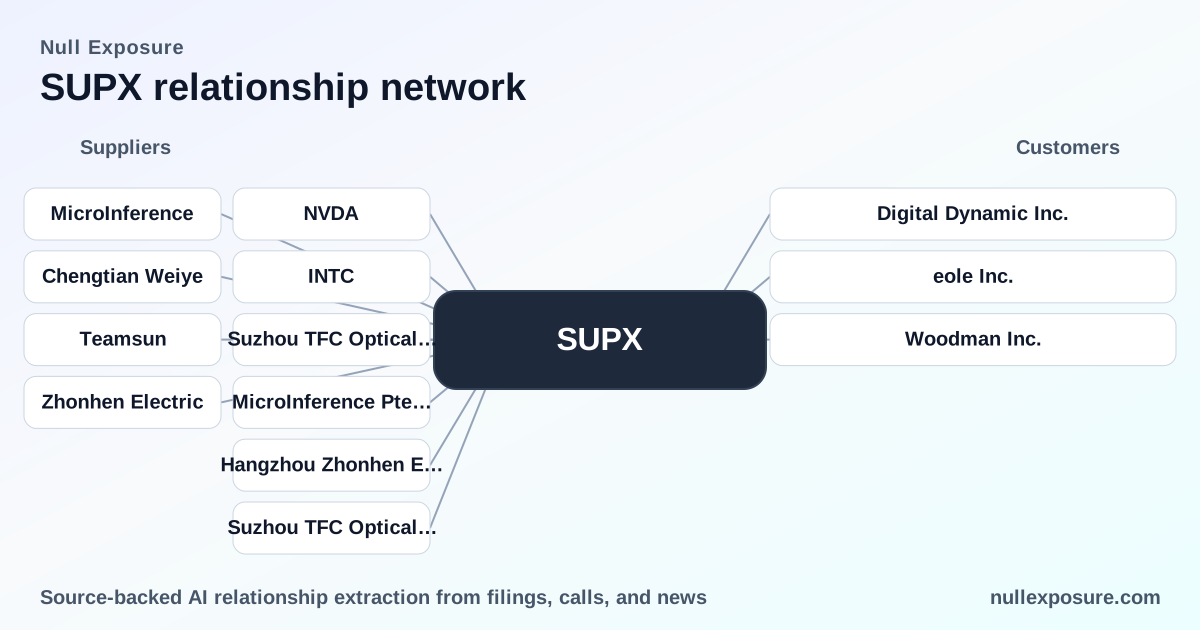
Digital Dynamic Inc.
SuperX completed the first batch delivery of high‑performance AI servers from its Japan Global Supply Center to Digital Dynamic on March 24, 2026, establishing an initial customer revenue event and validating the local supply center model. This relationship was also formalized earlier in an MOU that positions SuperX to provide modular system architecture and power system integration for joint AI data‑center projects. Source: SahmCapital report on April 10, 2026, and PR News Asia announcement (MOU) published March 2026 (see PR Newswire APAC release). -
eole Inc.
eole is a named partner in a February 4, 2026 MOU with SuperX’s Japanese subsidiary, where SuperX will lead modular architecture and power integration work alongside eole on prospective AI data‑center projects. The MOU indicates partner alignment on project development rather than pure resale, positioning eole as a collaborator on site and systems work. Source: PR News Asia press release, March 2026. -
Woodman Inc.
Woodman is the third signatory to the February 4, 2026 MOU with SuperX Industries Co., Ltd., joining Digital Dynamic and eole in exploratory work on AI data‑center projects; SuperX’s role is explicitly scoped to system architecture and power integration. The presence of three local partners in the MOU broadens SuperX’s route to customers while keeping project concentration high. Source: PR News Asia press release and subsequent Finviz coverage, March 2026.
Collectively these items are documented in multiple outlets, including MarketScreener and industry press that covered the first batch delivery in April 2026 and the MOU announcement in March 2026.
Track SuperX’s partner network and delivery milestones at NullExposure.
Financial and operational context investors should weigh
SuperX is in the early commercial phase and the financial profile reflects that transition. Market capitalization is roughly $323 million with trailing revenue around $3.6 million, but the company reports negative operating margins and EBITDA losses. Key metrics (latest quarter ended June 30, 2025) that shape verdicts on valuation and execution:
- Revenue TTM: $3.5966M; Gross profit TTM: $365,350.
- EBITDA: negative (~$11.94M); Diluted EPS TTM: -$1.35.
- Valuation multiples are extreme on a non‑scale revenue base (Price/Sales ~89.7; EV/Revenue ~87.9), reflecting investor expectations for rapid growth post‑deployment.
- Insider ownership is high (roughly 42%), institutions hold about 26%.
These numbers define a classic early‑stage enterprise value profile: valuation driven by expected future scale and successful commercial rollouts rather than current operating cashflows.
Execution risks and where upside will come from
The Japan relationships reveal both the upside and the execution risks investors must price:
- Upside: Early deliveries to Digital Dynamic and the MOU network provide immediate revenue recognition and reference customers for follow‑on deals, accelerating credibility in Japan’s AI infrastructure market.
- Execution risk: Concentration on a small group of partners creates single‑project dependency and supplier‑integration complexity; any delay or cancellation in partner projects would materially affect near‑term revenue.
- Supply and integration risk: Success depends on repeatable supply chain execution from the Japan Global Supply Center and SuperX’s ability to lead power and modular integration at scale.
- Valuation risk: Current market multiples require aggressive growth and successful large deals; failing to scale would pressure the share price significantly.
Company‑level signal on constraints and contract posture
No formal extraction constraints were recorded in the relationship feed. As a company‑level signal, SuperX’s public materials and partner announcements indicate a project‑centric, integration‑led commercial model rather than standardized long‑term contracts at scale. Investors should treat current revenue as contracting and project revenue rather than recurring SaaS‑style income until larger multi‑project agreements or service‑recurring arrangements are disclosed.
Verdict and recommended next steps for analysts
SuperX is converting R&D and pilot capabilities into tangible sales in Japan, with the first deliveries already executed and local MOUs in place. For investors, the tradeoff is clear: near‑term validation and revenue from named partners versus concentrated execution risk and lofty valuation multiples.
Actionable next steps:
- Monitor delivery cadence and project milestones with Digital Dynamic for revenue confirmation.
- Watch for contract terms that indicate recurring services or long‑term integration retainers rather than one‑off hardware sales.
- Reassess valuation only after SuperX demonstrates multi‑project rollouts or expanding partner count beyond the current MOU signatories.
For a consolidated view of partner exposures and delivery events, visit NullExposure.