SurgePays (SURG): Distribution partnerships extend reach but government subsidies drive the economics
SurgePays operates as a mobile virtual network operator (MVNO) and a retail platform, monetizing primarily through prepaid wireless services and federal subsidy reimbursements under the Affordable Connectivity Program (ACP), supplemented by device sales and a growing SaaS offering for retailers. The business is revenue-heavy on subsidized, low-income wireless services and dependent on distribution partnerships to scale customer acquisition and retail reach. For a mapped view of customer relationships and strategic partners, visit NullExposure.
How SurgePays actually makes money — concise operating model
SurgePays generates revenue across three practical vectors: (1) subsidized wireless service delivered by its MVNO brands (SurgePhone and Torch Wireless), which accounts for the majority of consolidated revenue; (2) platform and retail sales of devices, top-ups and related telecom products; and (3) software-driven merchant services (ClearLine), positioned as recurring SaaS revenue for retailers. Financials show Revenue TTM of $56.96M and negative gross profit and EBITDA, reflecting thin margins in subsidized plans and startup economics for software and platform businesses.
Operationally, the company recognizes revenues on a gross basis as the principal, and its MVNO model relies on underlying agreements with national carriers to provide network capacity. Geographically, operations focus on North America—U.S., Canada, and Mexico—via contract-free prepaid plans targeted at low-income consumers. These traits produce a contracting posture that is commercial (retail and government reimbursement) rather than enterprise-grade vendor licensing.
Company-level constraints that shape value and risk
- Government dependence is material and concentrated. Since ACP introduction, SurgePays derived over 70% of revenue from federal reimbursements, making federal policy and program continuity core value drivers and downside risks.
- Customer base is retail and individual-heavy. The subsidized revenue stream is driven by low-income consumers using mobile broadband and prepaid services; consumer churn and enrollment dynamics directly affect cash flow.
- Revenue concentration by segment. The MVNO mobile wireless segment comprised ~70–85% of consolidated revenue for 2024/2023, while Comprehensive Platform Services produced $17.42M (28.61%) for the year ended December 31, 2024 — a meaningful secondary revenue stream.
- Role and margin profile. SurgePays acts as a seller and service provider (principal), which supports higher topline capture but exposes the company to fulfillment and credit risk associated with subsidized reimbursement timing.
- Product mix: services first, software growth second. Services (wireless plans, top-ups) are the core cash engine today; ClearLine SaaS is a strategic growth vector that is positioned to drive recurring, higher-margin revenue, but it is still early relative to the MVNO base.
- Operational maturity signal. The mix of high government reimbursement dependence, negative EBITDA, and nascent SaaS expansion indicates a company in transition from subsidy-driven scale toward differentiated platform monetization.
Collectively, these constraints create high upside for distribution and software scale, and high downside if ACP reimbursement changes or retail distribution falters.
Recent and relevant customer/partner relationships you should know
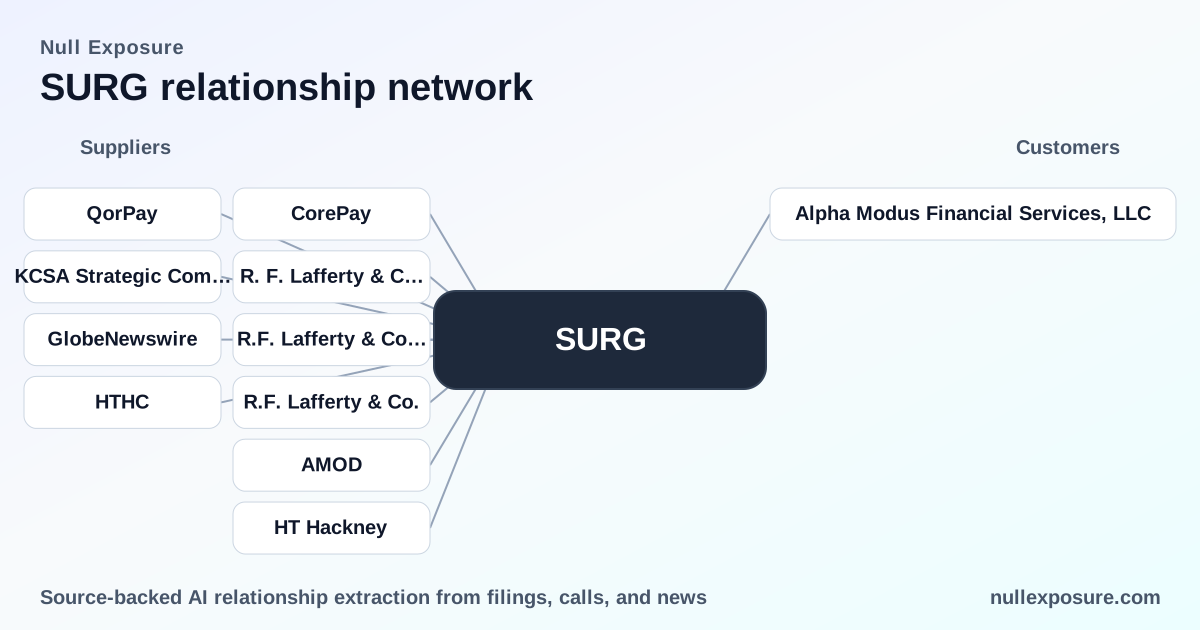
Below are every relationship reference returned in the monitoring window and what each one means for SurgePays.
- Alpha Modus / AMOD — StockTitan reported that Alpha Modus partnered with Prepay Nation and that the rollout “follows a pilot with a national retailer and an agreement with SurgePays to support initial distribution.” This places Alpha Modus in a distribution/integration role supporting SurgePays’ channel expansion, particularly for prepaid product distribution (StockTitan, March 9, 2026).
- Alpha Modus Financial Services, LLC — Marketscreener covered a signed letter of intent between Alpha Modus Financial Services and SurgePays to establish commercial integration and a distribution partnership, indicating a formal move toward collaborative go-to-market activity and channel integration (MarketScreener, March 10, 2026).
Both references point to the same strategic theme: third-party partners are being recruited to extend retail distribution and streamline commercial integration, which is critical for scaling prepaid top-ups, device sales, and merchant SaaS adoption.
What these partnerships mean commercially
Partnerships with firms like Alpha Modus serve two practical purposes for investors and operators: (1) accelerating distribution into retail channels and third-party platforms where prepaid customers transact, and (2) lowering customer acquisition cost by piggybacking on established retail footprints or integrated merchant flows. Given SurgePays’ gross-revenue recognition posture, successful distribution integration translates directly into topline growth rather than pass-through volumes. Conversely, partners that fail to convert foot traffic into ACP-enrolled subscribers or prepaid purchasers will not remediate the company’s margins or federal reimbursement risk.
Investment implications: upside, execution risk, and what to watch
- Upside: If distribution partners convert at scale and ClearLine SaaS accelerates merchant adoption, SurgePays can diversify away from raw subsidy dependence, improve unit economics, and grow higher-margin recurring revenue. The partnerships with Alpha Modus are tactical moves that directly support that diversification.
- Key risks: Very high policy concentration—ACP reimbursements comprise a majority of revenue—and negative profitability metrics (negative gross profit and EBITDA) mean cash flow is fragile. Watch reimbursement timeliness, enrollment retention, and retail partner conversion rates.
- Operational signals to monitor: enrollment trends in the ACP program, monthly reimbursements vs. receivables aging, ClearLine merchant traction, and the cadence of device/top-up sales through new retail integrations. Also monitor insider and institutional ownership levels; current institutional ownership is low (~8.2%) while insiders hold ~35%, which influences liquidity and governance dynamics.
Bottom line: SurgePays is a subsidy-anchored MVNO expanding through distribution and software initiatives; partnerships such as those with Alpha Modus are necessary for scale, but the company’s valuation and cash stability depend squarely on continued federal payments and successful retail conversion of subsidized subscribers.
For an investor-focused mapping of SurgePays’ partner and customer relationships, see the coverage at NullExposure.