Silvercorp Metals (SVM): Asset Monetization Through Selective Divestiture
Silvercorp Metals operates as a silver-focused miner and explorer, principally extracting and developing mineral properties in China and monetizing through metal sales, strategic asset sales and royalties, and occasional equity-linked transactions. The company is executing a portfolio pruning strategy—selling the Santa Barbara Ecuador project to Tincorp via a structured, share-based deal—thereby converting a non-core exploration asset into liquidity and a royalty upside while preserving operating cash flow from core Chinese mines. For further company relationship intelligence, see https://nullexposure.com/.
What the Santa Barbara deal reveals about Silvercorp's operating posture
The transaction with Tincorp reflects several operative characteristics that investors should weigh. Silvercorp is a producing miner with material scale (TTM revenue ~$366M and EBITDA ~$193M), which supports both ongoing operations and selective capital recycling. The company is using non-cash consideration (shares, staged payments and royalties reported by market coverage) to divest a peripheral Latin American asset—an approach consistent with a conservative contracting posture that conserves cash and leverages equity to transfer exploration risk.
- Concentration and focus: Silvercorp’s core is China-based silver production; divesting Santa Barbara signals a tighter geographic focus and reduced capital allocation to higher-risk greenfield projects.
- Criticality vs. non-core: The Santa Barbara project was treated as non-core—its sale converts contingent future value into immediate strategic optionality and potential royalty income.
- Maturity and balance-sheet flexibility: Positive EBITDA and substantial revenue give Silvercorp the flexibility to transact in shares and royalties rather than strictly cash, indicating a mid-to-late cycle miner with access to capital markets.
- Counterparty choice and deal structure: Using a smaller explorer (Tincorp) as the buyer and structuring the transfer with staged payments and a royalty component suggests Silvercorp prefers counterparty risk transfer combined with upside participation.
If you want a full read on how Silvercorp’s customer and counterparty relationships affect valuation and operational risk, visit https://nullexposure.com/.
Deal and market context — headline takeaways
Silvercorp and its wholly-owned subsidiary Adventus Mining Corporation executed a share purchase agreement to transfer the Santa Barbara Gold-Copper Project to Tincorp Metals. This is not a straight cash sale: the structure includes staged consideration and a royalty element, which preserves upside for Silvercorp while offloading near-term development risk. Multiple market notices and filings confirm the agreement and related shareholder disclosures in 2026.
Relationship entries (each result from the record)
Below are plain-English, 1–2 sentence summaries for every relationship entry in the provided results, with concise source citations.
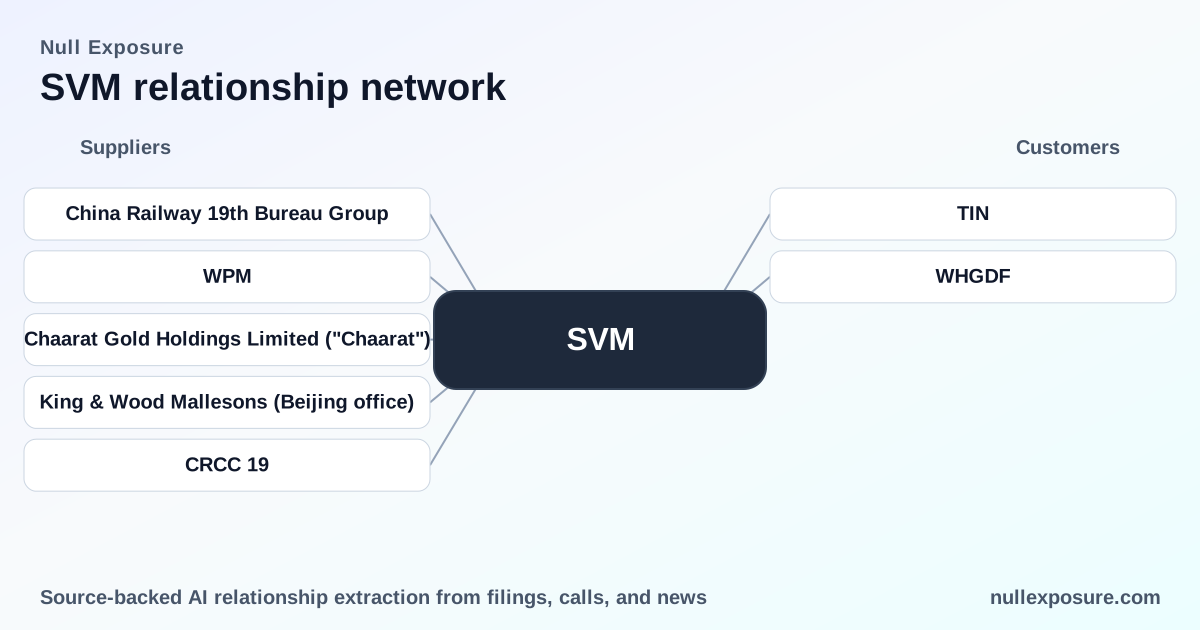
TIN (Investing News, March 10, 2026)
Tincorp Metals announced a definitive share purchase agreement dated February 24, 2026 under which it will acquire the Santa Barbara Gold-Copper Project from Silvercorp via purchase of the vendors’ holding company. The notice frames the transaction as an asset transfer into a junior explorer that will operate the project going forward (https://investingnews.com/tincorp-announces-definitive-agreement-to-acquire-the-santa-barbara-gold-copper-project-ecuador-and-concurrent-best-efforts-offering-of-subscription-receipts-for-up-to-c-16-million/).
Tincorp Metals Inc. (Investing News, March 10, 2026)
The same Investing News release identifies Silvercorp and its subsidiary Adventus as vendors in the share purchase agreement, confirming corporate-level transfer mechanics rather than a direct property sale. This disclosure underscores that Silvercorp is divesting via a share-based transaction that hands the holding company to Tincorp (https://investingnews.com/tincorp-announces-definitive-agreement-to-acquire-the-santa-barbara-gold-copper-project-ecuador-and-concurrent-best-efforts-offering-of-subscription-receipts-for-up-to-c-16-million/).
Tincorp Metals Inc. (Supplemental disclosure, May 4, 2026)
Tincorp filed supplementary disclosure to amend and expand details in its shareholder circular ahead of its May 5, 2026 meeting, noting that shareholder approval is required to complete the acquisition of Santa Barbara from Silvercorp and Adventus. This filing makes clear the deal is subject to customary corporate approvals and staged transaction mechanics (https://investingnews.com/tincorp-provides-supplemental-and-amending-disclosure-on-proposed-santa-barbara-acquisition/).
Tincorp (TradingView/TMX Newsfile, May 4, 2026)
A TMX newsfile listed on TradingView reported the resumption of Tincorp trading in direct connection with the definitive agreement to acquire Santa Barbara from Silvercorp, indicating market-sensitive corporate action and a near-term liquidity event for Tincorp equity holders tied to the transaction (https://www.tradingview.com/news/tmx_newsfile:ef22b58d0094b:0-tincorp-announces-resumption-of-trading-on-the-tsx-venture-exchange/).
Tincorp (SimplyWallSt commentary, March 10, 2026)
An analyst piece on SimplyWallSt described the Santa Barbara divestiture as an all-share transaction with staged payments and a royalty, framing the move as portfolio rationalization for Silvercorp and a capital-efficient way to retain upside via royalties. That coverage reinforces the market narrative that this sale is strategically motivated rather than distress-driven (https://simplywall.st/stocks/ca/materials/tsx-svm/silvercorp-metals-shares/news/does-silvercorp-metals-tsxsvm-portfolio-shift-recast-its-mul).
WHGDF (SimplyWallSt reference, March 10, 2026)
A separate ticker reference (WHGDF) appears in SimplyWallSt copy noting the same divestiture language—again characterizing the transaction as an all-share sale with staged payments and a royalty component—suggesting overlap in market data feeds and analyst commentary capturing the identical corporate action (https://simplywall.st/stocks/ca/materials/tsx-svm/silvercorp-metals-shares/news/does-silvercorp-metals-tsxsvm-portfolio-shift-recast-its-mul).
Investment implications and risks
- Value crystallization vs. upside preservation: The deal converts exploration upside into realized value with residual royalty upside for Silvercorp; investors should value the royalty stream and staged payments conservatively until cash flows are realized.
- Geographic concentration risk reduced: Divesting an Ecuador asset reduces Silvercorp’s non-China exposure and simplifies operations, which can improve operational predictability but narrows future optionality for diversification.
- Counterparty and execution risk: The buyer is a junior explorer; transaction completion depends on Tincorp shareholder approvals and successful integration of the project, representing execution risk for the timing of proceeds received by Silvercorp.
- Market perception and liquidity effects: Public notices and trading resumption tied to the deal illustrate that Silvercorp can transact via equity markets, but investors should monitor share dilution and any long-term royalty impact on margins.
Final read
Silvercorp’s disposition of the Santa Barbara project is a deliberate reallocation of capital away from a non-core Latin American exploration asset and into a model that retains upside while lowering near-term capital intensity. For investors focused on operational stability and cash generation, this is a signal of portfolio discipline; for growth investors, the retained royalty and staged payments are the components that preserve speculative upside.
For an expanded review of Silvercorp’s stakeholder relationships and how they affect credit profile and valuation, visit https://nullexposure.com/.